Histoplasmosis
and Cleanup of Bird, Bat, Rodent and Animal Feces
What is histoplasmosis?
Histoplasmosis is a fungal infection
that affects the lungs and may occasionally invade
other parts of the body. It is an uncommon disease.
In 1999, there were 15 cases reported among New
York City residents (rate of 0.2 cases per 100,000
persons).
Who gets histoplasmosis?
Anyone can get histoplasmosis. It
is recognized more often in immuno compromised individuals,
such as AIDS patients.
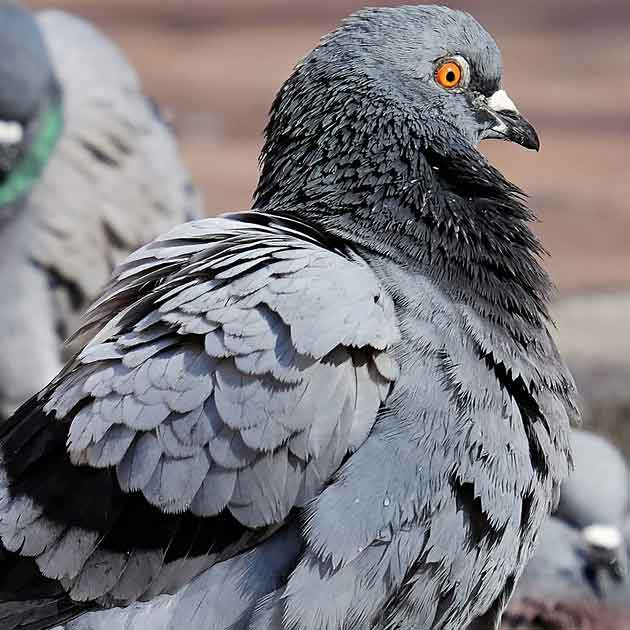
Birds, bats, cats, rats, skunks, opossum, foxes,
and other animals can get histoplasmosis and may
have a role in spreading the disease.
How is histoplasmosis
spread?
The disease is acquired by inhaling
the spore stage of the fungus. Outbreaks may occur
in groups with common exposures to bird or bat droppings
or recently disturbed, contaminated soil found in
bird coops, caves, etc. Person-to-person spread
of histoplasmosis is highly unlikely.
What are the symptoms
of histoplasmosis?
Symptoms vary from mild to severe,
ranging from a flu-like illness to serious lung
infections. In immuno compromised patients, the
disease may spread to the bone marrow, lungs, liver,
and lymph nodes.
How soon after infection
do symptoms appear?
Symptoms may appear within 5 to 18 days (usually
10 days) after exposure. However, most people do
not experience any symptoms.
Does past infection
with the fungus make a person immune?
Infection usually results in increased protection
against repeat infection, although the immunity
is not complete.
How is histoplasmosis
diagnosed?
Histoplasmosis is diagnosed by isolating
the fungus from body fluids or tissues, visualizing
the fungus under the microscope, or by an antibody
test.
What is the treatment
for histoplasmosis?
Specific treatments, such as amphotericin
B, are available for patients with severe illness.
How can histoplasmosis
be prevented?
Minimize exposure to dust in contaminated
and enclosed environments, such as bird roosting
areas and their surrounding soil. Use a protective
mask and spray the area with water to minimize exposure
to dust.
Baylisascaris procyonis
(Roundworm)
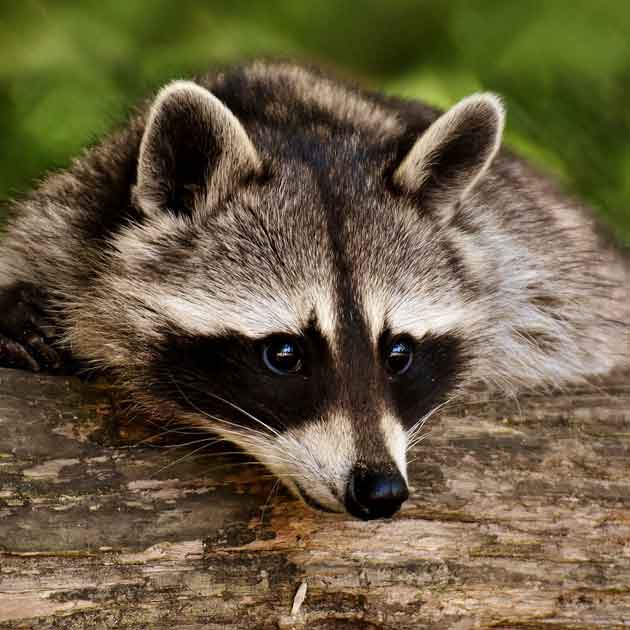
The roundworm Baylisascaris procyonis, does not
cause clinical disease in the raccoon host but can
cause severe or fatal encephalitis in humans (and
other animals). The larvae of B. procyonis have
a noted tendency to invade the brain and eye, causing
what is referred to as "neural larva migrans"
and "ocular larva migrans". To understand
risk of transmission, it is important to understand
the life cycle of the parasite in the raccoon. Initially,
raccoons become infected with B. procyonis either
by accidentally eating eggs from the soil or by
ingesting intermediate hosts (rodents, rabbits,
birds) already infected with larvae. Adult worms
then develop in the intestinal tract of the raccoon
and produce millions of eggs per day, which are
shed in feces. Once outside the body, the eggs become
infective in approximately 2 to 4 weeks, depending
on environmental conditions such as moisture and
temperature. Humans who accidentally ingest soil
or who touch other materials contaminated with raccoon
feces can subsequently be at risk to develop neural
larva migrans.