Hawkeye in the Media


Article published on December 03, 2007; The Independent & Free Press
by Sandra Traversy


Flights of fancy


Dan Frankian gazed up with anticipation at the thick flock of grackles roosting in the pines at the front of his property. The 100,000 or so migratory birds had made several swirling loops, and come to finally rest in a place they’d soon vacate. Many of us would have pointed skyward and marveled at the noisy, avian show, but Frankian sees them with a different, more calculating eye.

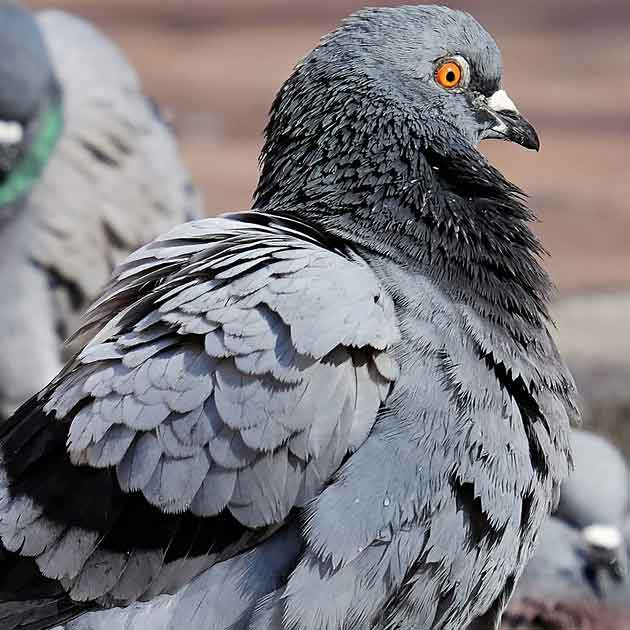
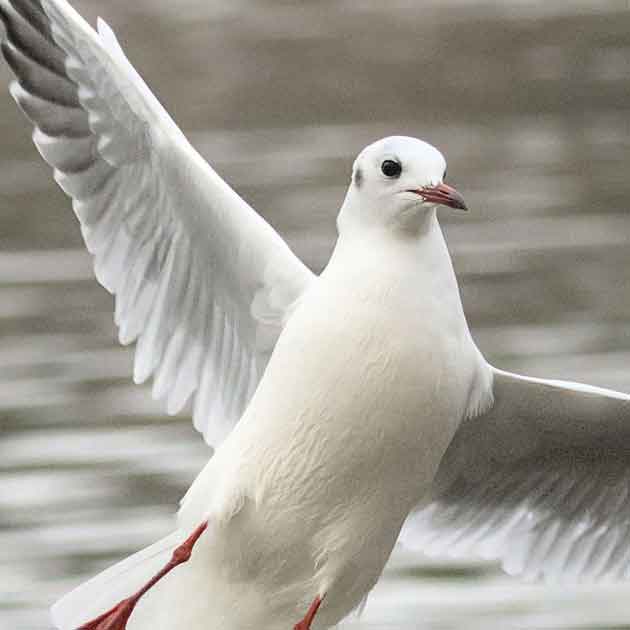
As president of Hawkeye Bird and Animal Control, located on Hwy. 25 in Halton Hills, he’s often dealing with large, unwanted flocks of birds in all sorts of situations from factories, apartments, and recreational areas to industrial buildings. Once a band of birds decides to take up residence, they don’t often leave and will breed and attract their friends as well.

Frankian brought a box out of his truck, laying several “scare” pistols on the tailgate. He chose one, loaded it, aimed and fired into the trees. The initial loud discharge was followed by a second explosion, which set the birds to flight. Not everyone has this impressive, pyrotechnic equipment at hand, so Frankian says a 2x4 laid on your tree trunk and slammed with a sledgehammer creates vibrations the birds don’t like. He joked that this might be the preferred method after 11 p.m.


The business of pest bird and wildlife control has taken him all over southern Ontario, with five offices set up to provide the necessary controls. On his website, he lists 12 pest birds and cites the reasons for them being a problem. Basically, it all boils down to them creating or contributing to a health hazard and causing physical damage by the uric acid in their droppings and nesting materials.


Health inspectors are quick to shut down a food processing plant if nuisance birds are found inside. Besides direct contamination, airborne spores from drying feces in air ducts and vents can settle on exposed food and transfer disease. Several cases of food poisoning by e-coli bacteria in water and food are reported every year, and are attributed to this disease transmission route.

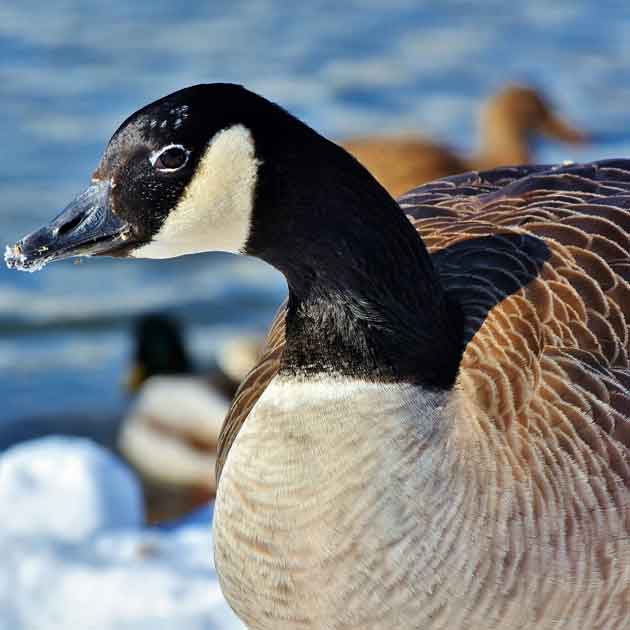
Birds can also be aggressive while they are nesting and Frankian has used his birds of prey to rid populated areas of species such as blackbirds and Canada geese around apartment buildings and golf courses. Of greater concern is the problem bird flocks can pose around airports as they see the open grasslands as an oasis, and quickly become desensitized to airplane noise and turbulence, and set up residency. Over the years, they’ve been responsible for many crashes, by being sucked into the turbines, striking the windscreen, distracting the pilot or contacting a propeller. Airborne birds are definitely an airport hazard.

Swallows, too, can become can be a problem when they venture into the urban setting, as they’ve made a very successful switch from cliffs and barns to man-made structures for nesting.

Walls on buildings often end up covered in fecal material, as well as collecting on the ground, not only defacing the building but enabling parasites to enter the building through cracks next to the nests, and thereby creating a health issue for people inside. Cliff swallows enjoy special protection under the law; only a permitted company like Hawkeye can disturb them once they have built their nest. Frankian’s company also offers a consulting service to architectural firms and engineers who want to ward off any chance of future infestation.

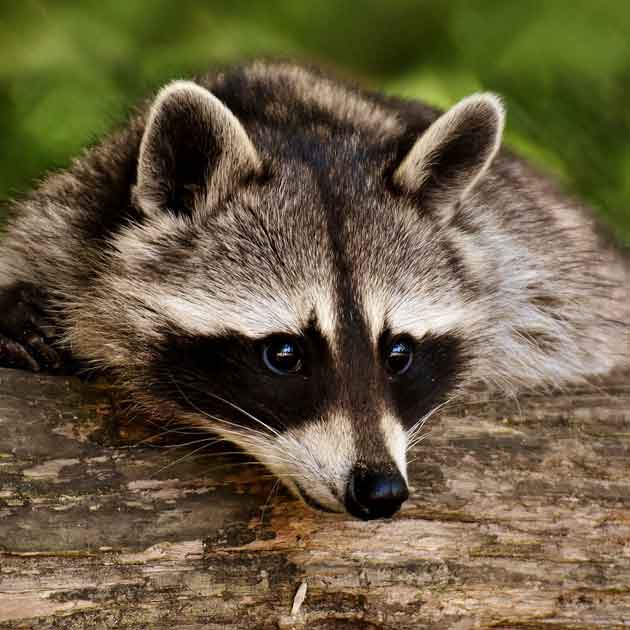
Hawkeye deals with nuisance animals and wildlife, helping companies and individuals avoid potential health hazards, costly damage to property, and loss of product and/or productivity if pest animal problems are not addressed immediately. Beavers flooding agricultural land, coyote predation on livestock, raccoon damage to corn crops, and other problem wildlife activity costs Ontario’s agricultural community millions of dollars annually.

Frankian and his staff not only employ the services of small to large predatory birds, they are also credited with rehabilitating and setting free quite a few previously injured birds. Each year at its aviary, Hawkeye rehabilitates as many as 15 birds they have picked up from various sources. Because of their size and potential danger, these birds– eagles, falcons, owls and hawks, to name a few, aren’t what most people could easily handle. Meat-eaters, they come equipped with a lethal set of talons and razor-sharp beaks.

Frankian owns the king of the flying predators— an immature male bald eagle. At eight pounds, the bird may not sound that large, but in order to handle him, Frankian has to don large, heavy leather gloves and hold him at arm’s length to keep him away from his face. He has had him since he was a chick. His plans for this bird include high-profile spots in commercials, videos and the movies, something he has already done for a number of years with other birds. This bird, with its sharp talons and pig-like grunts, is still considered to be very dangerous.

Eagles, peregrines and other predatory birds, depending on what’s wrong with them, can cost Frankian and Hawkeye $1,000-$5,000 to rehabilitate.

“If you get them in October when they’re hurt you can’t let them go until spring,” Frankian says. The diet for most of these birds is quail, which he purchases for a dollar apiece from a supplier. “The minute they come in they need food, water and vitamins and we have to determine what their injuries are.”

Hawkeye doesn’t receive any government money or any private donations— they pay out of their own pocket to get injured birds back into the air.

“We donate that and our time and we cover everything west of Toronto all the way to Kitchener,” he says. “There’s really nobody else but us to pick up birds of prey from shelters– we’re it. In Toronto, there’s the Toronto Wildlife Centre which takes care of that area. We have a free ambulance service and we pick up all the birds of prey from local SPCAs (Society for the Prevention of Cruelty to Animals).”

Recently staff at Hawkeye attempted to release a rehabilitated rough-legged hawk they named “Raffi.” It came to them in fairly poor condition, thin and with a leg injury.

As Frankian explains, “taking care of the feet and nails was an issue because he was abraded down there. The feather quality was quite bad, but it’s much better… now.”

Raffi dined on quail and pigeon when he arrived in February from Waterloo, and now the only “scars” that remain are two little crimp marks on top of his beak. Frankian and his staff put the beak back together with Krazy Glue and it had to be done in stages, with filing done in between.

Frankian released him expectantly, into the direction of a large willow tree, but the bird sank back to the ground and Frankian reassessed the situation, realizing the bird was not ready to survive on its own yet.

Undaunted, he decided to release his kestrel, Ontario’s smallest falcon. “Pebbles” had hit a window and some people brought her in to Hawkeye, thinking she was a baby. She was in top form, flying around her enclosure with confidence– proving she was ready for release to the great outdoors.

Frankian stepped outside and lightly tossed the bird into the air, watching her race off skywards. He then broke out into a broad smile, exclaiming, “That’s the best part, seeing them go like that – you want them to take off and survive!”

Annually, Hawkeye takes in about 10-15 birds, and 80 per cent of those are eventually released back to the wild.

“We don’t know the exact circumstances as to how they were injured— most of the time they’re found on the side of the road. Letting them go is really fun, it’s a culmination, like coming to the end of the race, it just feels good. You feel like a parent— now get out of the nest and go!”

You can contact Dan Frankian at www.hawkeye.ca or phone 416-429-5393. Hawkeye is located at 11255 Highway #25, 10 km south of Acton.


Hawkeye Pest and Bird Control | Hawkeye Pest and Animal/Wildlife Control | Privacy Policy
In Ontario our Pest Bird & Animal Wildlife Removal & Control Services & Products are available in: Ajax, Barrie, Bolton, Brampton, Brantford, Burlington, Caledon, Cambridge, Chatham, East York, Georgetown, Guelph, Hamilton, Kitchener, London, Markham, Milton, Mississauga, Newmarket, Niagara Region, Oakville, Orangeville, Oshawa, Ottawa, Peterborough, Richmond Hill, St. Catharines, Scarborough, Shelburne, Thornhill, Toronto-Central West, Toronto-Central East, Toronto-Etobicoke, Toronto North York, Vaughan, Welland, Whitby, Woodbridge. Please visit our Bird and Animal Control Locations page and/or contact us for services in other Canadian Provinces and the U.S.
©1985-2008 Hawkeye Bird Control Inc. RR#4 - 11255 Highway #25, Halton Hills Ontario, L7J 2M1 Canada
Telephone: 416-HAWKEYE (429-5393) | Fax: 866-281-5281 | Email: hawkeye@hawkeye.ca

Web Design, Hosting & Maintenance: GAWD Productions