BACK TO
TOP
MORE THAN 40 DEAD BIRDS
FOUND IN TORONTO'S EAST END
As reported by the Toronto Star, Police are asking
parents to be vigilant about where their children play
after more than 40 dead or dying birds were found in
Toronto's east end. The birds were sent for testing
to the Canadian Co-operative Wildlife Health Centre
in Guelph. It is believed the birds were poisoned. "Most
were found at the Dentonia Golf Course", police
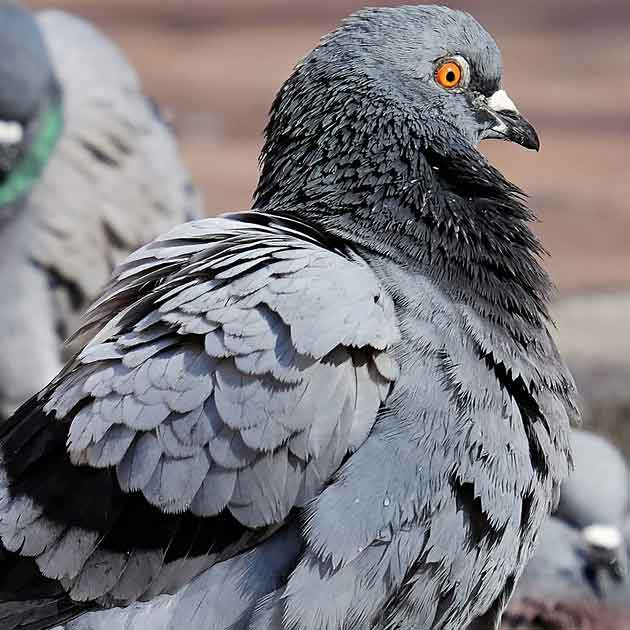
said. About 10 small black birds and a few pigeons were
found on the playground of Crescent Town Elementary
School, near Danforth and Victoria Park Aves., during
the last week of September, said principal Tamara Ross.
School officials are working to ensure children will
not be exposed to any potentially poisonous materials."The
caretaker expects the grounds frequently to check (for
more birds) and have instructed children not to touch
anything and tell us if they see anything," Ross
said.
Nathalie Karvonen, executive director of the Toronto
Wildlife Centre, suspects the birds were poisoned. "All
these birds were in very good body condition. They were
plumped and well hydrated, so something happened to
them fast. That's usually poisoning," she said,
noting the ill birds suffered seizures and were gasping,
which are symptoms consistent with poisoning.
Anyone who finds a sick bird can call the Toronto Wildlife
Centre at 416-631-0662.
CANADIANS ASKED TO
REPORT DEAD MIGRATORY BIRDS
Potential early warnings
of arrival of H5N1 flu virus
Original Article by Ian MacLeod | CanWest News Service
Wildlife field workers, hunters, fishermen and naturalists
are on the lookout for dead migratory ducks and other
fallen waterfowl as part of an expanding government
early-warning system for the potential arrival of the
deadly H5N1 flu virus.
People "need to realize that dead things are important
and need to be further investigated," says Dr.
Ted Leighton of the Canadian Co-operative Wildlife Heath
Centre, the organization co-ordinating a national surveillance
program for influenza viruses in wild birds.
The federal-provincial effort, which originated prior
to the renewed H5N1 influenza scare, typically monitors
the health of domestic poultry and livestock through
a network of veterinary specialists. A flu outbreak
in chickens, which Dr. Leighton believes is the most
likely scenario for H5N1 taking hold in North America,
would be quickly detected, he said.
But a new priority is monitoring the health of migratory
waterfowl, in part as a canary-in-the-mine safeguard
against H5N1 arriving here and going undetected until
it has circulated even further.
A longer-term component of Canada's surveillance program
is a cross-country collection of rectal swabs taken
from 4,800 wild migratory birds in August and September.
The samples, mostly from mallard ducks that inhabit
much of the country and allow for regional comparisons,
are being analyzed at several provincial and federal
laboratories. They will eventually form the first-ever
national catalogue of wild bird flu viruses in Canada.
That background information "will allow us to
deal with future epidemics in a much more intelligent
fashion and to estimate risks so we can take pro-active
steps," said Dr. Leighton, a veterinary pathologist
and the centre's executive director.
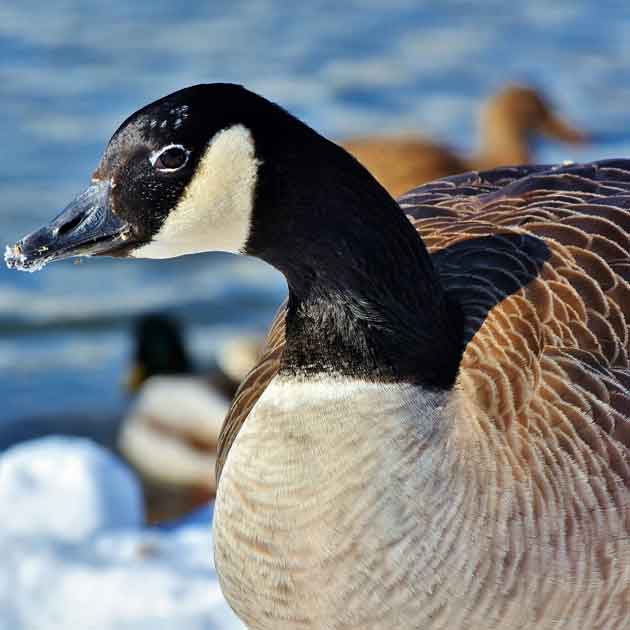
Migratory ducks and, to a lesser degree, geese are
the natural global reservoir of all 15 subtypes of type
A influenza viruses. Ducks are immune to the viruses.
But as the viruses spread through the environment and
mutate over time, some adapt to humans, causing mild
to serious illness, including the annual flu season.
The real danger arises when these viruses spread to
other animals, such as chickens and pigs, undergo genetic
alterations and develop into more virulent strains.
They can then return to wild bird populations with lethal
results. Humans can be infected if the original wild
bird germ mixes with existing human flu strains in,
for example, pigs, which can harbour human flu viruses,
too.
The bird flu sweeping through poultry populations in
Asia and Europe is believed to have originated when
a wild bird virus spread to Chinese domestic chickens.
It re-emerged from the poultry as the highly pathogenic
H5N1 virus blamed for the deaths of at least 60 people
in Asia, mostly those in close contact with chickens,
and the culling of an estimated 150 million domestic
chickens.
Of concern now is that wild birds may become infected
with H5N1 (or another deadly flu strain) from contact
with infected chickens in Asia and Europe. They could
then transport the germ, typically shed through fecal
matter, to lands, lakes and rivers along their migratory
flyways over Canada and other parts of North America.
BACK TO
TOP
PHAC NEWS RELEASE:
Wild Bird Survey Detects Avian Influenza in Ducks
OTTAWA - A national survey of wild migratory ducks
has detected avian influenza. Preliminary results indicate
that 28 of the positive reactions in Quebec and five
in Manitoba were due to the H5 subtype. The Public Health
Agency of Canada has determined that there is no information
in these findings suggesting a new threat to
human health.