Article published on Sunday December
17, 2006; Page A28 Washington Post
In His Battle With Pests, the Fun Is in the Arsenal
By Doug Struck Washington Post Foreign Service
Sunday, December 17, 2006
TORONTO Dan Frankian peered over a city fence and saw
his target. There, plump and oblivious, were the intruders.
The freeloaders had simply moved in from the country,
gorged themselves on the abundance of the city and left
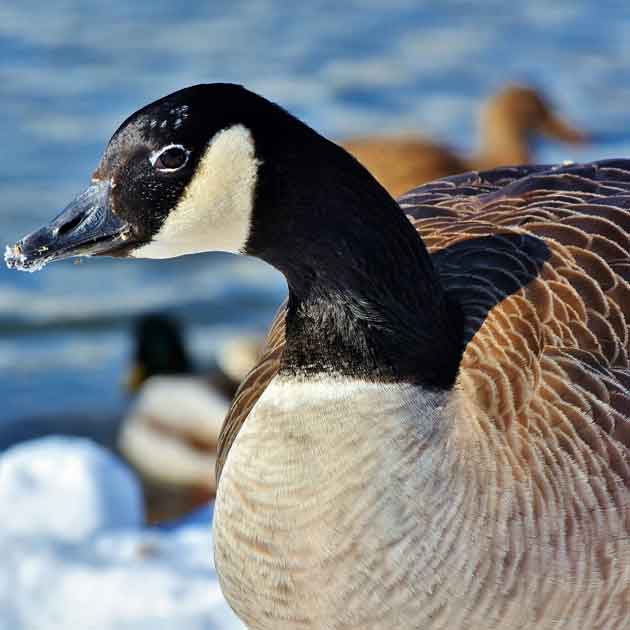
a nasty trail wherever they went. They were Canada geese.
Frankian mulled over the tools at his command this day.
Digger, looking expectantly from the front of his pickup
truck, has been Frankian's loyal companion for 20 years.
The springer spaniel is slowed by age but still game for
a good chase.
Dan Frankian's aerial ace in his fight to drive
away such ne'er-do-wells as Canada geese is Clara,
his 5-year-old Harris's hawk.
(By Doug Struck -- The Washington Post) |
 |
In the back of the truck was Cody, another spaniel, half
Digger's age and just itching for a run. And finally,
in a dark cage fashioned from a garbage pail, was his
secret weapon: Clara.
Clara is a 5-year-old Harris's hawk.
If the Canada geese scorned the dogs, Clara could be loosened
from a secure strap on Frankian's arm to take to the skies,
to wreak terror on any avians below.
"Usually, just the sight of a bird
of prey will work," he said.
For Frankian, who considers his company
the SWAT team of pest controllers, the fun is in the arsenal.
While most competitors do their work with some traps or
fireworks or nets, Frankian and his Hawkeye Bird Control
offer a full range of persuasive techniques.
Like five dogs. More than 100 hawks and
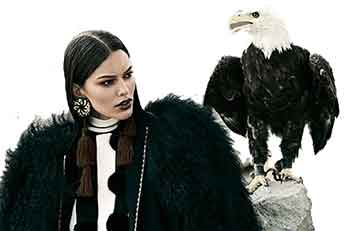
falcons. A few owls. And even three bald eagles -- "the
big bang in bird control" -- which can be unleashed
to reclaim the sky from unwanted wildlife.
Toronto and its environs are rife with
such wildlife, in the air and on the ground. The urban
center lies on a major flyway for millions of Canada geese,
swans, ducks and songbirds. They join the regular city
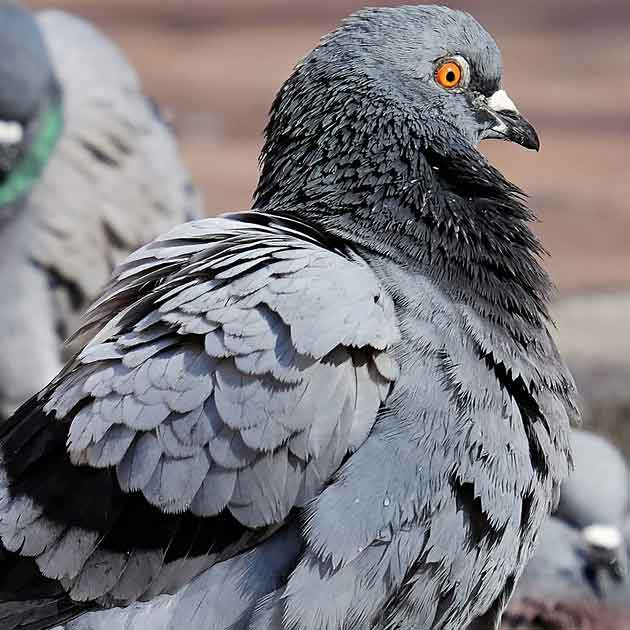
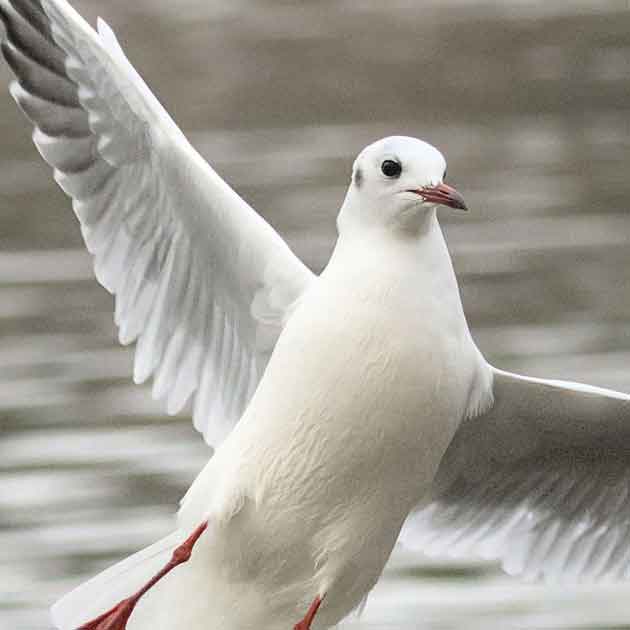
slickers -- pigeons, and sea gulls from nearby Lake Ontario
-- to infest any available water and to foul parks, lawns
and green space.
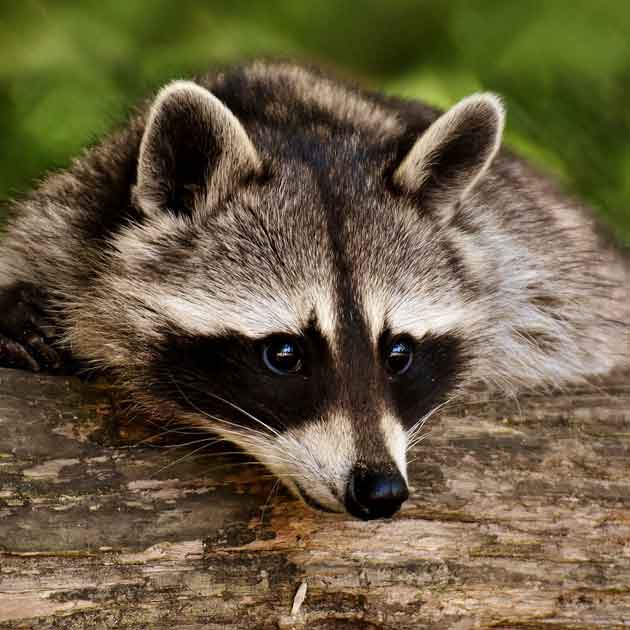
The city also is overrun with raccoons,
which gleefully feast on trash collection days despite
a minor industry built around garbage can locking devices.
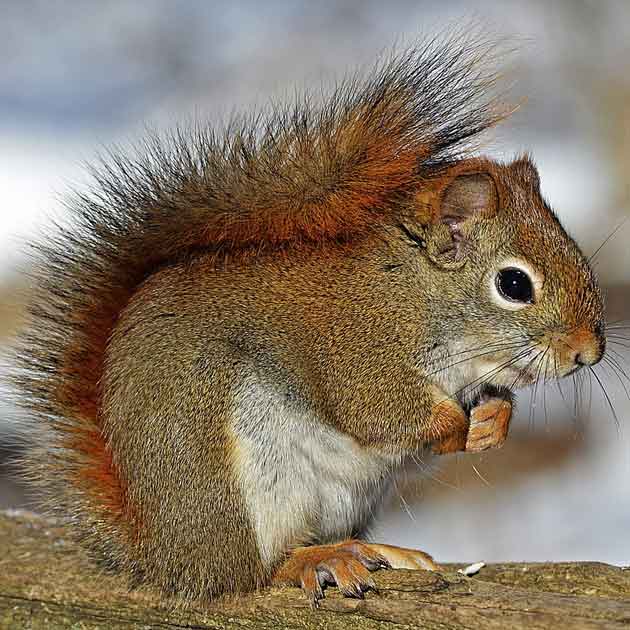
The raccoons and squirrels often move inside homes for
the winter, making holes under eaves. And not far from
town, Canada's iconic beavers industriously rework streams
to make lakes and chomp down forests into stumps.
Frankian, 42, takes on all. Most pest
control companies here are permitted only to cart a trapped
raccoon, for example, for release a half-mile away, barely
a commuter trip. James Bond-like, Frankian is licensed
to kill in some circumstances. But he would rather not,
he said. "If I can move an animal without killing
it, and it can go on living, I'll do it. I won't needlessly
shoot something for nothing," he said. Often, he
outlines the choices to his clients.
"They look at me and say, 'What do you think we should
do?' I say: 'If I walk up and shoot it, it's going to
cost this much. A live trap costs this much. A kill trap
costs this much.'
"And how many clients take the cheapest
option? "About 50-50," he said with a shrug.
Governments are often most averse to culling pests. "Even
the military seems to have a conscience these days."
Frankian, like the birds he chases, also
has flitted about. An Armenian born in Lebanon, he immigrated
to Canada when he was a youth, served in the Canadian
military and then turned a hobby of falconry into a business
with four offices and 18 employees. He has obtained an
unusual array of permits, including a fur trapper's license,
and specialties that include mountaineering on city buildings
and using hazardous-material equipment to remove bird
droppings.
His clients are governments that want
to clean up their municipalities, airports that want to
reduce landing hazards, companies that are finding fowl
on their property too foul and residents plagued by wild
visitors.
He has worked in mines (pigeons in the
shafts), oil rigs (gulls) and refineries (birds and animals).
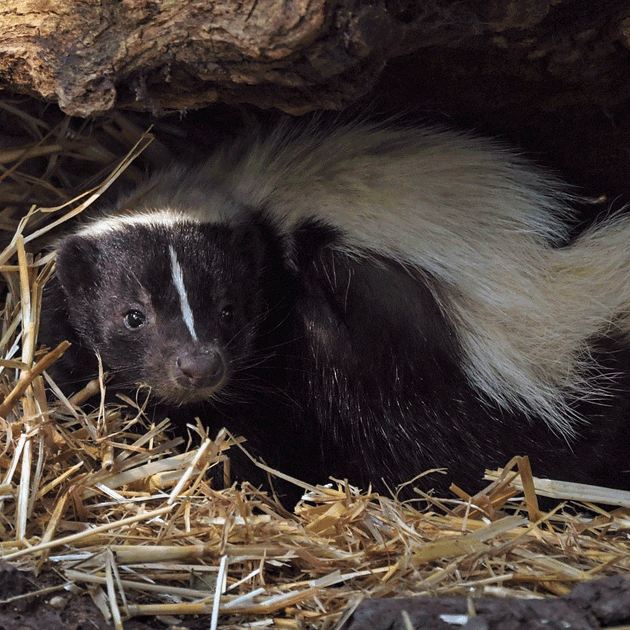
He's chased skunks out of mills and worked as far afield
as Thailand and Ecuador, he said.
This day, he decided Cody and Digger
would do the work.
"The dogs are really effective,"
he said. He typically brings them every day for a couple
of weeks to clear a municipal park or a business site.
This client is a food processing plant that does not want
bird droppings on its grounds. Eventually, the "birds
decide it's not a good place to be. They move on, and
we don't have to kill any."
If that doesn't work, his birds of prey
do. Frankian sounds like a proud parent as he describes
the diving attack of a hawk.
"You just hear a big thud and see
a puff of feathers," he said. "All the other
birds see that, and they start flying like crazy out of
there."
As Frankian's blue pickup truck approached
the Canada geese, the birds looked up, straightening necks.
The moment was still. And then Cory and Digger bounded
out of the truck, spaniel ears flapping, throats in full
bark.
With surprising speed, the geese leapt
into the air, abandoning the slow takeoff of their usual
leisurely flight. They rose and receded into the distance
with honking complaint. They might be back, Frankian admitted.
But so will he.