

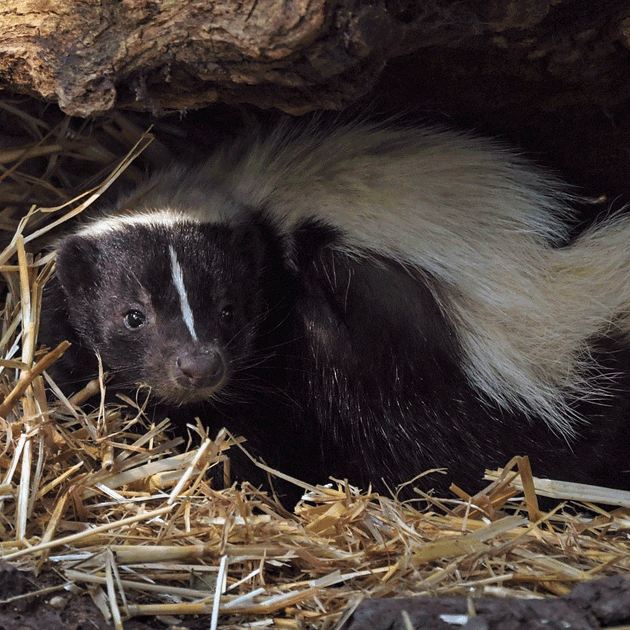
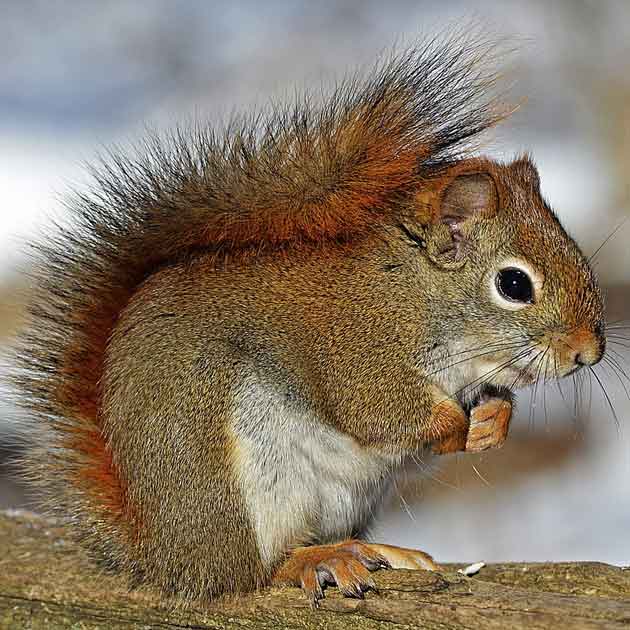


Mink (Mustela Vison)


The mink is a member of the weasel family. It is about 18 to 24 inches (46 to 61 cm) in length, including the somewhat bushy 5- to 7-inch (13- to 18-cm) tail, and weighs 1 1/2 to 3 pounds (0.7 to 1.4 kg). Females are about three-fourths the size of males. Both sexes are a rich chocolate-brown color, usually with a white patch on the chest or chin and scattered white patches on the belly. The fur is relatively short with the coat consisting of a soft, dense underfur concealed by glossy, lustrous guard hairs.
  Mink also have anal musk glands common to the weasel family and can discharge a disagreeable musk if frightened or disturbed. Unlike skunks, however, they cannot forcibly spray musk.
 
 
Identification
Closely spaced pairs of canine tooth marks are a sign of a mink kill.

Mink Damage
Mink will attack animals up to the size of a chicken, duck, rabbit, or muskrat. While eating muskrats, a mink will often make an opening in the back or side of the neck and skin the animal by pulling the head and body through the hole as it feeds. Like some other members of the weasel family, mink occasionally exhibit “surplus killing”
behavior (killing much more than they can possibly eat) when presented with an abundance of food, such as in a poultry house full of chickens.


Mink Control
Preventative measures include Exclusion*. Control methods include Live Trapping*, Licensed Trapping*, Physical Capture*, Shooting*, Relocation*, and Destruction of the animal.

*For adetailed definition of each control method please see Animal Wildlife Control Services & Solutions»


Please note that, in contrast to almost all other Ontario animal control operations, as a licensed furbearer trapping company we are able to employ all of these control methods INCLUDING relocation or permanent removal of captured mink.


Mink Breeding
Mink are polygamous and males may fight ferociously for mates during the breeding season, which occurs from late January to late March. Gestation varies from 40 to 75 days with an average of 51 days. Like most other members of the weasel family, mink exhibit delayed implantation; the embryos do not implant and begin completing their development until approximately 30 days before birth. The single annual litter
of about 3 to 6 young is born in late April or early May.


Hawkeye Pest and Bird Control | Hawkeye Pest and Animal/Wildlife Control | Privacy Policy
In Ontario our Pest Bird & Animal Wildlife Removal & Control Services & Products are available in: Ajax, Barrie, Bolton, Brampton, Brantford, Burlington, Caledon, Cambridge, Chatham, East York, Georgetown, Guelph, Hamilton, Kitchener, London, Markham, Milton, Mississauga, Newmarket, Niagara Region, Oakville, Orangeville, Oshawa, Ottawa, Peterborough, Richmond Hill, St. Catharines, Scarborough, Shelburne, Thornhill, Toronto-Central West, Toronto-Central East, Toronto-Etobicoke, Toronto North York, Vaughan, Welland, Whitby, Woodbridge. Please visit our Bird and Animal Control Locations page and/or contact us for services in other Canadian Provinces and the U.S.
©1985-2008 Hawkeye Bird Control Inc. RR#4 - 11255 Highway #25, Halton Hills Ontario, L7J 2M1 Canada
Telephone: 416-HAWKEYE (429-5393) | Fax: 866-281-5281 | Email: hawkeye@hawkeye.ca

Web Design, Hosting & Maintenance: GAWD Productions