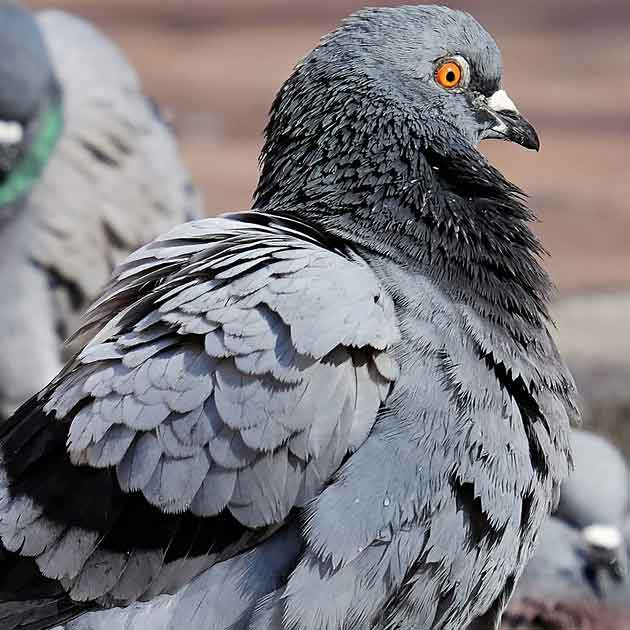
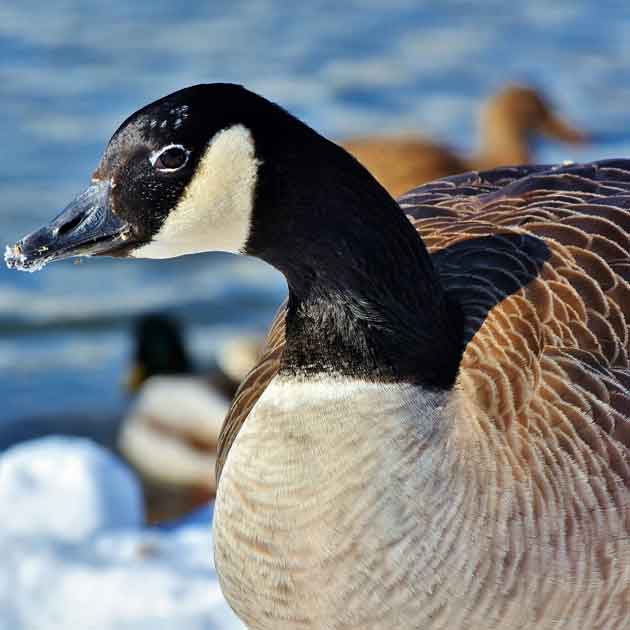
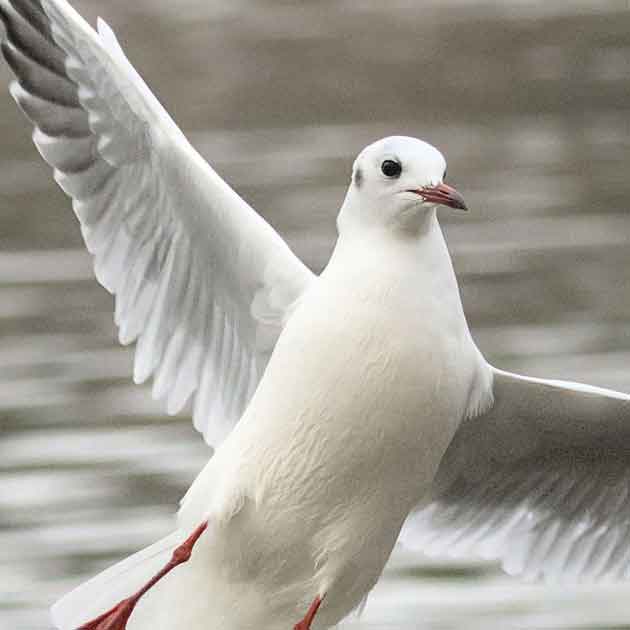
The general public's affection toward birds translates
into a serious underestimation of the health risks associated
with pest birds.
People who would never tolerate a colony of rats living
in their attic will turn a blind eye towards pigeons entrenched
in the rafters of their roof. Yet, in terms of disease and
damage, the two pests are quite similar. In order to better
understand how nuisance birds (or rats for that matter)
spread disease we need to understand the basics of disease
and transmission.
What is a Disease?
Diseases caused by foreign invaders are called infectious
diseases. The invading agents that account for the majority
of infectious diseases are grouped in the following five
categories; viruses, bacteria, mycotic (fungal), protozoal
and rickettsial. From a layman's standpoint, the classification
and definitions of disease are less important than how these
diseases spread and how can we protect ourselves from them.
Diseases need to be transported from place to place in order
to spread. Birds are a perfect mechanism for spreading disease
because they travel great distances, can harbor over forty
types of parasites and are able to internally host over
sixty types of infectious diseases.
How Pest Birds Harbor and
Spread Disease
The five types of infectious agents listed above can be
associated with birds in the following ways: the disease
lives in the bird and is passed on when the bird defecates;
the disease lives in the birds surrounding environment and
is spread by the birds lifestyle; the disease lives inside
a parasite that the bird harbors. From understanding how
the bird harbors diseases we can demonstrate the four ways
the diseases are passed by the bird to humans.
Food & Water Contaminated
with Feces
The most obvious example is when the diseased bird directly
defecates into a human food or water source. In the summer
of 93, New York faced a health crisis when several hundred
people came down with a mysterious ailment. The illness
was traced to sea gull droppings in an old city reservoir.
Health inspectors are quick to shut down a food processing
plant if nuisance birds are found inside. Besides direct
contamination, airborne spores from drying feces in air
ducts and vents can settle on exposed food and transfer
disease. Several cases of food poisoning (Salmonella) every
year are attributed to this disease transmission route.
Inhalation of Fecal Dust
As bird feces and/or the contaminated soil it rests on,
dries or is disturbed, microscopic pieces break off and
become airborne. These airborne particles can contain dormant
fungi and/or bacteria. When breathed into the lungs, the
warm, moist environment of the lung lining provides a breeding
ground for the infectious agents. Common symptoms of this
type of infection are flu like in nature: coughing, elevated
temperature, restricted breathing and general body fatigue,
and last roughly two to four days. The bodies defenses will
contain the invaders even before minor symptoms appear,
but in a small percentage of cases, major infection causing
long term disability and even death occurs. It is worth
noting that there is no known medical cure for internal
fungal infections. After the Northridge earthquake, several
thousand people came down with flu like respiratory symptoms.
The ailment was called Valley Fever and was caused by people
breathing in dust and airborne debris filled with histoplasmosis
spores and related fungal agents stirred up by the earthquake.
Direct Contact With Feces
Infection occurs when a worker or resident gets fecal dust
or droppings in an open wound or cut. This commonly occurs
when handling old rusty, sharp porcupine wire ledge products
which are covered with bird feces. The wound site becomes
red, puffy and puss-filled. Antibiotics are often needed
to cure the infection. In some rare cases, infection of
the blood (Septis) or internal infection can also occur
causing serious illness or death. Proper attire and care
must always be used when cleaning a bird site or installing
bird control products. If a cut or injury occurs, thoroughly
wash and disinfect the wound and cover with a sterile bandage
to minimize risk of infection.
Associated Parasites
Pest birds harbor ticks, fleas, mites and other parasites.
Parasites transfer disease in the following manner. The
parasite bites an infected animal and sucks in blood containing
the germ. When the bug bites its next victim it passes along
the germ to the new victim. This occurs because parasites
inject some of their saliva into the host when feeding.
Over forty types of parasites can live either on the birds,
in their nests or in the places they roost. They are responsible
for the transmission of several hundred viral and bacterial
agents. These diseases include plague, encephalitis, pox
and meningitis. Control of these parasites is a crucial
phase of the bird control project. Paradoxically, this threat
can be aggravated when bird control products are installed.
Unless the parasites are exterminated when the birds are
excluded from a site, the mites, fleas, ticks etc. will
seek a new host, often the human inhabitants. Therefore,
a proper bird control project should always include cleaning
and disinfecting.
How to Handle Pest Birds Problems
From A Health Perspective
Using our understanding of how nuisance birds play a roll
in disease transmission, we can develop a few guidelines
when dealing with bird infestations. First and foremost,
bird infestations are to be taken seriously but not irrationally.
When evaluating a health risk potential look for the following:
droppings or nesting materials inside air vents, birds around
food or beverage production facilities, or large amounts
of droppings in enclosed areas. These are the types of situations
where disease can be spread. Remember, pigeons walking around
your park bench is not cause for panic, while twenty birds
living in the rooftop air ducts of a restaurant is a serious
health concern requiring action. Second, pest control professionals
and do-it yourselfers must take the proper precautions when
tackling bird control projects. Respirators, goggles and
protective clothing must be used when cleaning up bird sites,
particularly enclosed areas out of the sun with large amounts
of droppings and nesting material. Finally, it is not enough
to remove the birds, it is crucial to exterminate all the
parasites and thoroughly disinfect the site.