CA
CA US
US




Geese
-
All About Molting Geese
Have you heard about molting geese? What does that mean? Join us as we explore why and when geese molt...
What is Molting?
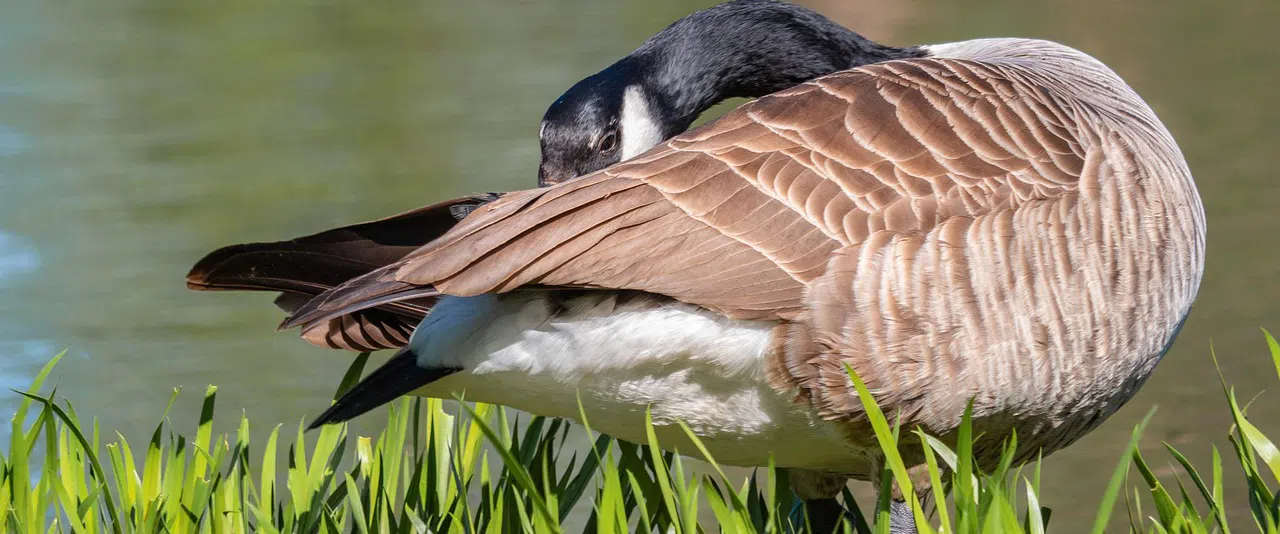
Moltingrefers to geese dropping their feathers during the month of June and early July. With nesting finished and little ones hatched, the birds will search for their summer homes and a safe environment for molting and raising their young.
Do All Geese Molt?
Yes, all of the geese species - and there are as many as twenty - molt their primary, or flight feathers in the summer. In fact, not just geese but all waterfowl do. This affords the birds a full, brand-new set of flight feathers for their long migration journey. While they are molting, Canada geese are grounded and cannot fly; this is in contrast to ducks. Yearlings will go through the molting process shortly after their first birthday.
Why Do Geese Molt?
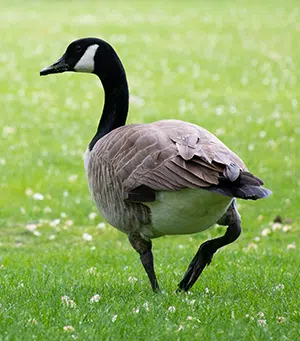 Molting usually starts in late June or early July and aids with regulating their body temperature in the the summer heat. Molting helps to cool the goose by increasing the area of bare skin.
- Molting also helps with getting rid of damaged or worn flight feathers. By shedding their old feathers, geese can make way for new, healthy, dense feathers that will allow for migration and also help them stay warm once temperatures drop.
The Molt Migration
Molting is physically taxing, and requires the birds to be flightless for 3 to 4 weeks while shedding their primary feathers. Because the molt is such a demanding process, many of the birds will fly a long ways to find the ideal location to safely spend the summer. Geese with young offspring will stay at their breeding grounds to molt while those who did not breed will have to leave.
Who participates in the Molt Migration?
The molt migration is all about leveraging resources. Those who have a half dozen tiny adorable goslings following them around, will spend this time remaining at their breeding sites. But those sites likely cannot sustain all of the geese that are there in early spring. Geese often don't find a mate and breed until they are between 2 to 4 years old, so those youngsters need to move on and leave whatever food is there for the ones rearing their offspring. Those who did breed but had a failed nest also leave and join Pre-Molt Groups.
What are Pre-Molt Groups
Adult geese that failed to hatch eggs, geese that have not yet found a mate (or lost their mate), or geese too young to breed (last year’s goslings) will flock up in what is referred to as “pre-molt groups”. With no babies to raise and no territory or nests to defend, these geese will form their own little (or large!) flocks. They will be looking for abundant feeding grounds as they make their way farther north.
Properties that had no geese issues all throughout spring may suddenly become inundated with large groups of geese and the mess they leave behind. Not only are we talking the usual droppings, but feathers - LOTS of feathers - as well.
Where do the Birds migrate to?
The molt is all about resources, so these geese go to where they can find lots of nutrition and safety - and that is often north. Remember, they cannot fly away during this time. Rivers, streams, any bodies of water provide a quick escape route from predators, if necessary. In fact, streams also double as a sort of water highway to travel on - if resources dwindle in one spot, they can move on to the next. Before fall they all will head back to their original spring destination to reunite with the main flock. This isn't so much about the flock or social structure, but rather about the fall migration route. The group that took part in the molt migration does not know the way south from where they are at. Hence, they'll join the ones who stayed put at the nesting site and they will all set out for their winter destination together, followint the tried and trusted path that brought them here.
Why is the Molt significant in terms of Geese Control and Removal?
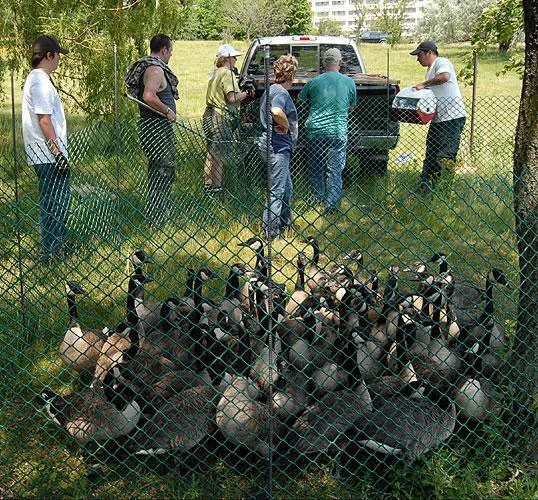 During this time when geese cannot fly, they are vulnerable. Using harassment techniques such as chasing with dogs or flying birds of prey seems a little unfair and often isn't terribly successful - since they cannot take off and fly away. Especially the pre-molt groups can be rather stubborn when asked to leave a perfectly good spot.
 But, this is the perfect time for translocation. This involves rounding them up and physically moving them to a more advantageous or appropriate area, if they are uninvited guests on your land, or in public parks, on beaches or golf courses, and so on. While they are grounded they can be captured, corralled and relocated to another area south west of you, approximately 300-400 kms away and along their natural winter migration route.
-
Canada Geese Migration and Flying V Formation
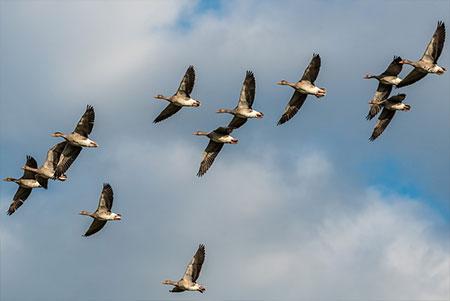 Canada Geese are one of the many migratory birds found in Canada who migrate to a more southern climate during the winter months. Most geese winter in the southern United States and Mexico, but due to the noticeable changes in our climate, some geese are still wintering in the southern most regions of central and western Canada, where winters are not lasting nearly as long as they have in the past. Most geese are still migrating, but may not be travelling as far south as previously recorded.
The V-Formation
Almost everyone in Canada has seen geese flying in a V shape formation, but many people are still unsure of the direct benefit of this formation to the geese. Geese fly in a V formation for one main reason, energy conservation.
Migrating is a long and tiresome journey, and being an egotistical goose in this situation, can lead to mortality through starvation or over exertion of energy. Thankfully, through evolution, geese and other migratory birds have developed behavioural traits that allow them to work as a team rather than as an individual, providing a mutually beneficial outcome for the entire flock.
Leading The Flock
Each goose shares the responsibility of leading the flock. This position is the most difficult to hold due to the fact that the leading goose is subject to the largest amount of wind resistance, and consequently the largest energy expenditure. Each goose behind the lead flies slightly higher than the goose in front of them. This reduces the amount of wind resistance each successive goose is experiencing, in turn reducing the energy output required to migrate. All members of the flock are willing to take turns in this position, only to spend an equal amount of time flying in a low energy cost situation. Migratory birds are truly the epitome of teamwork, and would experience a large population decrease every year during migration if it wasn’t for this wonderful evolutionary adaptation.
Hawkeye is the ONLY Toronto and Golden Horseshoe area licensed Pest Bird Control Specialist offering PERMANENT REMOVAL & GUARANTEED RESULTS. We are uniquely qualified under permits and licenses to PERMANENTLY REMOVE AND CONTROL pest birds such as pigeons, seagulls, geese, starlings, and swallows using a variety of methods including Birds of Prey. Additionally, we offer cleaning and disinfecting of affected areas and facilitate the future exclusion of birds.
Now with 7 Locations ( 6 In Canada and 1 in the U.S), we are ready to serve you better in Acton, Toronto, Oshawa, Bowmanville, two locations in Mississauga and West Palm Beach in Florida.
Contact us today or Email us at [email protected] if you need help with pest bird control and/or pest bird removal.
Pest Birds such asCormorants,Crows,Ducks,Doves,Geese,Grackels,Seagulls,Pigeons,Robins,Sparrows andStarlings.
Related Articles:
https://www.hawkeye.ca/blog/how-to-get-rid-of-geese-preparing-for-migration-in-the-gta -
Geese Nest Removal in Brampton: Best Practices and Legal Considerations
Canada Geese are about to return to nest and spend their summer in Brampton and towns all over Ontario. Hopefully, you have your permits in place and you and your professional goose control partner have agreed on a geese management plan that focuses on disrupting the breeding and nesting cycle.
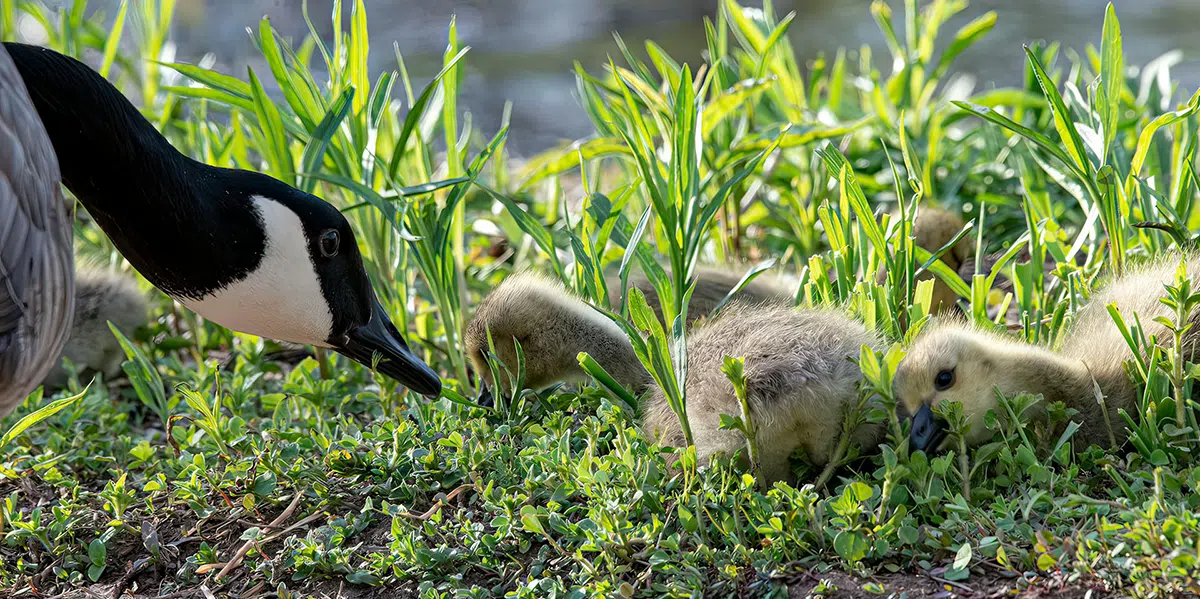
Like so many cities in our beautiful province, Brampton offers perfect breeding and feeding grounds for geese. Its many old cemeteries, parks, rivers, lakes, ponds and artificial bodies of water attract a large number of water fowl and other wildlife - and that doesn't come without challenges.
Geese Nest Removal in Brampton
Nest Removal is just one method to consider when making a geese management plan. Virtually all bird control measures require 2 or more methods employed simultaneously or one following another to ensure long term success. Canada geese have incredibly strong migration and nesting instincts. Geese will return to "their" Brampton nesting site year after year, so making that site unattractive is a non-lethal and humane way to make geese reconsider and change their choice of breeding location.
Geese are protected under the Migratory Bird Treaty Act and any interference with nests or eggs requires a permit.
Understanding the Challenge: Why Geese Nest Removal Is Necessary
Overpopulation
 Since Canada Geese have adapted so well to living alongside humans and as there are fewer natural predators in urban centers like Brampton, more goslings survive their first year of life and go on to continue the cycle of migration and breeding. Many female geese will return to and raise families (up to eleven wee ones in one season) where they themselves hatched and grow the size of the flock exponentially.
Public Safety
- Aggression
During nesting season, both parents-to-be have very defined roles. The female tends to the eggs and the male provides for her and keeps the nest safe. He takes his job very seriously and aggressively defends his mate and the nest. With a steady increase in the Brampton goose population, geese attacks are on the rise. - Slip and Fall Accidents
When an entire flock of geese congregates in a public park, marina, or other greenspace, there will be goose droppings. They are plentiful, messy, smelly, and slippery. - Spread of Disease
Birds carry bacteria, viruses, and parasites on feathers, and expel them through their droppings. Once dried, goose droppings and potential diseases become airborne. - Bird Strikes
We mainly think of aircraft when we hear the word bird strike but did you know that thousands of automobiles collide with geese every year. Due to their size, those collisions can be fatal. With its close proximity to Pearson International Airport as well as Hwy 410, this is a real concern for Brampton.
Property Damage
Golf Courses in particular suffer substantial and costly consequences from grazing geese. Young, fresh shoots are the most popular and will be decimated in no time - leaving grass unable to regenerate. Goose dropping are unsightly, unsanitary, and somewhat dampen the experience.
Environmental Concerns
- Water Quality
With the ongoing overpopulation of geese come concerns about water quality. Algae and bacteria such as E-coli contaminate many ponds, especially smaller ones. - Soil Erosion
Overgrazing at river banks and other waters' edges leads to soil erosion.
- Aggression
-
Goose Control During Nesting Season
Because Canada goose behaviour changes significantly during nesting season, springtime deserves its own goose management strategy. Many property owners find that small goose issues can become major property management issues if left unaddressed.
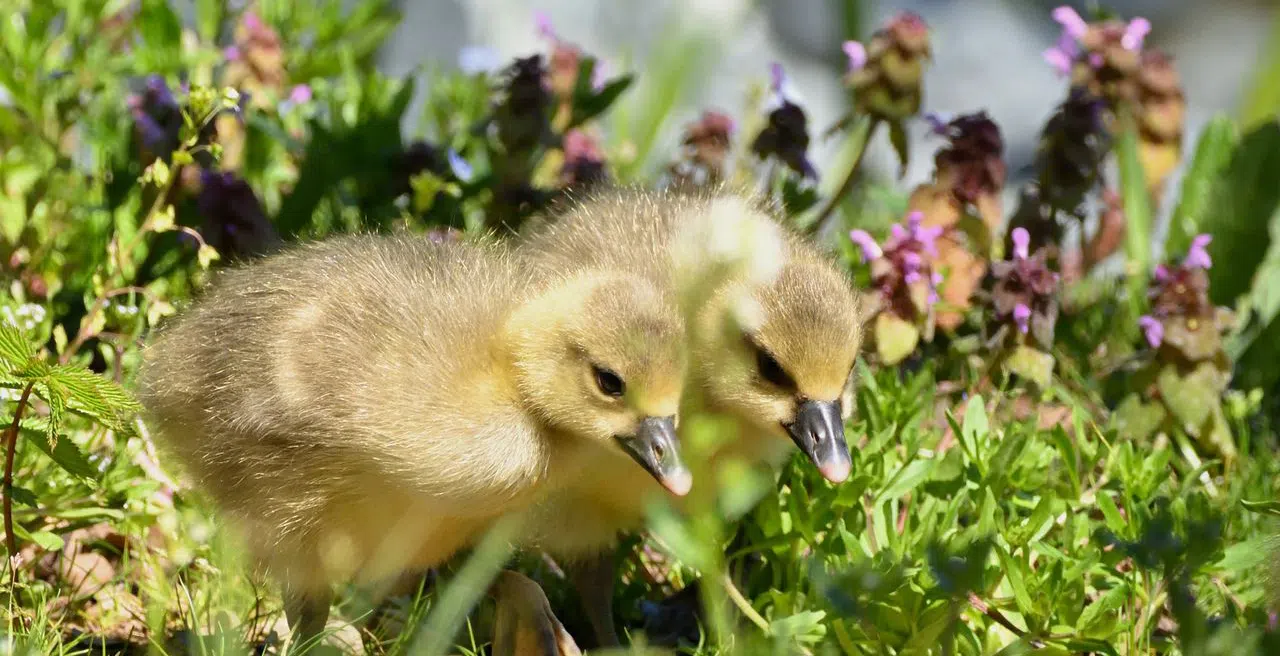
Geese become less willing to leave previously successful breeding sites during nesting season, a time when most complaints, conflicts, and aggressive encounters occur. This article explores why property owners should not wait until goslings appear before taking action, as well as how to remove nesting geese.
-
How to Break the Goose Nesting Cycle and Stop Them from Returning
Our beloved Canada geese are intelligent birds with excellent memory and a strong homing instinct. Hence, they return to the same breeding and nesting grounds year after year. Females will often stay with the flock and breed where they themselves hatched. With those nesting grounds often being in fairly populated areas, fewer natural predators and ample food ensure high survival rates of goslings and yearlings - and the flock grows. And grows.
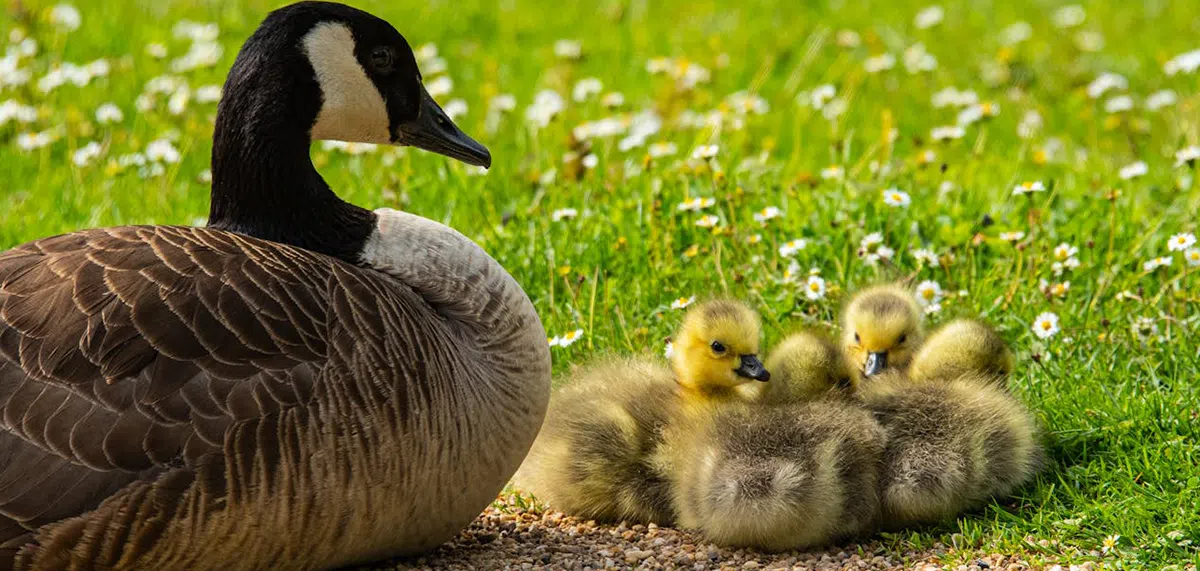
The geese population in many urban areas will continue to explode if left unchecked. What is needed here is early intervention - ideally, before breeding and nesting begins. That means that very early spring is when we need to take measures to disrupt the breeding cycle and encourage geese to leave.
Canada Goose Nesting Behaviour
Our fine feathered friends arrive often as early as March, back from their sunny winter home down south. The sole reason for their lengthy and strenuous migration is to breed in northern climates. The ideal nesting site for a flock of Canada geese includes:
- Proximity and access to water;
- Open grassy areas with little or no obstructed views;
- Access to food other than fresh grass shoots.
Understanding and taking into consideration when, how, and where geese will settle to breed and nest is imperative when implementing goose control measures.
Why Do Geese Return to the Same Spot Every Year?
- Geese Imprint on Successful Nesting Sites
After having a successful breeding season, geese are almost guaranteed to return to the same site. After all, it worked out well and now the goslings hatched at this site, call it home as well. - They have strong Memory and Site Fidelity
Again, after a successful nesting season, this site is now the starting point (and return destination) of their migratory route. - Site Suitability
As long as there is plenty of food and other conditions favour successful breeding, there is no reason to change course and look for different nesting grounds.
Why Egg Oiling/Addling Doesn’t Break the Cycle
We often see egg addling or oiling advertised and hailed as a solution - when it really isn't.
- Geese don’t know the eggs are no longer viable and keep sitting on them.
- You will still have to deal with them for the entire season until fall migration begins.
- It would likely take several unsuccessful breeding seasons before geese gave up and moved on.
- Egg oiling or addling prolongs the problem and delays the solution. It does not produce the desired outcome: make the flock of geese leave on their own.
Early Intervention — Disrupting Pre-Nesting Activity
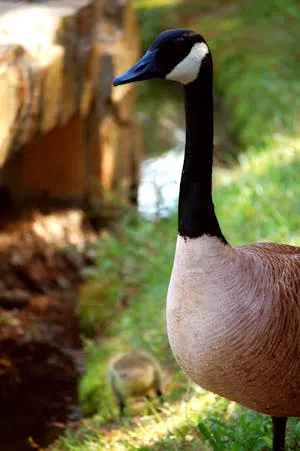 Timing is Critical
Geese that stay in our northern climates and do not migrate south may begin scouting nesting locations in late winter to early spring. Geese that are migrating north already have the nesting location engrained in their memory. Either way, the time for action is early March.- Visual Signs to Watch for
Pairs of geese walking your property, inspecting quiet corners, especially near water.
Strategies to Stop Geese before Nesting begins
- Falconry for Geese Control
Flying large birds of prey (eagles) overhead will make the area appear unsafe and unsuitable for nesting; - Hazing with Dogs
Having dogs patrol and chase geese on the ground will reinforce that the area is not desirable for breeding and nesting; - Lasers
Expertly deployed lasers in low light conditions will also reiterate that the area is unpredictable and unsafe; - Habitat Modification
Letting grass grow 4 inches or taller, planting shrubs or otherwise obstructing the view will make the location less desirable and dicourage geese from nesting; - Fencing or Pond Wiring
Low fences along the shore line will make landing and taking flight more difficult and wiring or netting across ponds will also prevent geese from seeking refuge in the water.
Note: All goose control measures require appropriate permits. Contact Hawkeye Bird & Animal Control for more information and assistance in obtaining permits.
- Proximity and access to water;
-
How to Get Rid of Geese Around Toronto’s Harbourfront Properties
Goose controlin Toronto is a growing issued these days. The citie's harbourrfront properties continue to record an increase in the Canada goose population - condos, parks, marinas, patios, and green roofs are prime targets. Iit is important to get rid of geese near the harbourfront swiftly to avoid cleanup of the subsequent mess, mitigate the risks of health and safety hazards as well as minimize a loss of reputation.

Goose Removal in the Harbourfront Area
So, Why Do Geese Love the Harbourfront So Much?
- Toronto's waterfront offers abundant green space and manicured lawns (ideal for goose grazing);
- The proximity to water provides plenty of safety for nesting and escape from land-dwelling predators;
- Because of constant human traffic, urban environments tend to discourage the presence of natural predators;
- Human presence also means supplementary wildlife feeding - intentional or accidental.
The Impact of Geese Infestations on Harbourfront Properties
Property Damage
Excessive goose grazing leads to lawn destruction and the resulting fecal matter contaminates pathways, docks, and buildings.
Health Risks
Geese, like many bird species, carry and transmit a slew of diseases through feces and feathers, both bacterial and parasitic in nature. Some examples are Salmonella, Campylobacter, E. coli, Cryptosporidium and Giardia.
Safety Concerns
Canada geese are fiercely protective of their nests and offspring and known for aggressive behavior, particularly during the spring and early summer. Additionally, there are increased risks of slip-and-fall accidents due to wet and slippery surfaces from droppings.
Environmental Impact
Excessive goose droppings degrade water quality in the harbour. This becomes an even bigger concern for smaller bodies of water.
Most Affected Harbourfront Properties
- Condominium Rooftops & Green Spaces – they are ideal for nesting due to their height, warmth, and safety.
- Marinas, Floating Docks & Ferry Landings – these provide perfect resting zones for geese with minimal disturbance.
- Public Parks & Trails (HTO Park, Harbour Square Park) – with short grass, access to water, and food dropped by tourists, Toronto's parks make for perfect goose habitats.
- Restaurant Patios & Courtyards – food-seeking geese are persistent beggars and leave an unsanitary mess.
- Event Spaces & Open Waterfront Lots – geese often disrupt public events and make areas unusable.
 Challenges of Waterfront Goose Control
 - Geese feel protected near water — escape routes, open views, and nesting privacy.
- Noise deterrents and decoys are largely ineffective and inappropriate for public settings.
- Legal protection under the Migratory Birds Convention Act demands permits for any and all goose control or removal methods.
- Nests may be hidden or inaccessible under benches and shrubs, around HVAC units, on rooftops, or below docks.
Should You Wait to Deal with a Canada Goose Problem?
No, you should not. Your problem, much like a flock of geese, will increase exponentially with time. Here's why:
- Canada geese return to the same nesting location to hatch 5-7 goslings every year.
- Nesting geese become territorial and aggressive — a public safety issue.
- Goose droppings carry bacteria and parasites, stain surfaces, and increase fall/injury risks.
- Toronto's waterfront offers abundant green space and manicured lawns (ideal for goose grazing);
-
How to Get Rid of Geese from Lakefront Properties
Waterfront properties experience some of the most persistent Canada goose problems because, unlike other properties, lakefront sites naturally provide almost everything geese need. That can make it particularly difficult to get rid of geese on a waterfront property without addressing the conditions that attract them in the first place.

This article will explore what you can do to get rid of geese and discourage them from settling around your lakefront home and when it's time to call in professional help.
-
How to Get Rid of Geese from Your Dock
Ahhh.. summer is on the horizon and with the warmer weather we all look forward to activities near or on the water. Unfortunately, so do our beloved Canada geese.
Of course, being waterfowl, they love and in fact need water. And, here in Ontario, we have plenty of lakes (large and small), beaches, marinas, and parks offering water features.
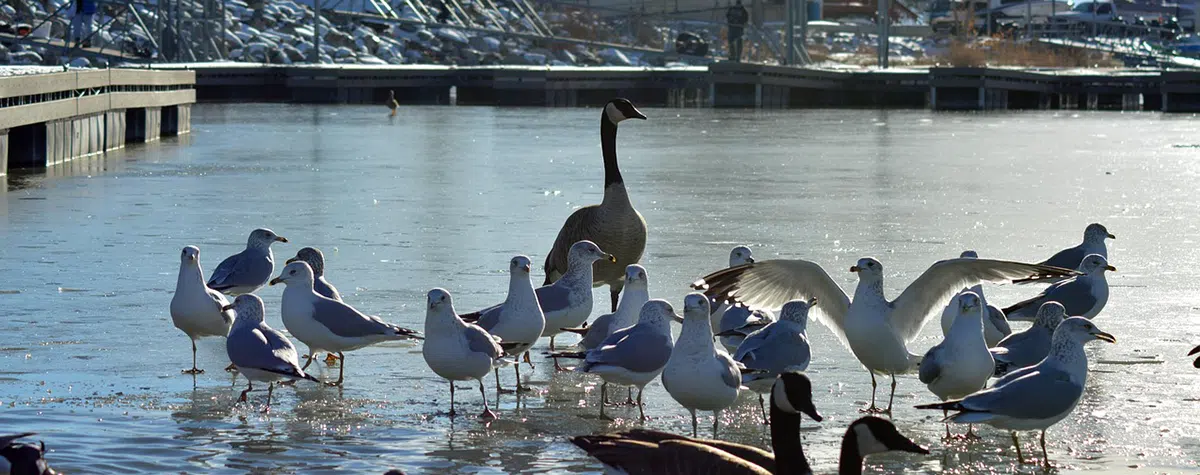
In fact, Toronto and its nearby cottage regions have over 250,000 lakes!
Let’s have a look at what we can do to get rid of geese from our docks and marinas this summer:
What’s The Issue with Geese on Docks?
- Geese are loud, messy, and often times aggressive. Probably not what we look for in our summer retreat with the kids.
- Goose droppings (especially excessive amounts) also pose some fairly significant issues related to health, water quality, and slip-and-fall accidents.
Goose control and management efforts are necessary to help protect you and your family, marina and park employees, and the public at large. Please note that ALL goose removal efforts require planning and permits. Read on and learn what keeps geese off docks and which geese control methods yield the best long-term results.
Why Geese Flock to Docks
- Open, flat sightlines offer visibility and safety
Geese are most comfortable on even ground with little or no obstructions – this enables them to spot predators early and retreat to the water for safety. - Easy access to water
Water is not only necessary for hydration, but also provides a safe haven for geese. - Lack of natural predators in urban and cottage settings
Even though the overall setting may be rural in cottage country, the constant presence of humans and their shenanigans pretty much assures that predators keep their distance. - Human feeding and lack of deterrence reinforce their presence
The absolute worst thing we can do is feed geese. Yes, the goslings are adorable and will come close and we may even get to pet them. But we are creating the very problem that we’ll later lament and want solved.
Cottage Waterfronts & Private Docks
 Goose Control Challenges:
- Docks are often unmonitored and void of human activity for long stretches;
- Owners want minimal disruption and no damage to natural surroundings.
Most Effective Solutions:
- Birds of Prey
After the initial 10-12 days of flying birds of prey, twice weekly falconry visits are highly effective. Falconry for Geese Control requires an experienced falconer and large birds of prey (like eagles). - Habitat Modification
Growing grass along the shoreline taller will help and also adding low fences or shrubs around water access points will discourage geese. This is something cottage owners can do on their own. - Laser Deterrents
Lasers are quiet and minimally invasive; they work best in low light (early morning/after sunset) and make the environment appear unpredictable and potentially unsafe for geese to nest. This requires handling by a professional. - Pyrotechnics
The drawback, of course, is the noise disturbance. But pyrotechnics are highly effective geese deterrents for docks if also deployed in low light conditions (similar to lasers). This requires a licensed and experienced operator. - Nest Removal (Not Addling/Oiling)
Hawkeye Bird & Animal Controldoes not necessarily endorse egg oiling. It doesn’t solve the problem at hand because the geese don’t realize that their eggs are no longer viable. They will continue to sit on their nests and remain a constant presence throughout the summer months. Egg addling or oiling also needs to be handled by professionals.
-
How to Get Rid of Geese in GTA Courtyards
Toronto and its surrounding areas are home to lovely architecture that often features beautiful, cozy courtyards and rooftop gardens. You know who else enjoys these hidden treasures? Our ever-present Canada goose population!

From Mississauga and Markham's large office parks with courtyards and water features to Vaughan and Oakville's upscale cozy residential hideaways and common areas, geese are claiming these spaces in ever-increasing numbers.
-
How to Get Rid of Geese Preparing for Migration in the GTA
Many GTA residents assume that Canada geese will soon leave, so the problem is almost over. But in reality, goose activity often increases before migration.
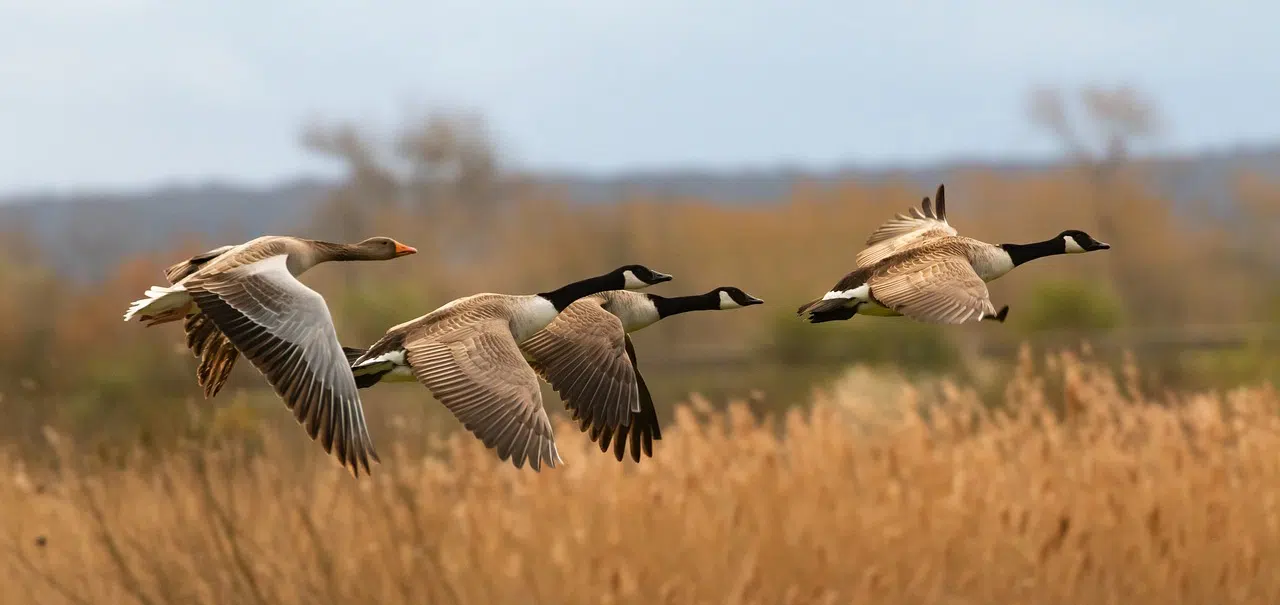
In fact, during the pre-migration period, as families gather before beginning their long journey, goose behaviour can lead to larger flocks and even greater impacts on GTA properties. Understanding Canada goose migration and planning pre-migration goose control can help reduce property damage before flocks become established.
How Canada Geese Prepare for Fall Migration
Geese Increase Their Daily Feeding Activity
- Increased feeding to build energy reserves
- Longer feeding periods
- Greater use of lawns, fields, and open green spaces
-
How to Get Rid of Molting Geese During Moulting Season (Summer Goose Control)
Moultinghappens during June and July and consists of Canada geese dropping and regrowing their primary flight feathers before fall migration. During this time the birds are grounded and unable to fly.
Why Do Geese moult?
All waterfowl moult during the summer, not just Canada geese.
- Moulting helps regulate their body temperature in the summer heat by increasing the area of bare skin.
- By shedding old or damaged feathers, geese can make way for new, healthy, dense feathers that will allow for migration and also help them stay warm once temperatures drop.
- Moulting helps regulate their body temperature in the summer heat by increasing the area of bare skin.
-
How to Prepare GTA Properties Before Geese Return This Spring
While we may still be buried under snow and ice, the arrival of Canada geese in the GTA is only weeks away. With spring goose season approaching quickly, now is the time to educate yourself and consider options for geese control—before the birds settle in and begin nesting.
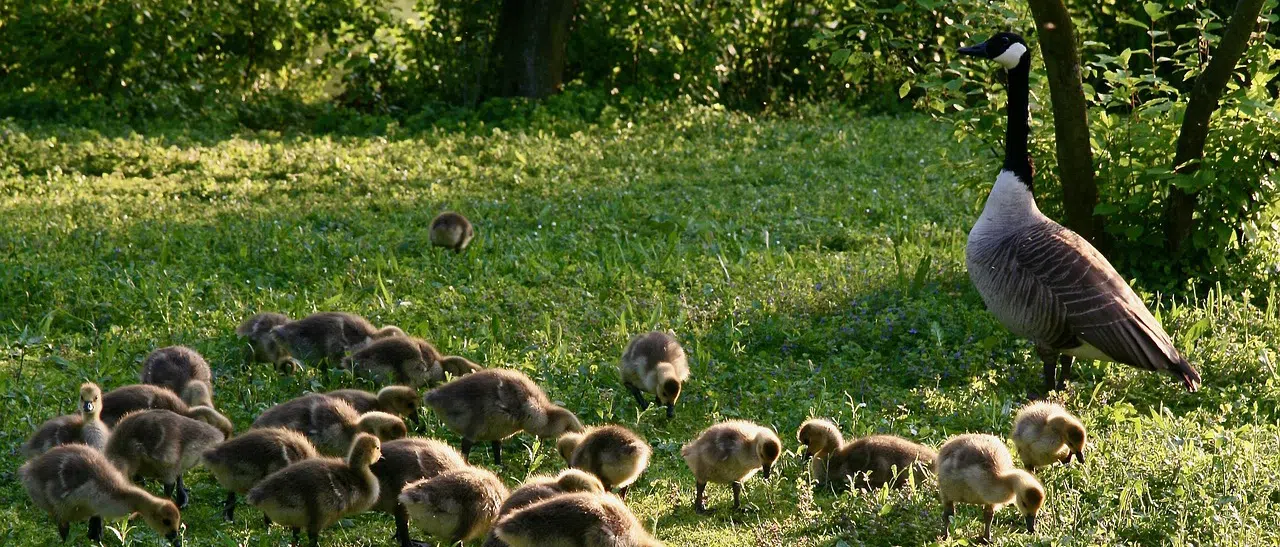
Canada geese may return from their southern winter home as early as March. Once geese establish a nest, removal becomes significantly more difficult due to regulations and aggressive behaviour. Early prevention is the most effective and cost-efficient approach. Contact Hawkeye Bird & Animal Control now.
-
How to Remove Geese From Your Property
Are you tired of geese taking over your property, leaving behind a mess and causing damage? Many property owners face this challenge, especially during geese migration seasons.
Let’s dive into some practical solutions on how to remove geese from your property, ensuring a peaceful and clean outdoor space.
Why Do Geese Come to My Property?
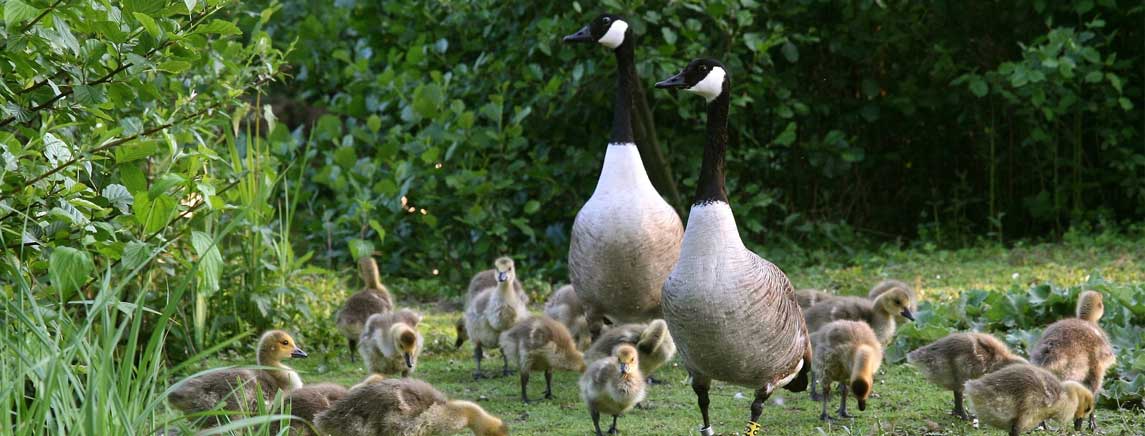
Geese are attracted to well-manicured lawns, water features, and abundant food sources. They prefer open, grassy areas where they can easily spot predators while grazing on the short grass. If your property has a pond or is near a water body, it automatically becomes twice as appealing to these birds.
Because geese are also creatures of habit, they’ll typically return to the same location year after year. This is due to their strong homing instinct, which makes them remember and revisit places, especially after a successful nesting season.
But even if you don’t think that geese in your space are a big deal, they can cause significant property damage by trampling and eating plants, and their droppings can create health hazards.
Geese may also become aggressive, especially during nesting season, posing a threat to pets and humans alike.
-
Is It Illegal to Destroy a Canada Goose Nest?
The breeding and nesting season for Canada Geese begins early each spring and families of geese are with us all summer long. And, with their stay come a host of issues - from mild annoyances to goose attacks, property damage, and the threat of diseases.
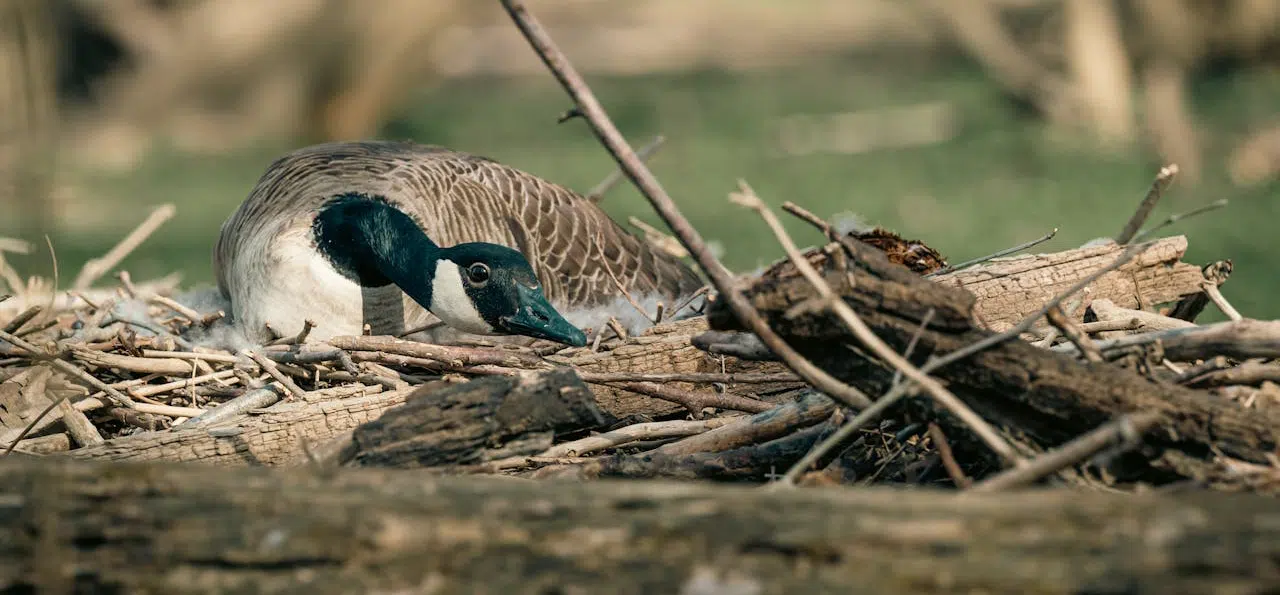
Many home and property owners desperately seek solutions to get rid of geese from residential and commercial properties. While destroying a goose nest before the goslings hatch is the most effective way to discourage geese from lingering until their fall migration AND reduce the probability of them returning to the same spot next year, there are some legal considerations.
So, Can You Legally Destroy a Goose Nest?
Yes - but ONLY with a permit issued by the Canadian Wildlife Service. Let's look at this in more detail...
Why You Can't Just Destroy a Goose Nest
The Migratory Birds Convention Act, 1994 (MBCA): The Primary Federal Law
The Migratory Birds Convention Act (MBCA) is a Canadian law, that was originally created in 1917 and updated to its current version in 1994. It is based on the Migratory Birds Convention (also known as the Migratory Bird Treaty) which was agreed upon and signed by Canada and the United States in 1916. The Act aims to protect migratory birds, their eggs, and nests from activities like hunting, trafficking, and commercialization without proper permits. It also allows for the creation of Migratory Bird Sanctuaries.
The Migratory Birds Convention Act prohibits the killing, disturbing, removing, owning or selling, or destruction of migratory birds, their nests, and their eggs without a permit. Canada Geese are migratory birds and covered by this Act.
Ontario's Fish and Wildlife Conservation Act, 1997 (and associated regulations)
The Fish and Wildlife Conservation Act from 1997 (FWCA) in Ontario regulates the hunting and trapping of wildlife, including geese. Although the FWCA doesn't specifically target geese, it does protect wildlife in general, including goose nests and eggs. Canada Geese, are also subject to the Migratory Birds Convention Act, 1994 (Canada) which provides additional protections.
All permits surrounding geese control, removal, and/or management are issued by the Canadian Wildlife Service, and they are generally granted only when there is a demonstrable need to protect public health, safety, or property. Permits are required for each method of goose control and each location, as deemed necessary. The Canadian Wildlife Service's prominent role is to protect wildlife and prevent unnecessary suffering.
Municipal By-Laws
Additionally, interference with geese and other wildlife may be further regulated by municipal by-laws. Virtually every city and town in Ontario has by-laws that prohibit the feeding of wildlife on public or private land. Under Toronto’s Animals By-law, feeding wildlife can earn you a fine of up to $365. By-laws such as this aim to help wildlife stay wild and out of harm's way.
What Are the Fines for Disturbing Canada Goose Nests Illegally?
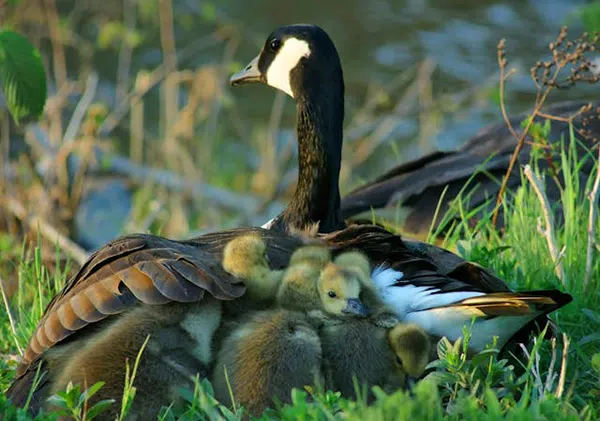 Penalties under the MBCA:
- Fines for unlawfully destroying, taking, or disturbing eggs
The set fine for any of these offences is $200 per egg; - Fines for unlawfully damaging, destroying, removing, or disturbing a nest
The set fine for for any of these offences is $200 per nest; - Fines for unlawfully buying or selling a migratory bird, nest, or egg
The set fine here is $300 per bird, nest, and egg; - Potential for more severe penalties for repeat offenses or large-scale destruction
In the past, the Ontario Court of Justice has handed down convictions and issued fines of $5000 or more.
What Else could Happen if You Destroy a Canada Goose Nest Illegally?
- You will face charges under provincial acts;
- In addition to fines, you will encounter court and legal costs;
- Ignorance of the law is not a defense.
Ethical and Practical Considerations:
Canada Geese are territorial and fiercely protective of nests and their offspring. The gander's primary role is to protect the female and the nest. As a result, both he and the female will aggressively defend their nest and may cause severe injuries in confrontations.
- Fines for unlawfully destroying, taking, or disturbing eggs
-
Ontarians are Warned to Avoid Contact with Wild Birds
The Middlesex-London Health Unitin Ontario is asking the public not to touch wild birds. This is in response to positive identification of several wild birds who succumbed to Avian Influenza in recent months.
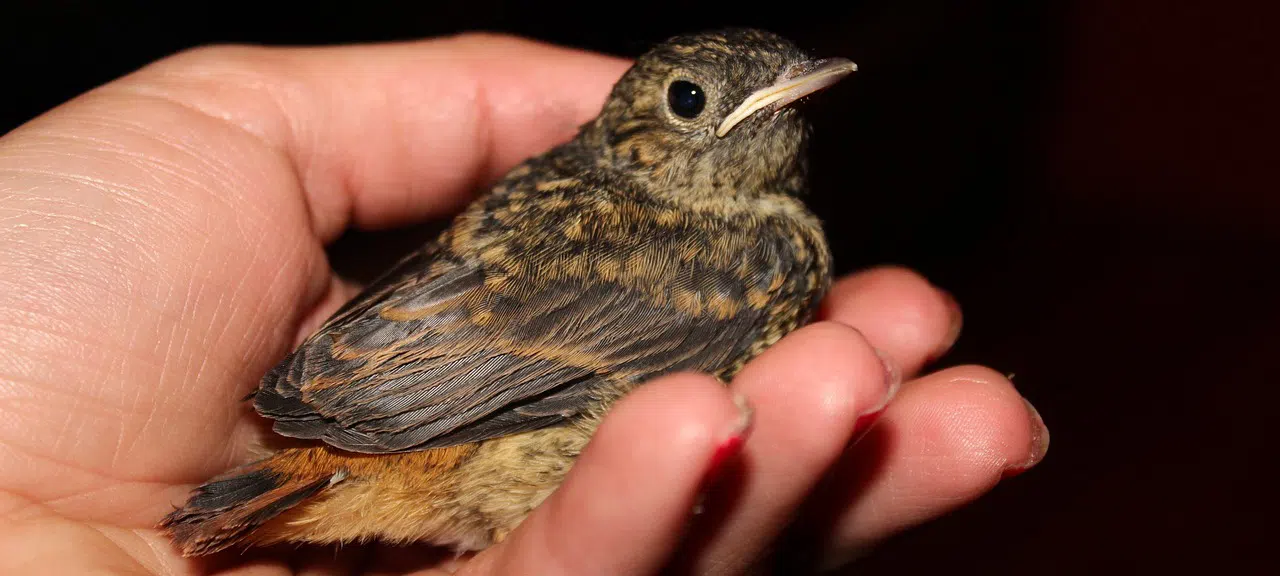
Canada Geese and Avian Flu
Recently, Ontario has seen an increase in the identification of birds killed by a deadly strain of avian flu known as H5NX. Three Canadian Geese recently found deceased in London and Strathroy tested positive for the highly pathogenic strain. In general, wild aquatic birds (water fowl) like geese, ducks, swans, and storks are most likely to harbor the disease - Avian influenza A viruses occur naturally in wild aquatic birds.
How is Avian Influenza Transmitted?
Transmission from birds to humans is very rare, and usually only occurs after close contact with infected birds or highly contaminated environments such as poultry farms or live animal markets. However, it is important to avoid contact with wild birds, particularly deceased ones. This goes for your pets as well.,
Contact with Infected Birds
Other birds can become infected through direct contact with the saliva, nasal secretions, or feces of birds that carry the virus or are symptomatic with avian influenza. Unfortunately, this includes backyard poultry such as chickens, quail, ducks, and turkeys.
Transmission through Bird Droppings
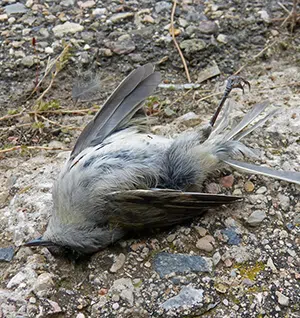 The trouble with the spread of Avian Flu is that infected birds can and will continue their normal activities and defecate in a number of locations on their flight path, potentially infecting several other birds (or, in rarer cases animals) along the way. And, an environment where many birds congregate can quickly become a hot bed for the spread of the virus.
Airborne Transmission of Avian Flu
Although much less common, viral air particles can also be inhaled. This usually happens when feathers or dried bird droppings are stirred up and become airborne. Cleaning and disinfecting an area with large amounts of bird dropping should always be left to professional Bird and Wildlife Operators to ensure safety and prevent the spread of contaminants.
Contact with Contaminated Surfaces
Bird Flu an be transmitted through contact with surfaces contaminated with the virus from infected birds - think cleaning an eavestrough.
Contact with Contaminated Food and Water
Birds, other wildlife, and pets can become infected through contact with contaminated food and water supplies
Who is at Risk of contracting Bird Flu?
Agricultural workers, particularly poultry and cattle farm workers and operators face the highest risk of coming in contact with Bird Flu. To a lesser extent, landfill workers may also be exposed - even though there are strict regulations when it comes to the disposal of dead birds.
Signs of Avian Influenza
Birds infected with Avian Influenza
Most people's instinct is to help when we see a struggling animal. If you observe any of the following symptoms in a wild bird, please resist the urge to help or comfort:
- Lack of energy or movement - Lethargy
- Nervousness, tremors, or lack of coordination
- Swelling around the head, neck, and eyes
- Coughing, gasping for air, or sneezing
- Diarrhea
- Sudden death
Avian Flu in Pets
Domestic Pets, can become infected and suffer from Avian Influenza. Cats in particular can experience severe illness leading to eventual death from infection with H5N1. Dogs can also contract the virus, although they usually exhibit mild clinical signs and low mortality compared to cats. Here are some of the symptoms to look for:
- Lethargy and Weakness: A noticeable lack of energy or not doing normal activities.
- Fever: Elevated body temperature, which may make your pet seem more sluggish or uncomfortable.
- Vomiting or Diarrhea: Gastrointestinal upset that is unusual for your pet
- What to do if you find a Dead Bird
-
Strategies To Manage Geese At Parks and Beaches
Why is it necessary to manage geese at Parks and Beaches?
- Geese at beaches and parks can lead to significant public health concerns.
- The presence of geese can interfere with recreational activities and enjoyment of the beaches and parks they frequent.
- Geese can cause environmental degradation.
Geese can be a significant nuisance on beaches and at parks and get in the way of the public enjoying nature and public spaces. The lack of predators and the lush vegetation at parks and beaches makes for a very inviting place for geese to nest, rest, and feed. Goose droppings often carry diseases, as can their feathers. Aside from being unsightly and dangerously slippery, this can lead to public health concerns at beaches and. Goose droppings in the water can contaminate the water and surrounding soil or sand with E coli and other infectious agents, making them hazardous to swimmers or young children accidentally ingesting contaminated water. Nesting geese can also be very aggressive and cause considerable injury to humans in an effort to protect their eggs or young hatchlings.
Environmental degradation is another concern; geese munching on young shoots and grasses leads to a diminished root system, dead or stunted vegetation, and eventual soil erosion. Healthy root systems protect against erosion from wind and water.
Management and Mitigation of Geese
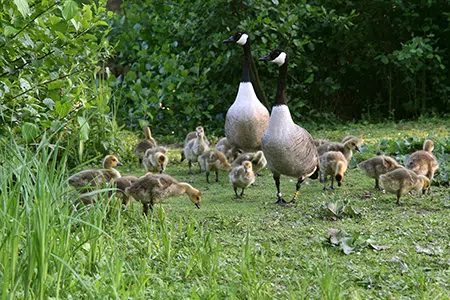 Geese are federally protected wildlife in Canada and the US, and as such, a permit is necessary for management and mitigation.
A primary strategy is to alter the environment to make it less attractive to geese. Using landscape barriers or low fences can deter geese from coming into an area. Planting unpalatable vegetation or using nontoxic repellants on the vegetation can help keep geese away. Allowing grass to grow a little longer (geese prefer short grass for better visibility and ease of movement), will also slow geese from setting up camp.
Visual and auditory deterrents can be used, but are less effective as the geese, over time, become habituated to it.
Dog Patrols are the Most Effective Way of deterring Geese at Parks and on Beaches.
Trained dogs can chase the birds without harming them. Regular patrols are necessary as geese will keep coming back, especially with any water in the area. Dogs are also great to prevent nesting; having dogs in the area regularly will discourage geese from laying eggs.
Geese Capture and relocation from Parks and Beaches
Capture and relocation is also a great way to control goose populations, but requires significant time and effort. Relocation requires permission of the landowners to where the geese will be moved to, as well as a permit from the wildlife service. Regulated hunting - also with a permit from the wildlife service - can help control goose populations where it is considered safe and legal. This approach must be carefully managed by professionals to ensure it is done safely, ethically and sustainably.
Do Not Feed Geese at Parks and on Beaches
Educating the public is of paramount importance. Don't Feed The Birds! Consuming human food is not healthy for geese and will almost certainly guarantee them hanging around and/or returning. If not fed the proper nutrition, geese can become ill and pass illness to other wildlife. If food is not easily available, geese are much less likely to be attracted to areas where humans are. Anything to reduce human and goose conflict is good for humans and geese. Some municipalities have introduced bylaws making it a finable offence to feed any wildlife in public or private spaces.
Geese management and mitigation requires ongoing monitoring of goose activity and for the management techniques to allow for adjustments as needed. Through diligent application of these methods and ongoing surveillance, it is possible to effectively maintain the enjoyment of the community’s access to beaches and parks in their municipalities. Humans can coexist peacefully with nature and wildlife in all its glory.
-
The Difference Between Goose Control And Goose Removal
Canada Geese, while a familiar and somewhat nostalgic sight, do cause a fair bit of headache and damage in urban, suburban, and rural areas. If you are seeking solutions to mitigate geese, we should talk about whether you want to control geese or remove them. Join us as we explore the diffrences.
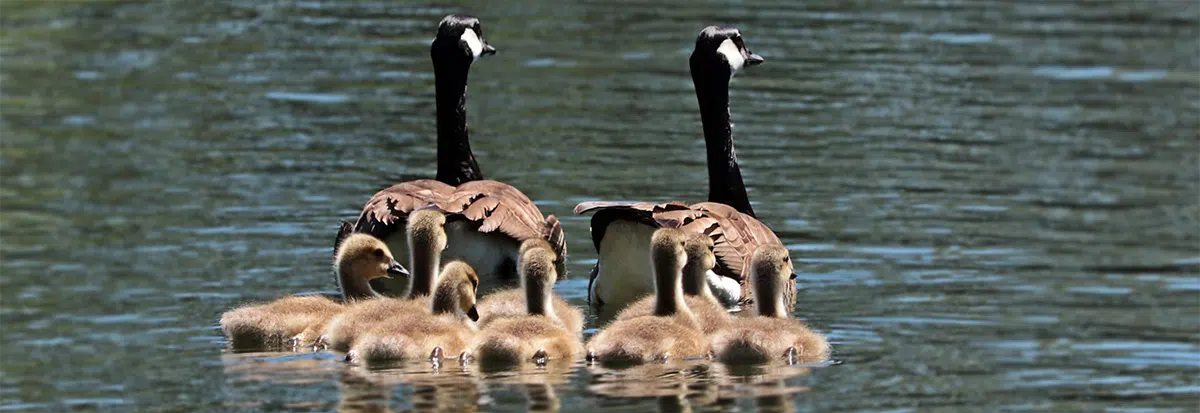
Deciding Between Goose Control and Goose Removal
- Goose Control and Goose Removal are terms that are sometimes used interchangeably, but they are actually two very different approaches to wildlife management.
- Knowing the difference can help you choose the right strategy for your goose related problems.
- Do you want to manage the population of geese on your property or remove them altogether?
- Are the geese an occasional nuisance during migration or for a few weeks in the summer months? OR - Do the geese cause significant damage to your property or pose a health risk to people or pets?
- Both goose control and goose removal require permits from the government. The Canada Goose is protected under the Migratory Bird Treaty Act, which is an agreement between many countries around the world.
What IsThe Difference Between Goose Control And Goose Removal?
The difference is the objective. Do you want to manage the population (the numbers) of geese or do you want all of them to move on to somewhere else? Geese Control attempts to limit or maintain the number of geese while Geese Removal moves the flock off of a property. Let's look at how this can be accomplished:
-
Which Is the Best Bird of Prey for Goose Control?
Canada Geese are increasingly becoming a nuisance across urban and suburban properties. Common goose complaints include excessive droppings, aggressive behaviour, and nesting in unsafe or high-traffic areas.
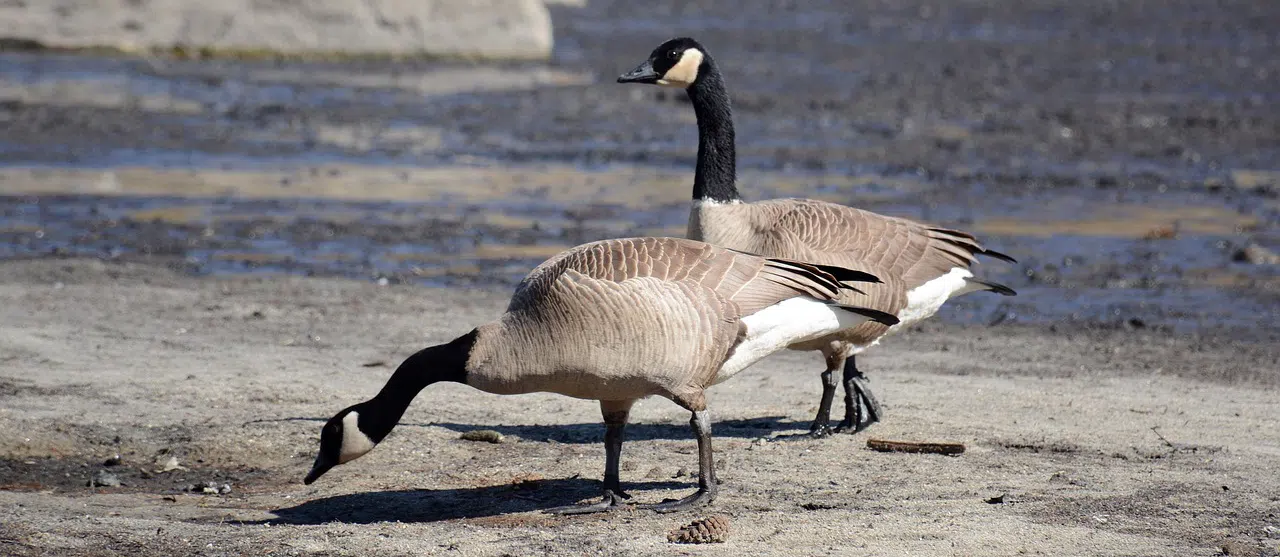
Canada geese are a common sight on rooftops of commercial buildings, in public parks, industrial yards, municipal green spaces, Toronto's waterfront, and on the shores of virtually all of Ontario's many lakes. So, what can be done about that? Let's explore why falconry for goose control(a humane, non-lethal method) is so much more successful than repellents and/or visual or sound-based deterrents.
Why Geese Are So Hard to Deter
First, we need to understand that geese are highly intelligent and social creatures that come with incredible homing instincts. When we hear homing instinct, we think of pigeons or doves... but geese are right up there. They learn and remember a migration journey thousands of miles long, from their spring nesting grounds to their winter home.
- Site Fidelity
Geese return to the same nesting site each year, as long as it is safe and can sustain a growing family; - Territorial Behaviour
Canada geese are highly territorial during nesting season, often causing conflict between bird and human; - Sheer Numbers
Geese travel and often nest in large flocks, creating widespread disruption; - Intelligence
Traditional goose deterrents lose effectiveness over time as geese quickly realize that they represent no physical danger (e.g., decoys, or noise, sprays).
How Birds of Prey Work as Natural Goose Deterrents
Birds of prey are natural predators and geese instinctively know that. Falconry for goose control takes advantage of the natural and inherent predator/prey relationship.
- Birds of prey tap into geese’s natural fear response;
- The presence of a predator (especially large and dominant birds like eagles) triggers immediate evacuation behaviour;
- No harm is done – it’s psychological intimidation, not physical capture;
- Repeated exposure builds a “conditioned avoidance response” in geese.
Birds of Prey Commonly Used for Bird Control
- Falcons
- Used in large open spaces, like landfills;
Used for gulls and ducks; - Not ideal for large, aggressive geese
- Used in large open spaces, like landfills;
- Hawks (e.g., Harris’s Hawk)
- Agile and able to navigate urban landscape, vineyards, and airport hangars;
- Commonly used in pest bird management;
- Not suitable for geese
- Eagles (e.g., Bald Eagles)
- Strong presence and size
- Best suited for intimidating and dispersing geese
- Particularly effective in open areas like airports, large lawns, rooftops, and parks
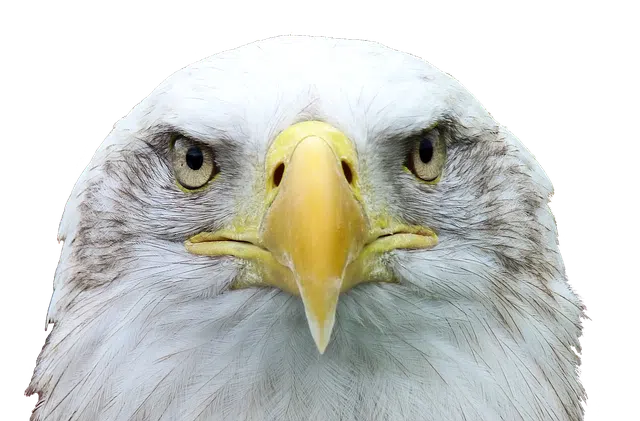
Why Eagles Are the Best Bird of Prey for Goose Control
- Intimidation Factor
Eagles are a top predator, able to take down a goose (although that is not the objective). Geese instinctively fear eagles; - Visibility
Eagles are large, dark raptors visible from long distances and instantly recognizable; - Versatility
Eagles are suited to work in open spaces (parks, rooftops, or runways) and complex environments; - Proven Effectiveness
Repeated eagle deployments create lasting avoidance behavior by Canada geese; - Low Disruption
Falconry using eagles produces no noise or mess; eagles blend into the environment and are safe around the public when flown by an experienced falconer.
- Site Fidelity
-
Why Goose Control Is Crucial for Airport Safety in the GTA
While Canada geese are usually considered more of a nuisance, around airports a flock of geese can have catastrophic consequences. The one place you never want to encounter birds is around an aircraft. Bird Control around airports poses specific challenges and requires expertise beyond the norm.

According to Transport Canada, the majority of bird strike incidents occur within the airport environment during the takeoff, climb, final approach, and landing phases of flight. Collisions with birds are a severe threat to the safety of the aviation industry. Human lives may be lost due to collisions and there is a constant threat of a major crash as a result of bird strikes. In addition, bird strikes cost airline companies as well as the military millions of dollars each year.
Canada Geese are a particularly large threat around GTA airports because of their size (no pun intended). A collision with such a large bird causes severe engine damage, broken windshields (or windscreens), and more.
Controlling and managing geese at airports is incredibly important to preserve human life and avoid damages and delays.
The Role of Nearby Structures in Attracting Geese to Airports
Green Spaces
Airports all over the world have plenty of grassy areas next to runways and taxiways. The grass is usually kept cut short - absolutely perfect for Canada geese.
Food Availability and The Landfill Connection
Besides the usual presence of human food leftovers on the ground or in unsecured trash cans, there is also the attraction of landfills which are often located near airports. Landfills attract geese and other pest birds as well as other wildlife.
Water Sources
Ontario's proximity to Lake Ontario as well as countless rivers, creeks and man-made bodies of water, are a haven for birds and other wildlife. Billy Bishop Toronto City Airport is surrounded by water and park space and a large number of resident geese. Hotels and golf courses around Pearson International Airport also attract a fair number of Canada geese.
Why Does This Matter to Airports?
Geese frequently travel between feeding and nesting areas, crossing flight paths and increasing the risk of bird strikes. Airport authorities should work with local businesses and municipalities to implement bird deterrent systems and strategies beyond airport property.
Why Geese Are Particularly Dangerous Near GTA Airports
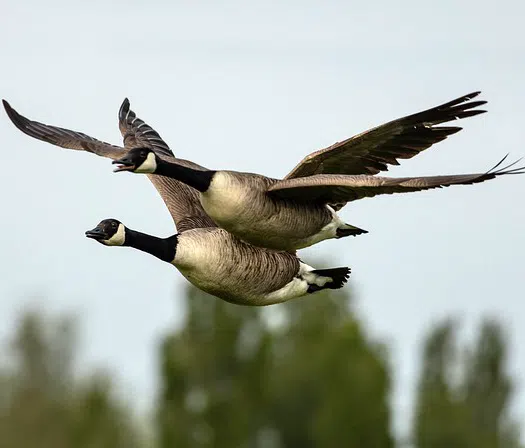 Size and Weight
Canada Geese can have a wing span of almost 70inches and weigh up to 14lbs. A midair collision with even just one bird of this size often has dire consequences.- Number of Geese
Because Geese live and travel in flocks - often very large flocks - there is a high risk of bird strikes involving more than one bird. - Flight Paths and Altitude
Canada Geese generally fly low enough to intersect with departing or arriving aircraft. There is little recourse for airline pilots, short of a rejected take-off or go-around procedure on approach. - Attractive Habitats
As mentioned earlier, expansive grassy areas and proximity to water often attracts Canada Geese to Toronto's airports. - Seasonal Migration
Another layer of complexity is added during the fall and spring migration. Hundreds of Canada geese set out and travel together, increasing the likelihood of a mid-air disaster.
Effective Humane Geese Control Strategies for Airports
Because of airports being such busy and highly sensitive environments, all goose control solutions require precise planning and execution. Airport managers may forbid one or require another. Here are some of the geese removal techniques used around airports:
- Birds of Prey (Falconry)
Falconry using birds of prey (eagles) is highly effective as a goose control method in Toronto, both near airfields and in enclosed environments such as hangars. Making use of the natural predator/prey relationship, falconry offers a completely non-lethal and environmentally friendly solution to geese near airports. - Hazing with Dogs
Trained dogs chase geese without harming them. Especially in conjunction or as a follow-up method to falconry, dogs can have a great impact conveying an unstable and unsafe environment for geese. Having dogs regularly patrol the grounds is also a good idea. - Pyrotechnics
The use of pyrotechnics requires expert aim and timing; shots need to be fired during a 30-60 second window between take-offs and landings. Some airports actually require a bird control company to make available 10,000 rounds or more in their effort to displace geese. Pyrotechnics are discharged from 40mm or 12 gauge shot guns in front of geese, so they can see a projectile coming at them. To be clear, the shots are not fired at the birds directly, but at the ground in front of them. - Lasers
Operating a laser at an airport is a delicate undertaking. It requires a highly skilled laser operator who is familiar with necessary limitations around aviation, and the permission of airport authorities. - Remote Control Vehicles (ROVs)
Remote control boats are used in larger bodies of water where dogs are ineffective. - Habitat Modification
Most modifications will be made to ponds and other water features. Methods from pond netting or pond wiring to planting shrubs or erecting low fences are designed to deter or prohibit geese from landing on water and seeking refuge from predators. - Drones
Geese can also be chased with drones - this happens on water, not on land. Again, geese seek bodies of water to escape from danger. Making surrounding lakes or ponds not safe, will drive the birds away. - Nest Removal and Relocation
If any nests are spotted on airport property, they, of course, need to be removed immediately. If geese are still plaguing daily operations by mid June - July, geese can be rounded up during the time they are rendered flightless (molting) and relocated.
-
Why Late Summer Is a Good Time for Goose Control
It is a common assumption that goose problems are over once goslings are grown and adult geese regain flight after their summer moulting season. That's why many property owners assume their goose problems are over once nesting season ends. However, late summer goose control should actually be focused on planning, assessment, and long-term management rather than simply reacting to immediate problems.

Yes, goose behaviour begins changing again as the birds prepare for seasonal movements, but property managers who dismiss geese now often miss an important strategic opportunity.