CA
CA US
US





Canada goose nest removal
-
All About Molting Geese
Have you heard about molting geese? What does that mean? Join us as we explore why and when geese molt...
What is Molting?
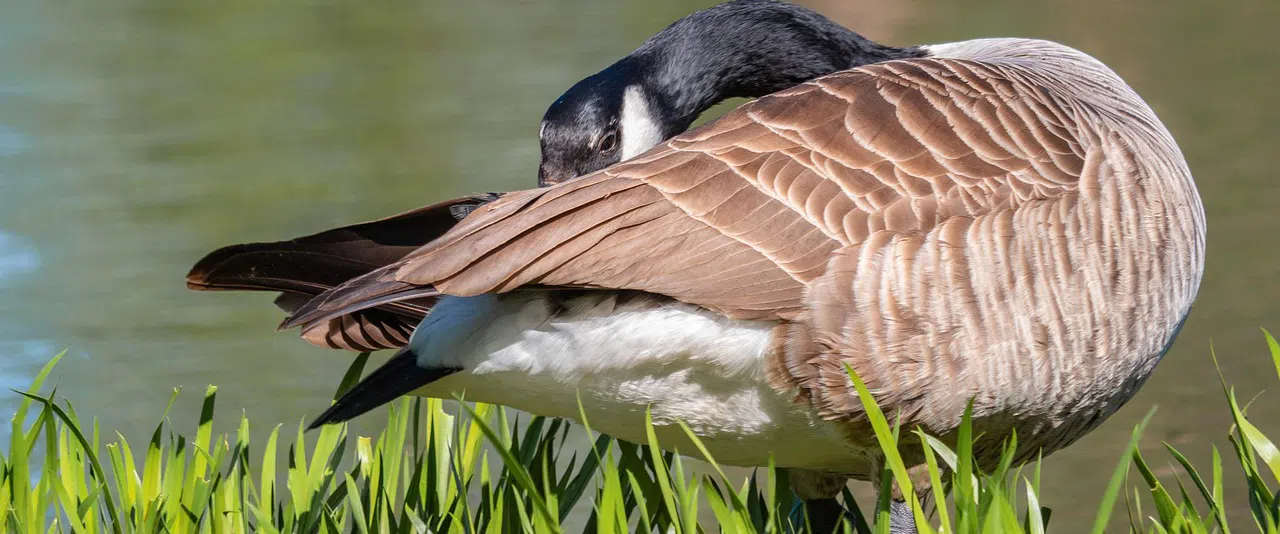
Moltingrefers to geese dropping their feathers during the month of June and early July. With nesting finished and little ones hatched, the birds will search for their summer homes and a safe environment for molting and raising their young.
Do All Geese Molt?
Yes, all of the geese species - and there are as many as twenty - molt their primary, or flight feathers in the summer. In fact, not just geese but all waterfowl do. This affords the birds a full, brand-new set of flight feathers for their long migration journey. While they are molting, Canada geese are grounded and cannot fly; this is in contrast to ducks. Yearlings will go through the molting process shortly after their first birthday.
Why Do Geese Molt?
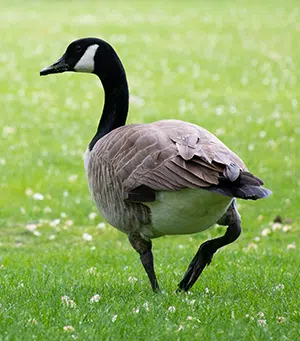 Molting usually starts in late June or early July and aids with regulating their body temperature in the the summer heat. Molting helps to cool the goose by increasing the area of bare skin.
- Molting also helps with getting rid of damaged or worn flight feathers. By shedding their old feathers, geese can make way for new, healthy, dense feathers that will allow for migration and also help them stay warm once temperatures drop.
The Molt Migration
Molting is physically taxing, and requires the birds to be flightless for 3 to 4 weeks while shedding their primary feathers. Because the molt is such a demanding process, many of the birds will fly a long ways to find the ideal location to safely spend the summer. Geese with young offspring will stay at their breeding grounds to molt while those who did not breed will have to leave.
Who participates in the Molt Migration?
The molt migration is all about leveraging resources. Those who have a half dozen tiny adorable goslings following them around, will spend this time remaining at their breeding sites. But those sites likely cannot sustain all of the geese that are there in early spring. Geese often don't find a mate and breed until they are between 2 to 4 years old, so those youngsters need to move on and leave whatever food is there for the ones rearing their offspring. Those who did breed but had a failed nest also leave and join Pre-Molt Groups.
What are Pre-Molt Groups
Adult geese that failed to hatch eggs, geese that have not yet found a mate (or lost their mate), or geese too young to breed (last year’s goslings) will flock up in what is referred to as “pre-molt groups”. With no babies to raise and no territory or nests to defend, these geese will form their own little (or large!) flocks. They will be looking for abundant feeding grounds as they make their way farther north.
Properties that had no geese issues all throughout spring may suddenly become inundated with large groups of geese and the mess they leave behind. Not only are we talking the usual droppings, but feathers - LOTS of feathers - as well.
Where do the Birds migrate to?
The molt is all about resources, so these geese go to where they can find lots of nutrition and safety - and that is often north. Remember, they cannot fly away during this time. Rivers, streams, any bodies of water provide a quick escape route from predators, if necessary. In fact, streams also double as a sort of water highway to travel on - if resources dwindle in one spot, they can move on to the next. Before fall they all will head back to their original spring destination to reunite with the main flock. This isn't so much about the flock or social structure, but rather about the fall migration route. The group that took part in the molt migration does not know the way south from where they are at. Hence, they'll join the ones who stayed put at the nesting site and they will all set out for their winter destination together, followint the tried and trusted path that brought them here.
Why is the Molt significant in terms of Geese Control and Removal?
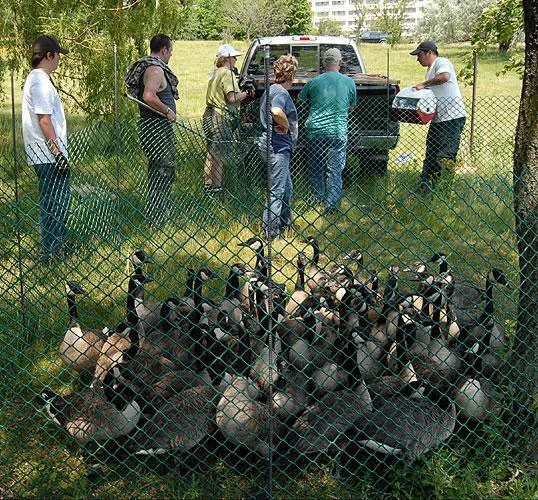 During this time when geese cannot fly, they are vulnerable. Using harassment techniques such as chasing with dogs or flying birds of prey seems a little unfair and often isn't terribly successful - since they cannot take off and fly away. Especially the pre-molt groups can be rather stubborn when asked to leave a perfectly good spot.
 But, this is the perfect time for translocation. This involves rounding them up and physically moving them to a more advantageous or appropriate area, if they are uninvited guests on your land, or in public parks, on beaches or golf courses, and so on. While they are grounded they can be captured, corralled and relocated to another area south west of you, approximately 300-400 kms away and along their natural winter migration route.
-
Goose Control During Nesting Season
Because Canada goose behaviour changes significantly during nesting season, springtime deserves its own goose management strategy. Many property owners find that small goose issues can become major property management issues if left unaddressed.
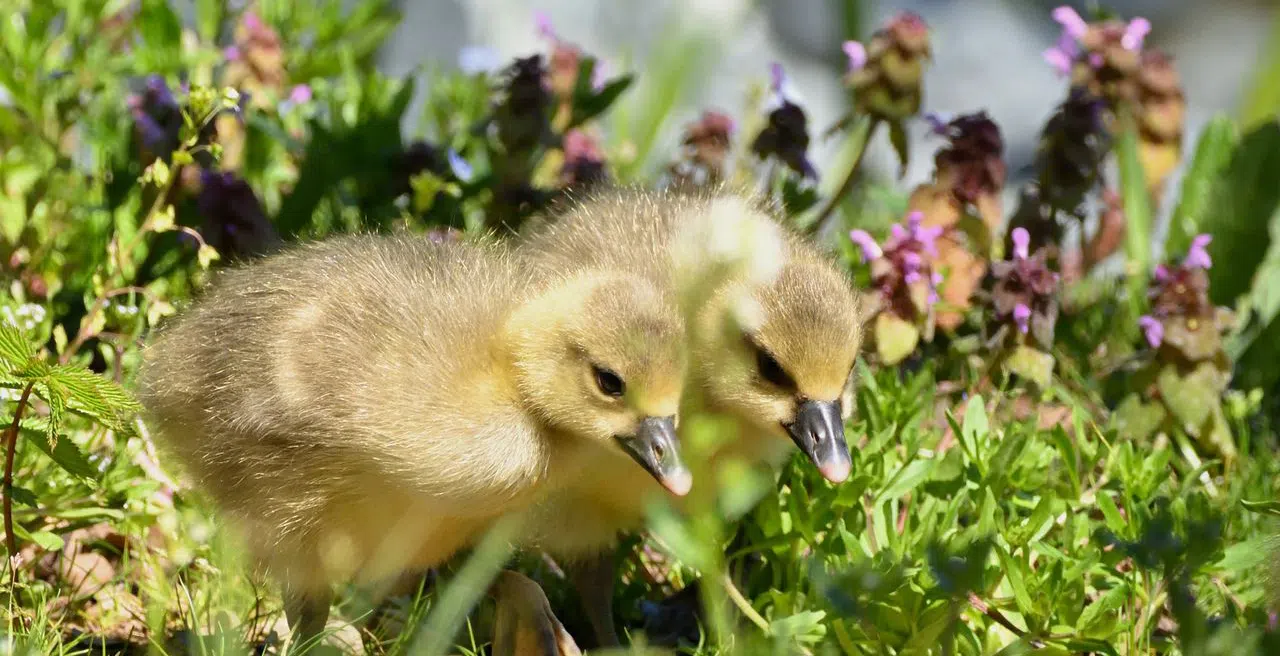
Geese become less willing to leave previously successful breeding sites during nesting season, a time when most complaints, conflicts, and aggressive encounters occur. This article explores why property owners should not wait until goslings appear before taking action, as well as how to remove nesting geese.
-
How to Get Rid of Geese from Lakefront Properties
Waterfront properties experience some of the most persistent Canada goose problems because, unlike other properties, lakefront sites naturally provide almost everything geese need. That can make it particularly difficult to get rid of geese on a waterfront property without addressing the conditions that attract them in the first place.

This article will explore what you can do to get rid of geese and discourage them from settling around your lakefront home and when it's time to call in professional help.
-
How to Remove Geese From Your Property
Are you tired of geese taking over your property, leaving behind a mess and causing damage? Many property owners face this challenge, especially during geese migration seasons.
Let’s dive into some practical solutions on how to remove geese from your property, ensuring a peaceful and clean outdoor space.
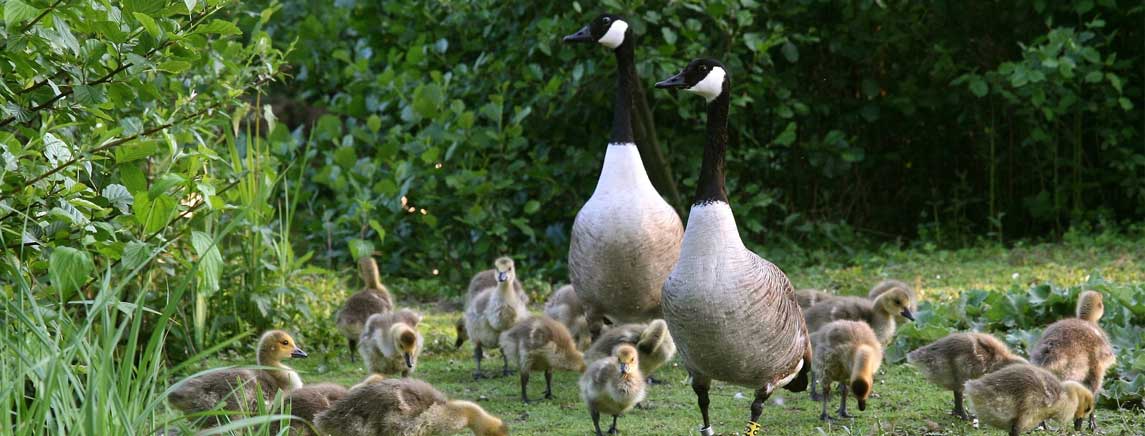
Why Do Geese Come to My Property?
Geese are attracted to well-manicured lawns, water features, and abundant food sources. They prefer open, grassy areas where they can easily spot predators while grazing on the short grass. If your property has a pond or is near a water body, it automatically becomes twice as appealing to these birds.
Because geese are also creatures of habit, they’ll typically return to the same location year after year. This is due to their strong homing instinct, which makes them remember and revisit places, especially after a successful nesting season.
But even if you don’t think that geese in your space are a big deal, they can cause significant property damage by trampling and eating plants, and their droppings can create health hazards.
Geese may also become aggressive, especially during nesting season, posing a threat to pets and humans alike.
-
Is It Illegal to Destroy a Canada Goose Nest?
The breeding and nesting season for Canada Geese begins early each spring and families of geese are with us all summer long. And, with their stay come a host of issues - from mild annoyances to goose attacks, property damage, and the threat of diseases.
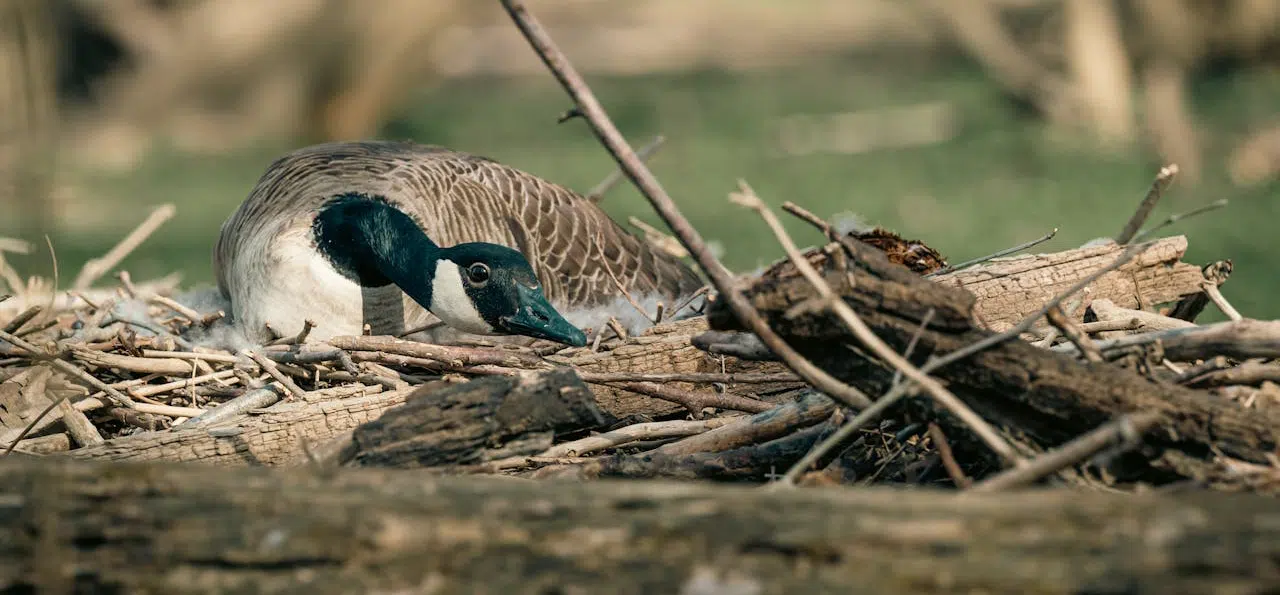
Many home and property owners desperately seek solutions to get rid of geese from residential and commercial properties. While destroying a goose nest before the goslings hatch is the most effective way to discourage geese from lingering until their fall migration AND reduce the probability of them returning to the same spot next year, there are some legal considerations.
So, Can You Legally Destroy a Goose Nest?
Yes - but ONLY with a permit issued by the Canadian Wildlife Service. Let's look at this in more detail...
Why You Can't Just Destroy a Goose Nest
The Migratory Birds Convention Act, 1994 (MBCA): The Primary Federal Law
The Migratory Birds Convention Act (MBCA) is a Canadian law, that was originally created in 1917 and updated to its current version in 1994. It is based on the Migratory Birds Convention (also known as the Migratory Bird Treaty) which was agreed upon and signed by Canada and the United States in 1916. The Act aims to protect migratory birds, their eggs, and nests from activities like hunting, trafficking, and commercialization without proper permits. It also allows for the creation of Migratory Bird Sanctuaries.
The Migratory Birds Convention Act prohibits the killing, disturbing, removing, owning or selling, or destruction of migratory birds, their nests, and their eggs without a permit. Canada Geese are migratory birds and covered by this Act.
Ontario's Fish and Wildlife Conservation Act, 1997 (and associated regulations)
The Fish and Wildlife Conservation Act from 1997 (FWCA) in Ontario regulates the hunting and trapping of wildlife, including geese. Although the FWCA doesn't specifically target geese, it does protect wildlife in general, including goose nests and eggs. Canada Geese, are also subject to the Migratory Birds Convention Act, 1994 (Canada) which provides additional protections.
All permits surrounding geese control, removal, and/or management are issued by the Canadian Wildlife Service, and they are generally granted only when there is a demonstrable need to protect public health, safety, or property. Permits are required for each method of goose control and each location, as deemed necessary. The Canadian Wildlife Service's prominent role is to protect wildlife and prevent unnecessary suffering.
Municipal By-Laws
Additionally, interference with geese and other wildlife may be further regulated by municipal by-laws. Virtually every city and town in Ontario has by-laws that prohibit the feeding of wildlife on public or private land. Under Toronto’s Animals By-law, feeding wildlife can earn you a fine of up to $365. By-laws such as this aim to help wildlife stay wild and out of harm's way.
What Are the Fines for Disturbing Canada Goose Nests Illegally?
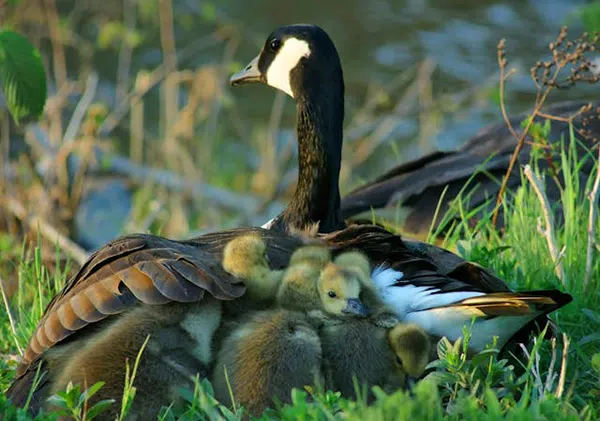 Penalties under the MBCA:
- Fines for unlawfully destroying, taking, or disturbing eggs
The set fine for any of these offences is $200 per egg; - Fines for unlawfully damaging, destroying, removing, or disturbing a nest
The set fine for for any of these offences is $200 per nest; - Fines for unlawfully buying or selling a migratory bird, nest, or egg
The set fine here is $300 per bird, nest, and egg; - Potential for more severe penalties for repeat offenses or large-scale destruction
In the past, the Ontario Court of Justice has handed down convictions and issued fines of $5000 or more.
What Else could Happen if You Destroy a Canada Goose Nest Illegally?
- You will face charges under provincial acts;
- In addition to fines, you will encounter court and legal costs;
- Ignorance of the law is not a defense.
Ethical and Practical Considerations:
Canada Geese are territorial and fiercely protective of nests and their offspring. The gander's primary role is to protect the female and the nest. As a result, both he and the female will aggressively defend their nest and may cause severe injuries in confrontations.
- Fines for unlawfully destroying, taking, or disturbing eggs