 CA
CA US
US

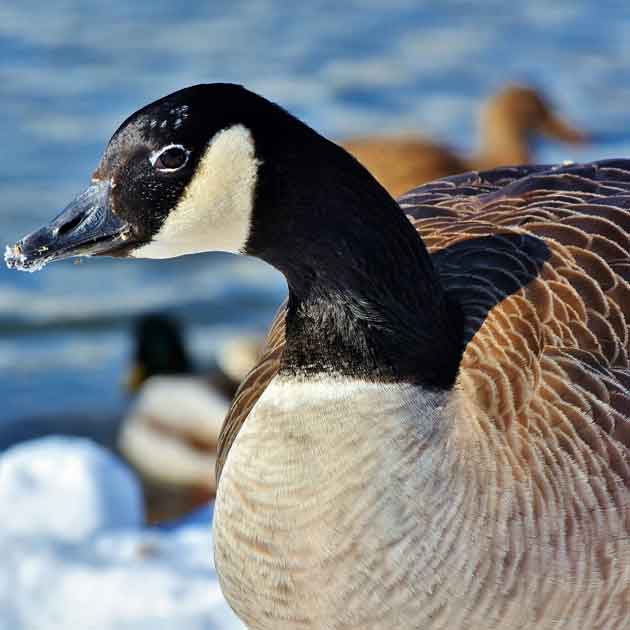





Because Canada goose behaviour changes significantly during nesting season, springtime deserves its own goose management strategy. Many property owners find that small goose issues can become major property management issues if left unaddressed.
Geese become less willing to leave previously successful breeding sites during nesting season, a time when most complaints, conflicts, and aggressive encounters occur. This article explores why property owners should not wait until goslings appear before taking action, as well as how to remove nesting geese.
Different Stages of Goose Nesting Season
Canada geese generally pair for life and live in large groups (flocks) with highly developed social structures. Female yearlings often stay with their own group, while young ganders will find a mate in other flocks or set out to establish their own after finding a mate.
Territory Selection and Pair Formation
- Newly gathered flocks of geese start claiming areas early.
- Larger flocks return to previously successful breeding sites.
- Areas near water and with wide open spaces are targeted the most.
Goose Nest Establishment and Egg Laying
- Increased site attachment
- Reduced movement
- Material collection for nest building
- More territorial behaviour
Gosling Season and Family Group Expansion
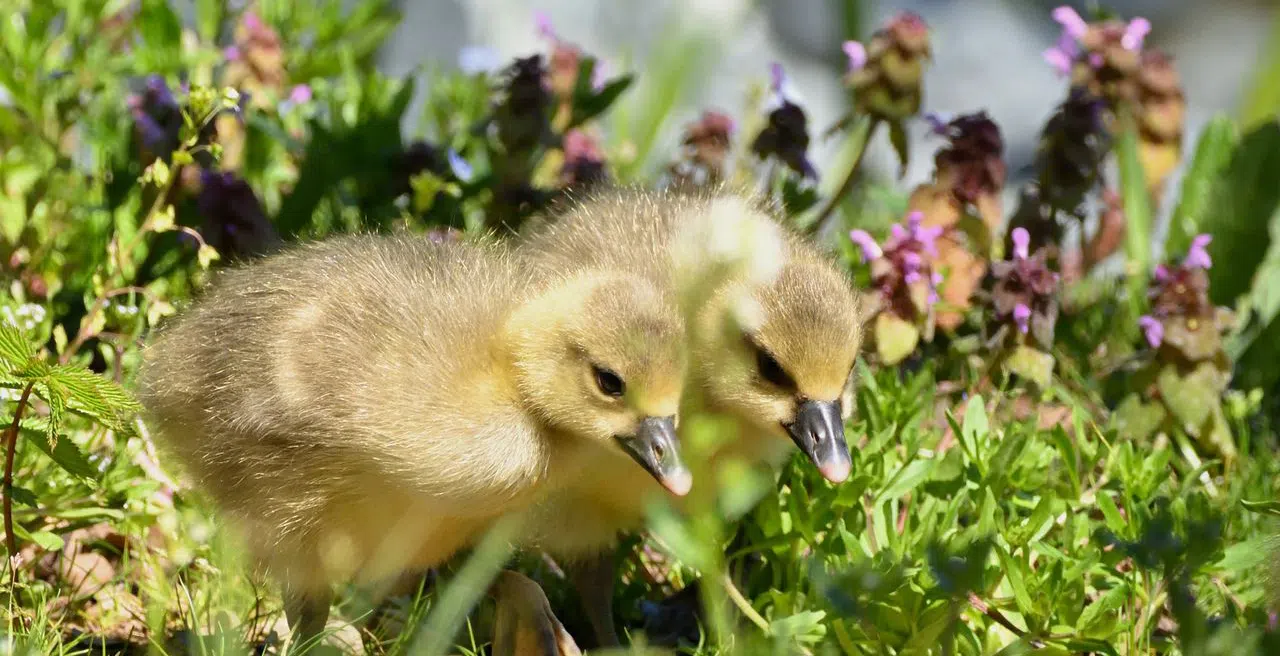
Goslings are fully mobile when hatched and the family will expand their excursions to forage as they grow. Fresh, green, short shoots of grass are the preferred snack at this time.
- Goose activity suddenly increases
- Feeding requirements grow
- Family groups are occupying and traveling across larger areas
How Goose Nesting Season Impacts Property Operations
Canada geese nesting in public spaces and on commercial properties leads to an influx of maintenance cost and public health concerns.
Increased Liability Risks During Goose Nesting Season
- Aggressive geese near public areas
- Visitor complaints
- Employee concerns
- Potential injury incidents
Increased Maintenance Costs During Nesting Season
- More goose droppings
- More cleanup is required
- Landscape impacts
- Resource allocation
Reduced Usability of Outdoor Spaces
- Athletic fields
- Parks
- Golf courses
- Walking paths
- Corporate campuses
- Common areas
Why Geese Become Difficult to Remove During Nesting Season
- The most important thing to consider when it comes to goose removal (at any time) is the need to obtain proper permits. The Canada goose is protected under the Migratory Bird Treaty Act and ALL work around geese requires permits from Canadian Wildlife Services before any control or removal efforts can commence.
- Once nesting has begun (the nest is complete and contains eggs), geese form an even stronger attachment to the site and will become protective and potentially aggressive.
Nesting geese on a property can become increasingly difficult to manage once eggs are present, making early intervention important. Ideally, control or removal measures should begin before nest completion.
It's best to consult a wildlife professional like Hawkeye Bird & Animal Control for goose removal during nesting season. Nest destruction may be the only viable option once geese have already settled down to nest.
At this point, you may be wondering, “Can I remove a goose nest myself?” Please, remember that you cannot destroy or move nests yourself without the appropriate permits. This is not a DIY job.
Why Goose Control is Not a DIY Job During Nesting Season
Removing a Canada goose nest or attempting to relocate a nesting pair can be difficult and potentially dangerous. Consider the following:
Avoid Direct Contact with Nesting Geese
- Aggressive defensive behaviour
- Injury risks
- Unpredictable reactions
Ineffective control measures and inconsistent pressure will not deter nesting Canada geese. Audio and visual deterrents yield little to no results, because geese quickly adapt and learn to ignore such efforts. If they are inclined to move at all, the birds will merely move to a different area on the property. The goal is not simply to get rid of geese temporarily, but to address the factors that attract them to the property.
Best Goose Control Strategies During Nesting Season
Canada goose control during nesting season, like all bird control, requires a well thought out strategy and long-term plan.
Falconry for Goose Control During Nesting Season
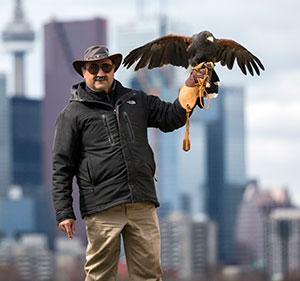
Natural predator pressure by birds of prey (eagles) signals to geese that the current or chosen breeding site is unsafe and not suitable for nesting. While falconry is an excellent goose control method throughout the year, it is especially effective before nests are established. Falconry is suitable for:
- Parks
- Sports fields
- Corporate campuses
- Industrial properties
- Agricultural properties
Trained Dogs for Goose Removal
Using trained dogs to chase geese is a strategy often employed in conjunction with falconry, further reiterating that the site is unpredictable and unsafe for nesting. Because dogs are natural ground predators, they encourage family groups to relocate and can be used on:
- Athletic fields
- Parks
- Large lawns
Habitat Modification to Make Nesting Areas Less Attractive
- Let grass grow longer (6-8 inches)
- Install visual barriers
- Plant shrubs
- Install low fencing
Geese prefer very short grass for grazing and open sightlines during nesting season. That's why obstructing views is an excellent strategy to discourage nesting.
Pond Management and Wiring for Goose Control
Geese use open water to escape ground predators, so limiting access between water and feeding areas can be effective.
- Place boulders or plant long grasses at the shoreline.
- Prevent geese from landing in or taking off from open water by installing pond wiring or netting applications.
Lasers, Pyrotechnics, and ROVs
Lasers, remotely operated boats, and pyrotechnics are used in conjunction with dogs and falconry, or when a body of water is too large for dogs to patrol. All of these methods complement other efforts to make the area appear unsafe and unpredictable - and therefore unsuitable to raise a family. They are used in low light conditions (between dusk and dawn), when geese feel most vulnerable and are most alert.
Risks of Ignoring Goose Problems During Nesting Season
For the Canada goose, every successful breeding cycle not only increases flock size but also cements the site its chosen as the preferred breeding territory in the future. Each pair of Canada geese can hatch as many as eleven goslings in one year.
- Growing goose populations
- Increased site loyalty
- More aggressive encounters
- More goose droppings
- Greater long-term management challenges
- Repeat seasonal issues
- Increased costs
Preparing for Future Canada Goose Nesting Seasons
Large properties require a long-term goose management plan. Even if nest destruction results in the flock moving this year, it will take several years before your property will no longer be on the migration route. Accomplishing that goal will require:
- Monitoring recurring hotspots
- Annual planning
- Habitat assessments
- Early-season inspections
- Integrated management strategies
Hawkeye’s Goose Control and Removal During Nesting Season
Hawkeye Bird & Animal Control is the #1 Canada goose control specialist in the Greater Toronto Area. Our expert technicians, falconers, and dog operators offer 35+ years of experience dealing with:
- Aggressive geese
- Nesting-related challenges
- Regulatory considerations
- Site-specific control programs
Contact Hawkeye today and get started on your geese management plan. Let's deal with the current problem but focus on the future.
Our highly skilled falconers and dog operators are available for Canada goose control all across Southern Ontario, including Toronto, Scarborough, Brampton, Vaughan, Markham, Ajax, Newmarket, Etobicoke, Oshawa, and Mississauga
