CA
CA US
US




Molting geese
-
All About Molting Geese
Have you heard about molting geese? What does that mean? Join us as we explore why and when geese molt...
What is Molting?
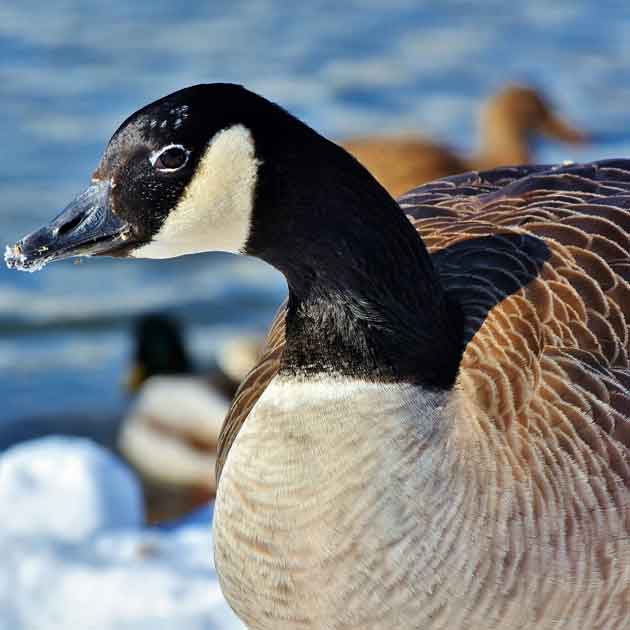
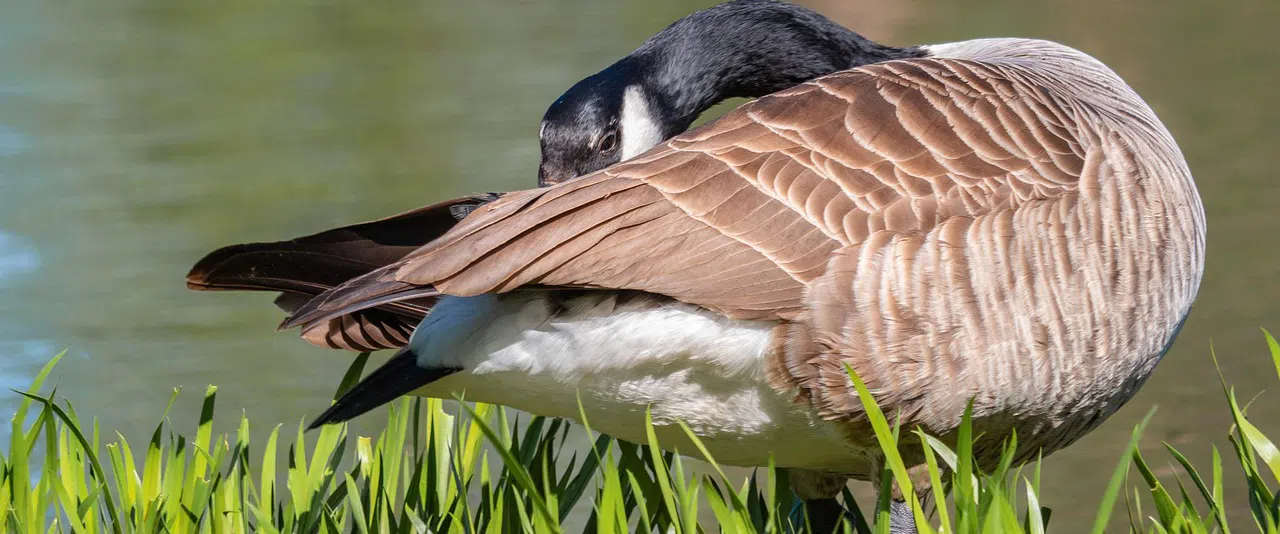
Moltingrefers to geese dropping their feathers during the month of June and early July. With nesting finished and little ones hatched, the birds will search for their summer homes and a safe environment for molting and raising their young.
Do All Geese Molt?
Yes, all of the geese species - and there are as many as twenty - molt their primary, or flight feathers in the summer. In fact, not just geese but all waterfowl do. This affords the birds a full, brand-new set of flight feathers for their long migration journey. While they are molting, Canada geese are grounded and cannot fly; this is in contrast to ducks. Yearlings will go through the molting process shortly after their first birthday.
Why Do Geese Molt?
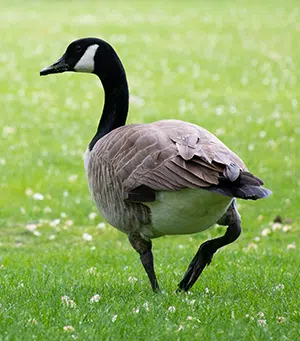 Molting usually starts in late June or early July and aids with regulating their body temperature in the the summer heat. Molting helps to cool the goose by increasing the area of bare skin.
- Molting also helps with getting rid of damaged or worn flight feathers. By shedding their old feathers, geese can make way for new, healthy, dense feathers that will allow for migration and also help them stay warm once temperatures drop.
The Molt Migration
Molting is physically taxing, and requires the birds to be flightless for 3 to 4 weeks while shedding their primary feathers. Because the molt is such a demanding process, many of the birds will fly a long ways to find the ideal location to safely spend the summer. Geese with young offspring will stay at their breeding grounds to molt while those who did not breed will have to leave.
Who participates in the Molt Migration?
The molt migration is all about leveraging resources. Those who have a half dozen tiny adorable goslings following them around, will spend this time remaining at their breeding sites. But those sites likely cannot sustain all of the geese that are there in early spring. Geese often don't find a mate and breed until they are between 2 to 4 years old, so those youngsters need to move on and leave whatever food is there for the ones rearing their offspring. Those who did breed but had a failed nest also leave and join Pre-Molt Groups.
What are Pre-Molt Groups
Adult geese that failed to hatch eggs, geese that have not yet found a mate (or lost their mate), or geese too young to breed (last year’s goslings) will flock up in what is referred to as “pre-molt groups”. With no babies to raise and no territory or nests to defend, these geese will form their own little (or large!) flocks. They will be looking for abundant feeding grounds as they make their way farther north.
Properties that had no geese issues all throughout spring may suddenly become inundated with large groups of geese and the mess they leave behind. Not only are we talking the usual droppings, but feathers - LOTS of feathers - as well.
Where do the Birds migrate to?
The molt is all about resources, so these geese go to where they can find lots of nutrition and safety - and that is often north. Remember, they cannot fly away during this time. Rivers, streams, any bodies of water provide a quick escape route from predators, if necessary. In fact, streams also double as a sort of water highway to travel on - if resources dwindle in one spot, they can move on to the next. Before fall they all will head back to their original spring destination to reunite with the main flock. This isn't so much about the flock or social structure, but rather about the fall migration route. The group that took part in the molt migration does not know the way south from where they are at. Hence, they'll join the ones who stayed put at the nesting site and they will all set out for their winter destination together, followint the tried and trusted path that brought them here.
Why is the Molt significant in terms of Geese Control and Removal?
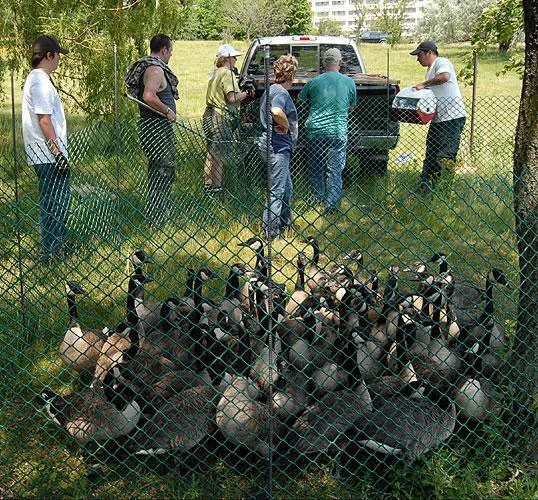 During this time when geese cannot fly, they are vulnerable. Using harassment techniques such as chasing with dogs or flying birds of prey seems a little unfair and often isn't terribly successful - since they cannot take off and fly away. Especially the pre-molt groups can be rather stubborn when asked to leave a perfectly good spot.
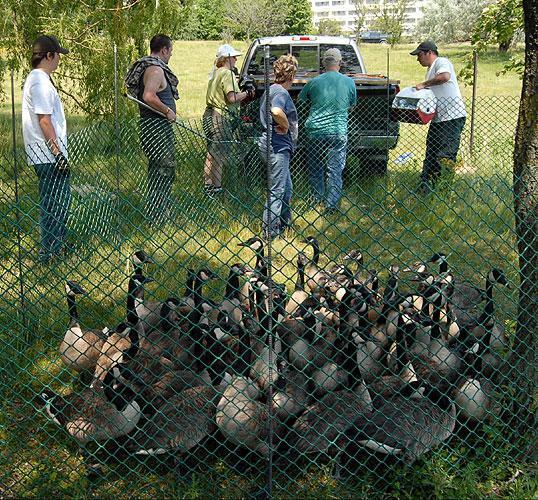
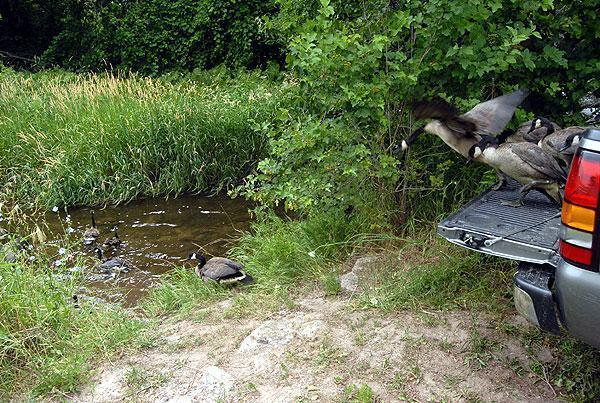
 But, this is the perfect time for translocation. This involves rounding them up and physically moving them to a more advantageous or appropriate area, if they are uninvited guests on your land, or in public parks, on beaches or golf courses, and so on. While they are grounded they can be captured, corralled and relocated to another area south west of you, approximately 300-400 kms away and along their natural winter migration route.
-
Geese Removal & Relocation
Please note: All Control Methods related to Geese are subject to permits issued by Environment Canada.
This is a brief overview of your options when dealing with Geese damage, along with advantages and disadvantages. We can either chase while geese are flying, remove nests and eggs when they are laying, or capture and relocate while they are molting.
Often a combination of methods proves most effective; contact us to dicuss a program customized to your needs and budget.Also see this article comparing geese nest removal and chemical oiling »
Geese Relocation
Molting geese can not fly and will be captured, corralled and relocated to another area south west of you, approximately 300-400 kms away.
Advantages:
- Historically no return for the rest of the season;
- Sometimes deters them from coming back the next year;
- Excellent results.
Disadvantages:
- More public & obvious;
- More costly, as it requires 1-2 days of labour with 3-4 staff members depending on number of Geese and transport over a day.
Chasing Geese:
Chase with Dogs & Birds of Prey or Pyrotechnics
Advantages:
- Dogs on the ground and Birds of Prey in the air;
- Effective and keeps geese off your property;
- Geese are extremely scared of Eagles and will disperse quickly.
Disadvantages:
- Repeated services necessary, therefore more costly.
Nest removal:
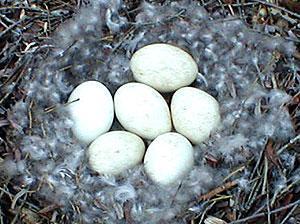
Involves walking to every nest on your property, remove all eggs and nest out.
Advantages:
- The entire population in your area will not increase;
- Upsets geese and encourages them to move to a new area and re-nest;
- Also means they will set up territory at this new site, as will their offspring.
Disadvantages:
NoneShooting:
Use of 12 gauge, air rifle, or .22 Caliber, where firearms are permitted. There will be a limit of birds shot on your permit.
Advantages:
- 100% effective; What you kill will not ever come back.
Disadvantages:
A Public Relations nightmare - You will be seen as a killer of Geese (Case in point The City of Mississauga) Mayor Hazel is probably our strongest mayor in Canada, but with over 93% approval rating even she felt the wrath of animal rights activists. Very difficult to keep quiet, especially in public areas. This should not be taken lightly as certain animal rights activists have become quite militant.Related Articles:
https://www.hawkeye.ca/blog/how-to-get-rid-of-molting-geese-summer-goose-control -
How to Get Rid of Molting Geese During Moulting Season (Summer Goose Control)
Moultinghappens during June and July and consists of Canada geese dropping and regrowing their primary flight feathers before fall migration. During this time the birds are grounded and unable to fly.
Why Do Geese moult?
All waterfowl moult during the summer, not just Canada geese.
- Moulting helps regulate their body temperature in the summer heat by increasing the area of bare skin.
- By shedding old or damaged feathers, geese can make way for new, healthy, dense feathers that will allow for migration and also help them stay warm once temperatures drop.
- Moulting helps regulate their body temperature in the summer heat by increasing the area of bare skin.
-
How to Remove Geese From Your Property
Are you tired of geese taking over your property, leaving behind a mess and causing damage? Many property owners face this challenge, especially during geese migration seasons.
Let’s dive into some practical solutions on how to remove geese from your property, ensuring a peaceful and clean outdoor space.
Why Do Geese Come to My Property?
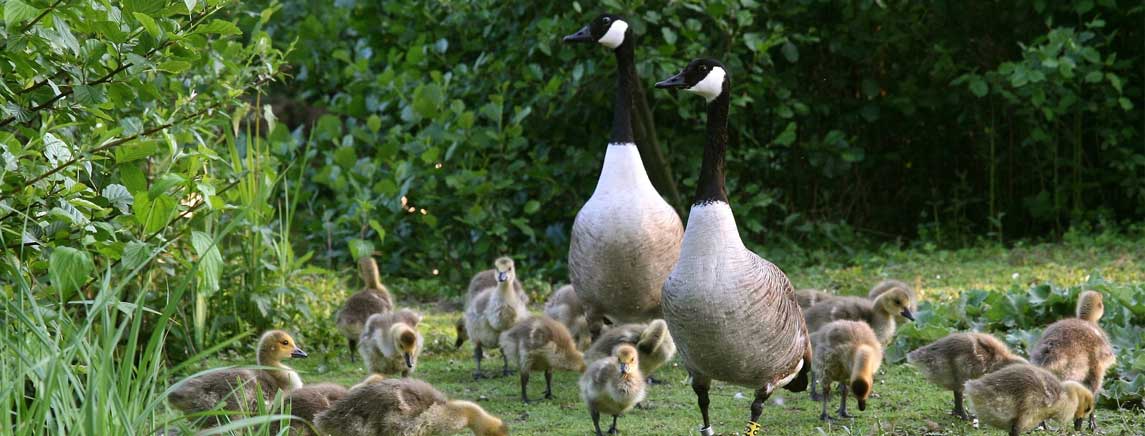
Geese are attracted to well-manicured lawns, water features, and abundant food sources. They prefer open, grassy areas where they can easily spot predators while grazing on the short grass. If your property has a pond or is near a water body, it automatically becomes twice as appealing to these birds.
Because geese are also creatures of habit, they’ll typically return to the same location year after year. This is due to their strong homing instinct, which makes them remember and revisit places, especially after a successful nesting season.
But even if you don’t think that geese in your space are a big deal, they can cause significant property damage by trampling and eating plants, and their droppings can create health hazards.
Geese may also become aggressive, especially during nesting season, posing a threat to pets and humans alike.