 CA
CA US
US

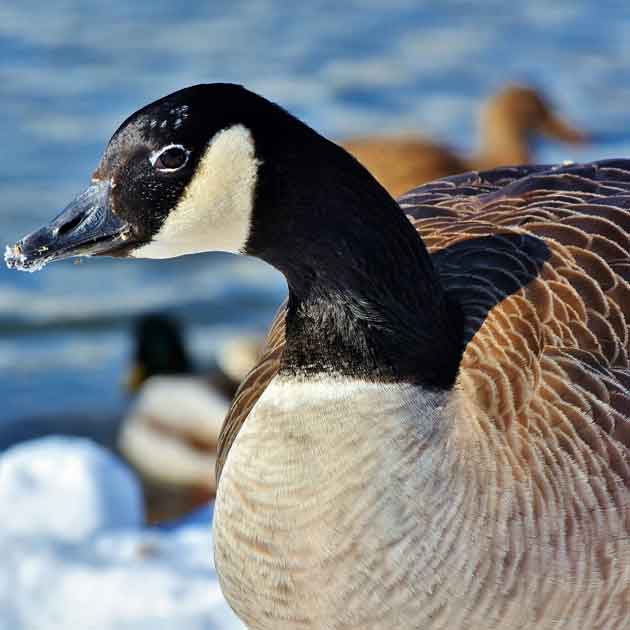



Moulting happens during June and July and consists of Canada geese dropping and regrowing their primary flight feathers before fall migration. During this time the birds are grounded and unable to fly.
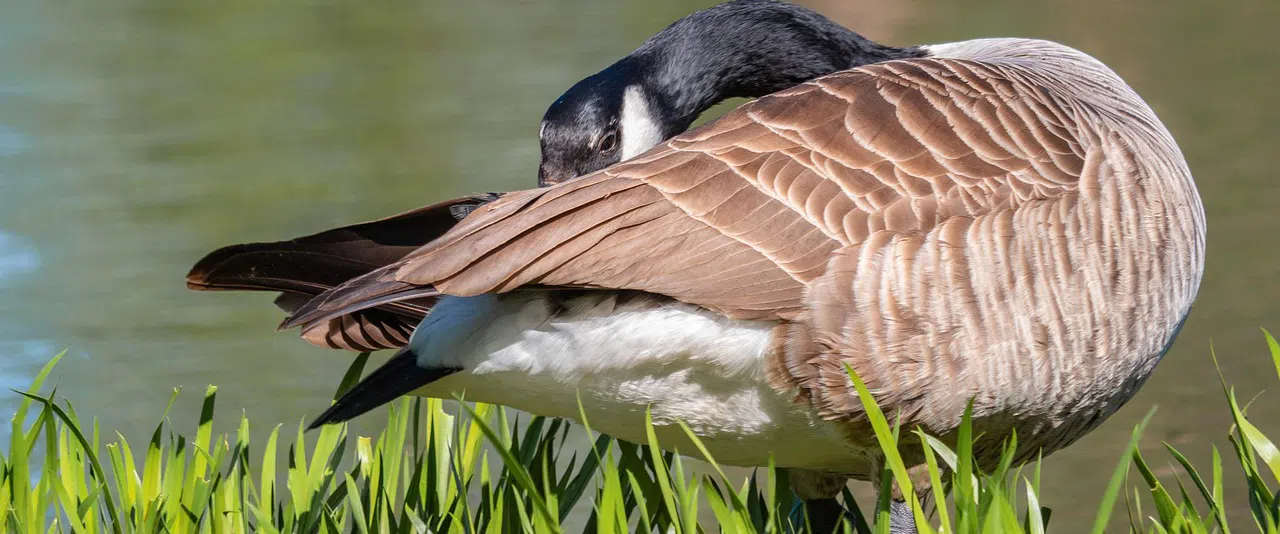
Why Do Geese moult?
All waterfowl moult during the summer, not just Canada geese.
- Moulting helps regulate their body temperature in the summer heat by increasing the area of bare skin.
- By shedding old or damaged feathers, geese can make way for new, healthy, dense feathers that will allow for migration and also help them stay warm once temperatures drop.
Why Moulting Birds Create Unique Goose Control Challenges
While regrowing their primary flight feathers, Canada geese are temporarily flightless and often gather in large groups for safety. This presents added challenges for property owners:
- Geese cannot easily leave the property
- Larger concentrations form
- Geese spend more time feeding
- Increased droppings accumulation
- Increased turf damage
- More pressure on waterfronts, sports fields, and parks
Because geese are unable to take flight and quickly leave a site, measures such as using falconry or trained dogs for goose control do not work during the moult.
Why Moulting Geese Stay in the Same Area for Weeks
- Reduced mobility
- Dependence on nearby food and water
- Formation of large groups for safety
Why Goose Moulting Season Can Become a Major Property Problem
- Increased Goose Droppings
Larger concentrations of geese require more frequent cleanup efforts. - Damage to Turf and Landscaped Areas
Heavy grazing pressure
Stress on maintained turf
Sports field impacts - Increased Use of Shorelines and Ponds
Goose congregation around water leads to shoreline degradation - Public Complaints and Operational Challenges
Parks
Sports fields
Golf courses
Hiking trails
Commercial properties
Residential communities
Why Early Goose Control Is Critical Before Moulting Begins
Goose prevention is always easier than removal and early-season goose management offers many more options to get rid of geese. Once Canada geese have entered the moulting cycle, there are only two options:
- Wait it out until geese leave on their own
During and after moulting season geese flock sixes may actually increase, as groups tend to gather before their migration journey. - Geese relocation
Translocation is costly and requires a huge amount of planning, permits, and human resources.
It is important to identify annual moulting locations that may turn into pre-migration gathering sites.
Best Ways to Get Rid of Moulting Geese
Using birds of prey or dogs to chase geese when they are vulnerable and unable to take off and fly away seems cruel and moot. You could potentially chase them to a neighbouring property but you might find that moulting geese aren't easily motivated to leave a perfectly suitable place with enough space and food to sustain a large flock.
Goose Relocation During moulting Season
Relocation (or translocation) is a humane way to get rid of geese that not only solves the problem for the current year but also lays the groundwork for future years. There are strict rules and requirements for goose relocation. These include:
- Permits
ALL work around Canada geese requires permits from the Canadian Wildlife Service. Canada geese are protected under the Migratory Bird Treaty Act. - Approval of the proposed new location
The site that geese are to be sent to must be pre-approved. It must be located 400-600km south west of the capture site and on their migration path. - New site requirements
The site must have adequate supplies of fresh water (i.e., pond, lake, river, stream, well with an automated pump) and food (i.e., short cropped/mowed grass) for the number of geese to be released. The birds must have access to shelter from direct sunlight (shade) at all times of the day. - Preparing the new site
The area must be enclosed by a six to ten foot high fence to prevent the flightless geese from leaving and ending up in traffic. Also, this helps keeps predators out and protect the geese. - Safe transport
A covered truck (usually covered by wire) containing food and water will transport the geese to their new location. - New site monitoring
The geese have to be observed and monitored in their new habitat to ensure their safety and well-being. If any geese escape and leave the designated area, it is the permit holders responsibility to recapture and return them.
As you can see, Canada goose relocation is not a small undertaking. It makes much more sense to intervene with goose control efforts BEFORE the moult period.
Summer Goose Control After Moulting Season
The period between completion of the moult and beginning of fall migration still allows for effective goose control options:
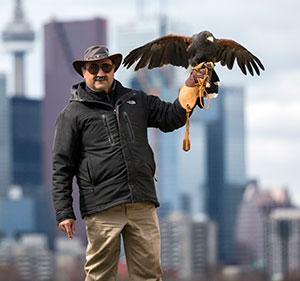
Falconry for Summer Goose Control
- Establish predator pressure with birds of prey
- Prevent property from becoming a future moulting site
- Falconry is a very effective component of a broader management program
Habitat Modification to Reduce Goose Activity
- Grow longer shoreline vegetation (i.e., ornamental grasses).
- Place large rocks or plant shrubs along shorelines.
- Install low fences to reduce visibility and the openness of the area.
Pond Management Strategies for Goose Removal
Ponds and streams become the centres of goose activity throughout the entire summer. Restricting access to open water can reduce the number of geese in the area. Here are some ideas:
- Pond wiring
- Shoreline management
- Limiting easy access routes through fencing
Special Considerations When Goslings Are Present
While goslings won't go through a moult until their second year of life, they are unable to fly until later in the summer. Their flight feathers develop over the course of the summer months, so while their parents are moulting, they are also not yet ready to take flight.
Building a Long-Term Summer Goose Control Program
Like all bird control efforts, keeping Canada geese at bay requires diligent observation and planning and multiple control strategies working hand-in-hand. This is a job for professionals.
- Identifying annual moulting hotspots
- Tracking recurring goose activity
- Shoreline improvements
- Habitat modifications
- Seasonal management planning
Hawkeye’s Moulting Goose Control and Removal Services
Hawkeye Bird & Animal Control has extensive experience with goose relocation or translocation. We are able to help you obtain the necessary permits and get you started on a long-term goose management plan that includes site-specific goose control solutions including falconry, trained dogs, lasers, ROVs, pyrotechnics, and more.
Our highly skilled falconers and dog operators are available for geese control all across Southern Ontario, including Toronto, Scarborough, Brampton, Vaughan, Markham, Ajax, Newmarket, Etobicoke, Oshawa, and Mississauga
Related Articles:
https://www.hawkeye.ca/blog/how-to-break-the-goose-nesting-cycle-and-stop-them-from-returning
https://www.hawkeye.ca/blog/how-the-rise-in-goslings-increases-goose-infestations-across-vaughan
