CA
 US



Bird Control
-
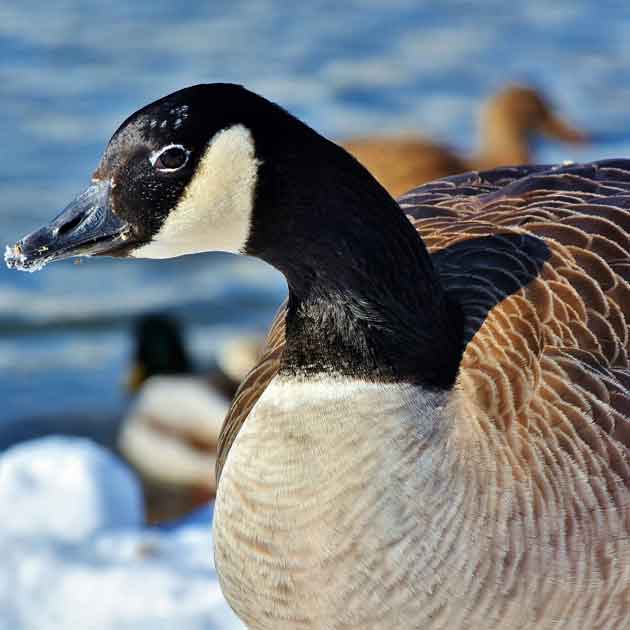
All About Molting Geese
Have you heard about molting geese? What does that mean? Join us as we explore why and when geese molt...
What is Molting?
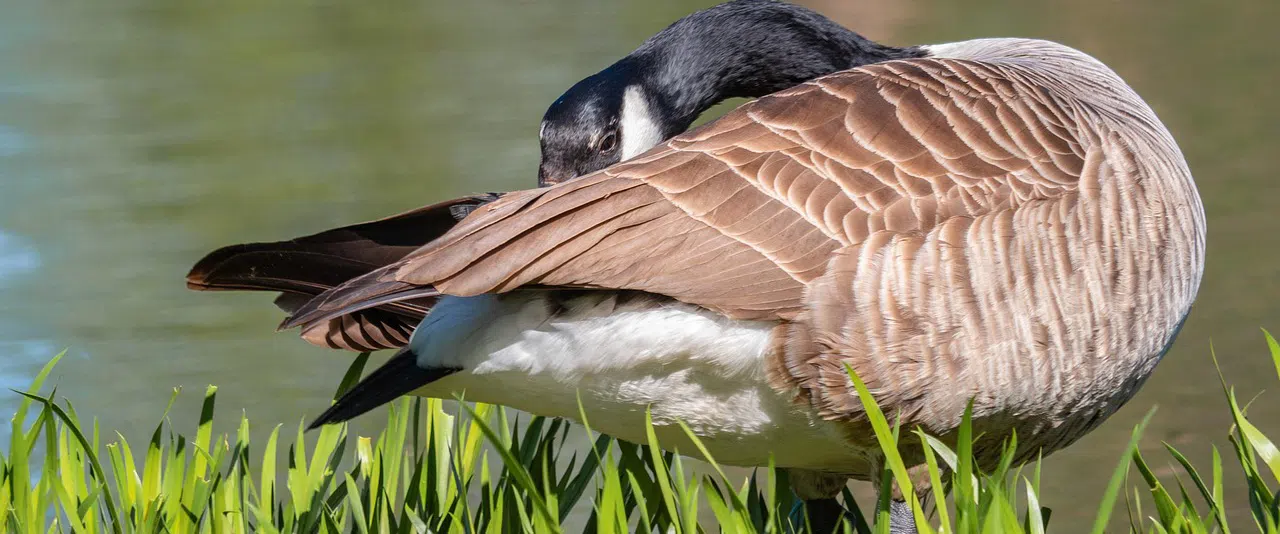
Moltingrefers to geese dropping their feathers during the month of June and early July. With nesting finished and little ones hatched, the birds will search for their summer homes and a safe environment for molting and raising their young.
Do All Geese Molt?
Yes, all of the geese species - and there are as many as twenty - molt their primary, or flight feathers in the summer. In fact, not just geese but all waterfowl do. This affords the birds a full, brand-new set of flight feathers for their long migration journey. While they are molting, Canada geese are grounded and cannot fly; this is in contrast to ducks. Yearlings will go through the molting process shortly after their first birthday.
Why Do Geese Molt?
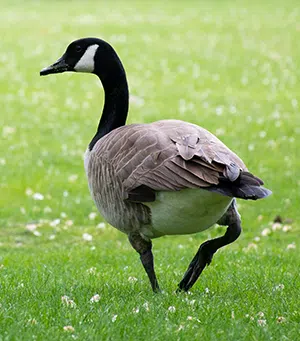 Molting usually starts in late June or early July and aids with regulating their body temperature in the the summer heat. Molting helps to cool the goose by increasing the area of bare skin.
- Molting also helps with getting rid of damaged or worn flight feathers. By shedding their old feathers, geese can make way for new, healthy, dense feathers that will allow for migration and also help them stay warm once temperatures drop.
The Molt Migration
Molting is physically taxing, and requires the birds to be flightless for 3 to 4 weeks while shedding their primary feathers. Because the molt is such a demanding process, many of the birds will fly a long ways to find the ideal location to safely spend the summer. Geese with young offspring will stay at their breeding grounds to molt while those who did not breed will have to leave.
Who participates in the Molt Migration?
The molt migration is all about leveraging resources. Those who have a half dozen tiny adorable goslings following them around, will spend this time remaining at their breeding sites. But those sites likely cannot sustain all of the geese that are there in early spring. Geese often don't find a mate and breed until they are between 2 to 4 years old, so those youngsters need to move on and leave whatever food is there for the ones rearing their offspring. Those who did breed but had a failed nest also leave and join Pre-Molt Groups.
What are Pre-Molt Groups
Adult geese that failed to hatch eggs, geese that have not yet found a mate (or lost their mate), or geese too young to breed (last year’s goslings) will flock up in what is referred to as “pre-molt groups”. With no babies to raise and no territory or nests to defend, these geese will form their own little (or large!) flocks. They will be looking for abundant feeding grounds as they make their way farther north.
Properties that had no geese issues all throughout spring may suddenly become inundated with large groups of geese and the mess they leave behind. Not only are we talking the usual droppings, but feathers - LOTS of feathers - as well.
Where do the Birds migrate to?
The molt is all about resources, so these geese go to where they can find lots of nutrition and safety - and that is often north. Remember, they cannot fly away during this time. Rivers, streams, any bodies of water provide a quick escape route from predators, if necessary. In fact, streams also double as a sort of water highway to travel on - if resources dwindle in one spot, they can move on to the next. Before fall they all will head back to their original spring destination to reunite with the main flock. This isn't so much about the flock or social structure, but rather about the fall migration route. The group that took part in the molt migration does not know the way south from where they are at. Hence, they'll join the ones who stayed put at the nesting site and they will all set out for their winter destination together, followint the tried and trusted path that brought them here.
Why is the Molt significant in terms of Geese Control and Removal?
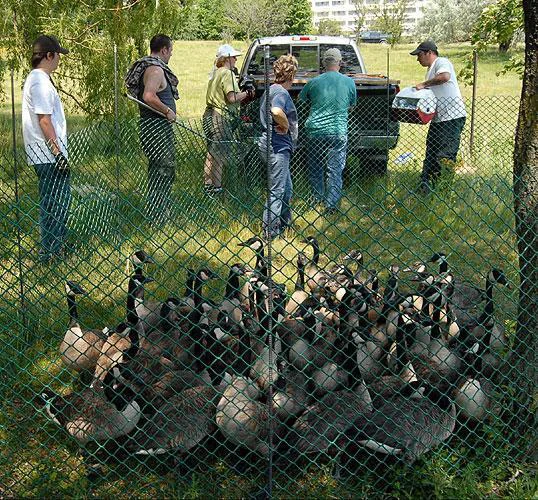 During this time when geese cannot fly, they are vulnerable. Using harassment techniques such as chasing with dogs or flying birds of prey seems a little unfair and often isn't terribly successful - since they cannot take off and fly away. Especially the pre-molt groups can be rather stubborn when asked to leave a perfectly good spot.
But, this is the perfect time for translocation. This involves rounding them up and physically moving them to a more advantageous or appropriate area, if they are uninvited guests on your land, or in public parks, on beaches or golf courses, and so on. While they are grounded they can be captured, corralled and relocated to another area south west of you, approximately 300-400 kms away and along their natural winter migration route.
-
Canada Geese Migration and Flying V Formation
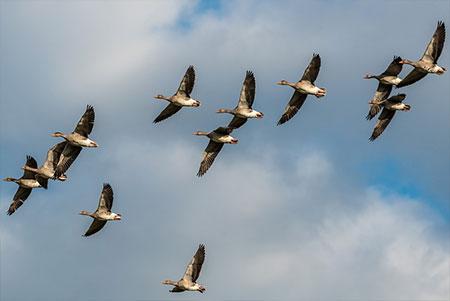 Canada Geese are one of the many migratory birds found in Canada who migrate to a more southern climate during the winter months. Most geese winter in the southern United States and Mexico, but due to the noticeable changes in our climate, some geese are still wintering in the southern most regions of central and western Canada, where winters are not lasting nearly as long as they have in the past. Most geese are still migrating, but may not be travelling as far south as previously recorded.
The V-Formation
Almost everyone in Canada has seen geese flying in a V shape formation, but many people are still unsure of the direct benefit of this formation to the geese. Geese fly in a V formation for one main reason, energy conservation.
Migrating is a long and tiresome journey, and being an egotistical goose in this situation, can lead to mortality through starvation or over exertion of energy. Thankfully, through evolution, geese and other migratory birds have developed behavioural traits that allow them to work as a team rather than as an individual, providing a mutually beneficial outcome for the entire flock.
Leading The Flock
Each goose shares the responsibility of leading the flock. This position is the most difficult to hold due to the fact that the leading goose is subject to the largest amount of wind resistance, and consequently the largest energy expenditure. Each goose behind the lead flies slightly higher than the goose in front of them. This reduces the amount of wind resistance each successive goose is experiencing, in turn reducing the energy output required to migrate. All members of the flock are willing to take turns in this position, only to spend an equal amount of time flying in a low energy cost situation. Migratory birds are truly the epitome of teamwork, and would experience a large population decrease every year during migration if it wasn’t for this wonderful evolutionary adaptation.
Hawkeye is the ONLY Toronto and Golden Horseshoe area licensed Pest Bird Control Specialist offering PERMANENT REMOVAL & GUARANTEED RESULTS. We are uniquely qualified under permits and licenses to PERMANENTLY REMOVE AND CONTROL pest birds such as pigeons, seagulls, geese, starlings, and swallows using a variety of methods including Birds of Prey. Additionally, we offer cleaning and disinfecting of affected areas and facilitate the future exclusion of birds.
Now with 7 Locations ( 6 In Canada and 1 in the U.S), we are ready to serve you better in Acton, Toronto, Oshawa, Bowmanville, two locations in Mississauga and West Palm Beach in Florida.
Contact us today or Email us at [email protected] if you need help with pest bird control and/or pest bird removal.
Pest Birds such asCormorants,Crows,Ducks,Doves,Geese,Grackels,Seagulls,Pigeons,Robins,Sparrows andStarlings.
Related Articles:
https://www.hawkeye.ca/blog/how-to-get-rid-of-geese-preparing-for-migration-in-the-gta -
Falconry Based Bird Control
Falconry-based bird control is a sophisticated and environmentally responsible method of managing nuisance bird populations. In Canada, this process is mainly used for gulls and pigeons. It leverages the natural hunting instincts and behaviours of birds of prey to deter, scare, or sometimes remove smaller birds that pose economic or health-related issues in various settings. This form of bird control is increasingly preferred over more traditional methods, such as the use of poisons, nets, or noise-making devices, which can be less effective, more intrusive, and potentially harmful to the environment and non-target species. Here are some main points to help you understand the history, process, application, and benefits of falconry-based bird control. We will also dive into the main locations that falconry-based bird control is commonly used.
1. Historical Context and Evolution
Falconry, the practice of training raptors to hunt, dates back millennia and is a tradition that has been passed down through generations and across many different cultures. The adaptation of falconry for the purpose of bird control is a relatively recent development. As society evolves and many areas once populated by forest become increasingly more inhabited by businesses and homes, the need for more humane and ecological methods of managing wildlife populations has become a necessity. Falconry, once used only for sport, has become a practical and effective solutions for many.
2. Training and Falconer Expertise
The success of falconry-based bird control hinges heavily on the expertise of the falconer and the training of the birds. Falconers must have a deep understanding of raptor behaviour, bird ecology, and the specific dynamics of the nuisance species they are trying to control. Birds of prey are trained through a process that involves trust-building, learning commands, and conditioning the birds to work in various environments. Falcons, hawks, and sometimes even eagles are taught to work in cooperation with a falconer to fly over problem areas and sometimes predate on nuisance bird species using a technique called ‘kill-to-scare’; although not always necessary. Knowing which falconry bird species would be most effective for your bird control problem is the key to success in this arena. For example, birds that typically predate on ground animals may not be as effective in scaring away or predating on nuisance birds. These factors are up to the falconer to decide in order to provide the best service possible.
3. Raptors in Bird Control
Different species of raptors (birds of prey) are chosen based on their suitability to the environment and the target pest species.
Falcons (e.g. Peregrine Falcons, Gyrfalcons)
Known for their incredible speed and agility, they are often used in open areas or in settings where their high-speed hunting flights can deter other birds. Peregrine Falcons will typically capture their prey mid-air. The prey of the peregrine falcon solely consists of bird species, although the size can range from small song birds all the way to large geese and other shore birds. The Gyrfalcon varies slightly in the sense that they will typically knock prey down while flying and then gather them on the ground. In addition a Gyrfalcon will also predate on ground mammals such as hare.
Hawks (e.g. Harris's Hawks, Red-tailed Hawks)
Known for their ability to navigate through more enclosed spaces, they are ideal for hunting in urban environments or agricultural settings. These birds are known for perching and gliding down to capture prey with their talons. With very similar diets, these hawks typically predate on rabbits, rodents, and other birds; even up to the size of a pheasant. Red-tailed Hawks and Harris’s Hawks do differ somewhat in their hunting ability. For example, Red-tailed Hawk’s are more keen at capturing say a squirrel in a tree. These slight differences in hunting ability can make all the difference when choosing what bird of prey will be used for each particular situation.
Eagles (eg.Golden Eagle, Bald Eagle)
Although less commonly used due to their size and the nature of their hunting, Eagles can be effective in certain situations where larger birds need to be controlled. In the wild, Bald Eagles will typically predate on fish, but they also hunt for ducks, geese and small mammals. Whereas the Golden eagles will hunt a far larger variety of mammals ranging in size from a ground squirrel to a deer, coyote, or bobcat. Both raptors can provide excellent services in terms of bird control as just their sheer presence will inflict fear upon any nuisance bird.
4. Common Problem Areas
Falconry bird control can be applied in numerous settings, each presenting unique challenges:
Airports
The presence of birds, especially flocking species like geese, can be a significant hazard for aircraft. A wide variety of falconry birds are used at almost every airport to prevent any danger of bird strikes with aircrafts. Using falconry here can save lives by reducing the risk of bird strikes. It is reported by Bird Strike Canada that nearly 2000 bird strikes with air crafts occur each year. Using falconry at all airports will drastically help to reduce this number and making flying safer for birds and passengers.
Agriculture
Crop damage and food consumption by birds can cause significant economic losses for farmers. If gone unchecked, birds could destroy an entire seasons crop. Falconry is an excellent and humane technique for protecting agriculture. Raptors patrol the skies above fields and orchards to scare off species that might otherwise feed on the produce.
Urban Areas
Pigeons, gulls, and other birds can create unsanitary conditions and damage structures with their droppings. Industrial roof tops are a main concern in this aspect. HVAC systems on roofs can become contaminated with feces and nesting material leading to poor air quality in these building. Ultimately this posses significant health concerns. Falconry can help maintain a bird-free environment around buildings, parks, and other public spaces.
Waste Management
Gulls and other birds that feed on refuse can spread litter, create noise pollution, and can become a huge inconvenience. Falconry is one of the many techniques used to help keep bird populations to a minimum at landfills and waste processing facilities.
Aquaculture
Fish farms can attract predatory birds like cormorants. These birds will predate on the fish causing a depletion in fish stocks. Raptors can be used to patrol these areas, create fear in the pest birds to assist in protecting the fish stocks.
Pros of Falconry-based Bird Control
- Natural Deterrence
Birds of prey are natural predators for many smaller bird species, creating a natural deterrent without causing harm to the nuisance birds.
- Non-lethal Method
Falconry-based bird control is a humane and non-lethal method. The goal is to scare off or intimidate nuisance birds rather than causing harm.
- Environmentally Friendly
Unlike some chemical or mechanical bird control methods, falconry-based bird control does not introduce harmful substances into the environment.
- Selective Targeting
Falconers can train their birds to focus on specific bird species, providing a targeted approach to bird control without affecting non-targeted species.
- Adaptability
Falconry-based bird control is adaptable to various environments, including agricultural areas, airports, and urban spaces. Birds of prey can be trained to address specific bird-related issues in different settings.
- Reduced Health Risks
Nuisance birds can pose health risks, especially in areas where they congregate in large numbers. Falconry-based bird control helps minimize the spread of diseases associated with bird droppings without resorting to harmful chemicals.
- Long Term Cost-Effectiveness
While the initial investment in falconry training and equipment may be significant, the long-term costs can be lower than some other bird control methods that require ongoing maintenance or the use of chemicals.
- Public Relations & Aesthetics
Falconry-based bird control is often perceived positively by the public, as it is seen as a natural and ethical way to address bird-related issues. Additionally, the presence of trained birds of prey can be aesthetically pleasing and adds a unique aspect to certain environments.
- Educational Opportunities
Falconry provides educational opportunities for the public, as people can learn about the natural behaviours of birds of prey and the importance of maintaining a balance in ecosystems.
- Customization
Falconry-based bird control programs can be customized to suit specific needs and challenges in different locations. Falconers work closely with clients to develop strategies that address particular bird-related issues. While falconry-based bird control offers various benefits, it is essential to note that successful implementation requires skilled and experienced falconers who understand both the behaviour of birds of prey and the specific challenges posed by nuisance birds in a given environment.
Related Articles:
Why does Falconry work for Bird Control?
https://www.hawkeye.ca/blog/how-to-get-rid-of-pigeons-naturally-with-falconry - Natural Deterrence
-
Falconry For Bird Control At Airports
 Without a doubt, Bird Control is of utmost importance around airports, as the toll on human life as well as aviation equipment is potentially huge. Bird strikes on aircraft has the potential to cause significant damage and possible catastrophic events. Bird strikes are a dangerous threat to aviation safety, particularly on take off and landing. The consequences of a goose hitting an engine or the windshield of an aircraft can be disastrous. Bird strikes can cause engine failure, damage to critical structures, and even crashes. Given the seriousness of the possible consequences, many airports in North America and in Europe use falconry as an effective method of deterrence.
Why Choose Falconry for Bird Control at Airports
- Falconry used for bird abatement and wildlife management at airports is natural, ethical, humane and environmentally responsible.
- Falconry for bird abatement is highly effective for bird control as it uses the innate fear of birds to the predators - raptors.
- Specially trained raptors work in tandem with the expert falconer and closely follow signals and commands from the falconer.
- Many species of raptors are used to deter the many species of problem birds. Falcons will target smaller faster birds and eagles are used for the larger birds like geese.
- Raptors can fly at higher altitudes than any man can reach with other control methods.
The Benefits of Falconry for Bird Control around Airports:
The benefits of using falconry are myriad.
- Falconry is environmentally friendly, no chemicals or pollutants to harm the environment.
- Falconry is highly effective. The presence of raptors is a very strong deterrent for almost every bird species.
- Falconry is highly adaptable. The falconry program is tailored to each airport and the environment. It can be quickly adapted as needs change, especially during migration in spring and fall, when differing species of bird may fly through the area. The presence of raptors is a very strong deterrent for almost every bird species.
- Falconry is very cost effective after the initial expenditure. It will lead to long term savings by reducing and minimizing the cost of bird strikes and damage to the aircraft, reducing downtime and repairs to the aircraft. The extent that bird strikes can be minimized is truly amazing. For example: A southern US airport had a trial program for the month of January a few years ago. Bird strikes went from 161 a month to 1 bird strike.
How Falconry at Airports works:
Airport Assessment and Planning
In order to use falconry at an Airport Assessment and planning must to done on a continuous basis. Wildlife control experts assess the bird activity at the airport, what species of bird and other wildlife is present, the behaviour patterns of the birds and the wildlife, what in the area may be attracting the birds, and what can be modified in the habitat to make it less attractive to birds.
Selection of Bird of Prey
The selection of raptor(s) to be used is important. The larger raptors will go after larger birds, ie: Eagles are used for Geese, Falcons with their speed and agility will go after smaller birds like starlings or gulls, Hawks will be sent after smaller birds yet, like songbirds and doves. Owls can also be used, especially at dawn and dusk and in the colder weather. The choice of raptor is going to depend on the predominant species in the area. Often a variety of raptors are used.
Flying Birds of Prey
The raptors used at airports are highly trained and taught to stay out of the way of aircraft flight paths. The falconers must be exceptional at their craft and have a close relationship with their raptors. The continuous presence of raptors in the area makes it a hostile environment for birds and most smaller wildlife. Dogs and drones are also sometimes used in conjunction with falconry. Dogs and drones will scare away the larger wildlife and prevent any ground animals from making the area their home.
About Falconry
The ancient art of falconry has been used for thousands of years across various cultures around the world to hunt with a trained raptor in cooperation with the falconer. In the context of bird control at airports, falconry involves using highly trained raptors - including hawks, falcons, owls and eagles, to keep other problems birds away from the vicinity of an airport. Falconry for bird abatement uses the innate fear of the prey when a predator is in the area. The prey - problem bird species - will flee the area and tend to stay away because of the danger to them. The fear response to the predator is used to our advantage.
Falconry for bird control is a unique blend of using Mother Nature along with modern wildlife management strategies. Public perception of falconry is generally positive because it is humane, environmentally friendly and does not harm the ecosystems of the areas where the magnificent raptors are flying.
Other Bird Control Methods
Traditional methods of bird control include loud noises such as shotguns, pyrotechnics, sonic boom devices, visual deterrents like using reflectors that move with the wind, and habitat modification to make the area less attractive to birds. These methods all have their limitations. Birds become use to the noise and the lights and seeing no actual danger to them they become habituated to it. However, putting a raptor in the air becomes a serious threat to any birds near the airport.
Unique Challenges at Airports
One of the challenges of using falconry for bird control at airports is finding an expert falconer who has the skills and experience for assessment and planning, who knows behavioral patterns of different species of raptors as well as those of the problem birds, and has a sufficent amount of raptors on hand. Birds of Prey cannot work all day, everyday; many raptors are required to get the job done.
Hawkeye Bird & Animal Control
Hawkeye Bird & Animal Control are the experts at falconry around airports. Dan Frankian is a master falconer and trains his raptors to provide bird control on the apron and beside the runways while keeping the raptors out of the actual flight path. His Birds of Prey are specially trained to scare birds away from the flight path before the problem birds even approach it, from as far out as the outer marker. You don’t have to wait for the aircraft to land to have your raptor up in the sky.
Dan Frankian also teaches his methods to other falconers. If you have a team of falconers or a wildlife abatement team wanting further training, please contact Dan at Hawkeye Bird And Animal Control.
Related Articles:
https://www.hawkeye.ca/blog/pigeon-control-and-removal-for-gta-airports
https://www.hawkeye.ca/blog/how-to-get-rid-of-pigeons-naturally-with-falconry -
How to Get Rid of Geese Preparing for Migration in the GTA
Many GTA residents assume that Canada geese will soon leave, so the problem is almost over. But in reality, goose activity often increases before migration.
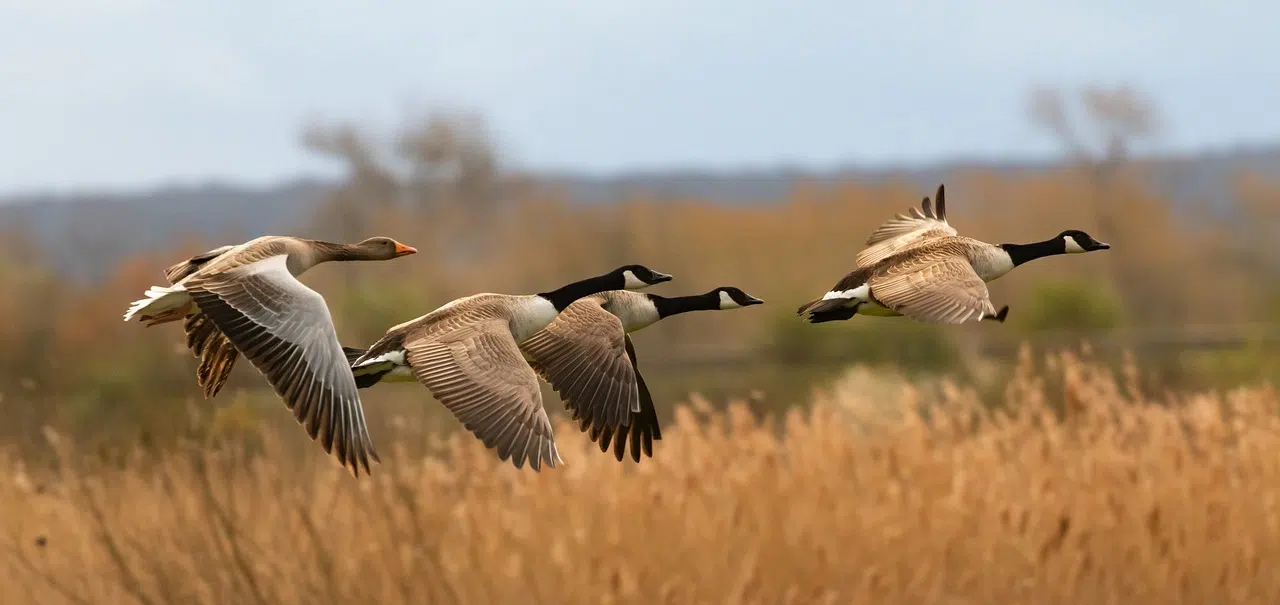
In fact, during the pre-migration period, as families gather before beginning their long journey, goose behaviour can lead to larger flocks and even greater impacts on GTA properties. Understanding Canada goose migration and planning pre-migration goose control can help reduce property damage before flocks become established.
How Canada Geese Prepare for Fall Migration
Geese Increase Their Daily Feeding Activity
- Increased feeding to build energy reserves
- Longer feeding periods
- Greater use of lawns, fields, and open green spaces
-
How to Prepare GTA Properties Before Geese Return This Spring
While we may still be buried under snow and ice, the arrival of Canada geese in the GTA is only weeks away. With spring goose season approaching quickly, now is the time to educate yourself and consider options for geese control—before the birds settle in and begin nesting.
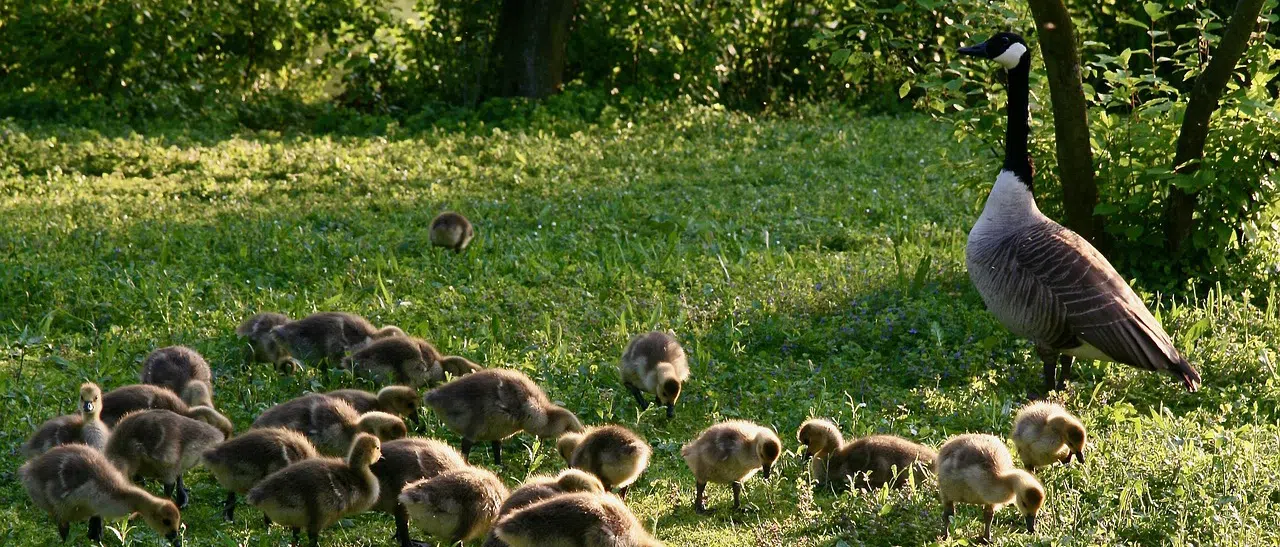
Canada geese may return from their southern winter home as early as March. Once geese establish a nest, removal becomes significantly more difficult due to regulations and aggressive behaviour. Early prevention is the most effective and cost-efficient approach. Contact Hawkeye Bird & Animal Control now.
-
Why Does Falconry Work For Bird Control?
- Birds of Prey, or raptors, are natural predators to many pest birds.
- Raptors disrupt breeding and roosting of pest birds.
- Raptors create stress in pest birds.
- Falconry is highly targeted to particular species of pest birds.
- Falconry is ecologically and environmentally friendly.
- Falconry is regulated and overseen by government agencies in many countries to ensure it is conducted ethically and professionally.

What is Falconry?
Falconry is the ancient art of hunting with trained birds of prey. It has been practiced for thousands of years in many cultures around the world. More recently, falconry is used for bird control, wildlife removal and abatement, It takes advantage of the natural relationship between bird predators and their prey. The predators - birds of prey, or raptors, are trained to scare away and chase pest birds. With a raptor in the area, the pest birds quickly learn the area is no longer safe. The pest birds become stressed and they quickly learn to avoid the area entirely.
-
Why Late Summer Is a Good Time for Goose Control
It is a common assumption that goose problems are over once goslings are grown and adult geese regain flight after their summer moulting season. That's why many property owners assume their goose problems are over once nesting season ends. However, late summer goose control should actually be focused on planning, assessment, and long-term management rather than simply reacting to immediate problems.
Yes, goose behaviour begins changing again as the birds prepare for seasonal movements, but property managers who dismiss geese now often miss an important strategic opportunity.