CA
CA US
US





raccoon in garden
-
Fall Raccoon Prevention Tips: Protect Your Home and Property
Fall preparation should happen before raccoons establish themselves in roofs, attics, sheds, garages, or other sheltered areas around your home. A late-summer property inspection can identify vulnerabilities while they are still relatively easy to address.
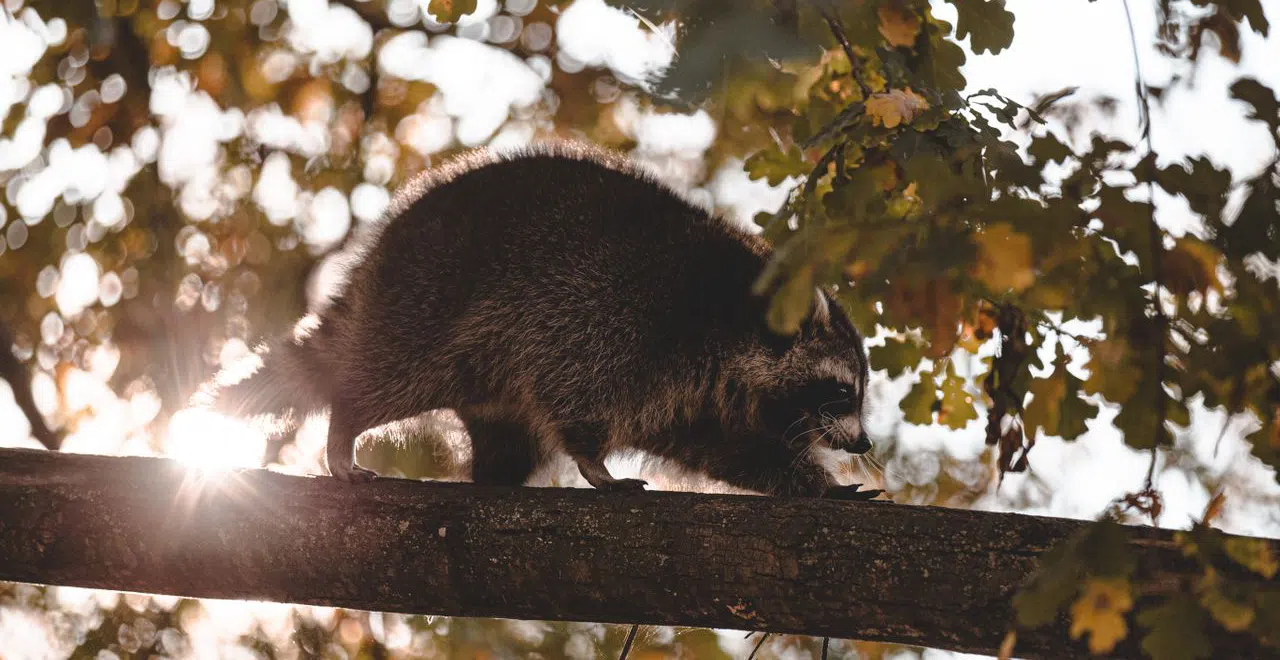
The goal of an inspection isn't to eliminate wildlife from the surrounding area, but to make the property harder for raccoons to enter, occupy, and repeatedly visit. This article will discuss what type of inspection is needed and what to pay attention to.
-
How to Get Rid of Raccoons in Greenhouses
Winters in Southern Ontario can be harsh and long. In order to survive, our local wildlife often moves closer to people’s homes and businesses and backyard or commercial structures such as greenhouses. Animals like raccoons seek out shelter, warmth, and food and all of that can be found in residential backyard greenhouses, commercial agricultural greenhouses and nurseries, as well as community or educational garden structures.
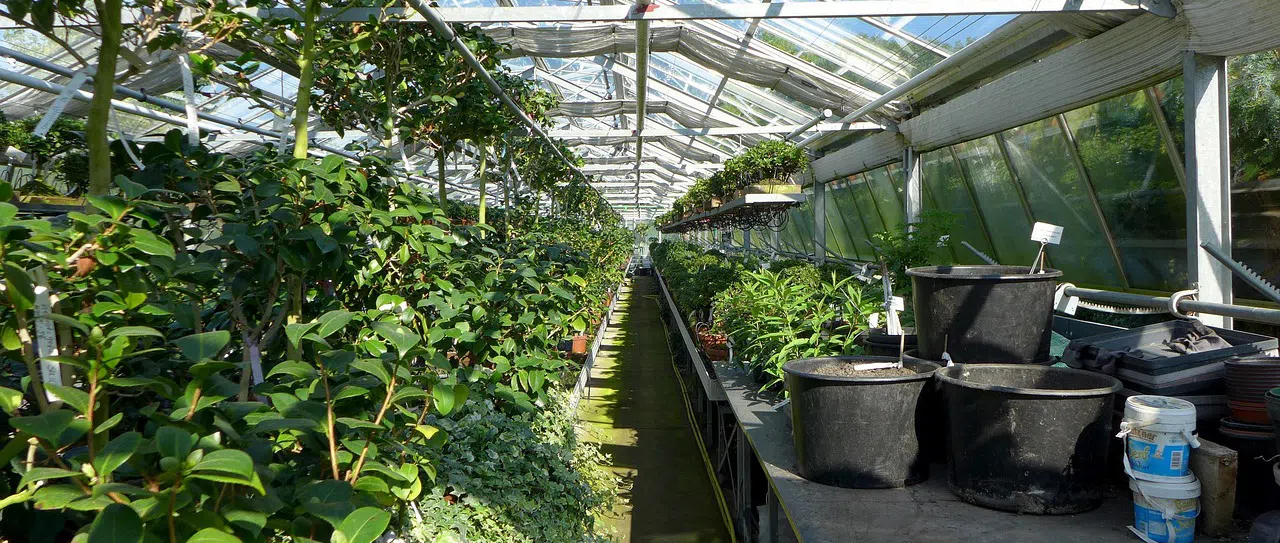
The negative and often costly impacts of raccoons invading greenhouses include crop destruction (especially fruits and plants), feces contamination, and structural damage. That’s why wildlife control for greenhouses is so crucial and permanent raccoon removal for horticultural facilities is something that should strongly be considered.
Why Greenhouses Are Raccoon Magnets
- Guaranteed Climate and Shelter
Greenhouses are kept warm and humid year-round, thus offering an ideal refuge from freezing winter temperatures and wind. - Abundant, Accessible Food
Raccoons are attracted by soft, ripe produce (tomatoes, peppers, berries), potting soil amendments (bone meal, organic fertilizer), and rodent populations thriving on seeds/spills. And then there's garbage or compost bins - those are also very applealiong. - Constant Water Source
Irrigation systems, condensate lines, and humidity trays provide easily accessible fresh water, a critical raccoon attractant, especially during dry seasons.
How Raccoons Enter Greenhouses
- Plastic/Fabric Cover or Vents
Raccoons easily tear through the light plastic or screen mesh used on the outer layer of a backyard greenhouse or automated roof or side wall vents. - Sliding Door Gaps
Cold and desperate raccoons exploit worn or damaged seals on large sliding doors used for vehicle/equipment access. - Utility/Pipe Tunnels
They can enter through unsecured maintenance tunnels or gaps where main water lines or heating pipes penetrate the foundation.
Signs of Raccoon Presence in the Greenhouse
While a slew of small critters are likely to camp out in your greenhouse for the winter, the scope and size of damage you're seeing should give you a good idea of the type of animal sharing your space.
- Disturbed soil, torn plant roots, missing produce.
- Nocturnal noises or tracks near entry flaps.
- Droppings, foul odour, or insulation shredded for nesting.
Overall, the signs of a raccoon infestation in your greenhouse are similar to those you would look for in your home. Have a look here: https://www.hawkeye.ca/blog/10-tell-tale-signs-you-have-a-raccoon-in-your-home.
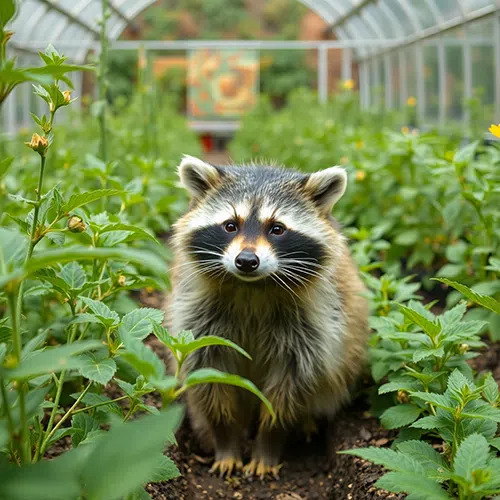 Critical Risks of Raccoon Infestation in Greenhouses
Crop Contamination and Financial Loss
Raccoons claw and bite through high-value crops, causing direct product spoilage. Contaminated produce often mandates the disposal of entire rows or benches of plants due to the presence of feces/urine and the risk of rabies transferred by an infected animal's saliva.
Climate Control Failure
Raccoons nesting near heating elements, fans, or control panels can chew wiring or block airflow, leading to HVAC or ventilation failure. This leads to the risk of overheating, freezing, or improper humidity control, potentially destroying not only the equipment, but also the entire growing environment.
Structure Compromise (Glass/Plastic)
Raccoons scratch and tear the plastic sheeting or seals around glass panes, compromising the greenhouse's thermal envelope. This leads to massive heat loss, increased utility bills, and exposure of the interior to weather.
Regulatory & Liability Exposure
The presence of raccoon feces in a food-producing environment is an immediate health inspection failure (Canadian Food Inspection Agency/local health unit), risking shutdown, fines, and the imposition of strict biohazard cleanup requirements.
How to Keep Raccoons Out of a Greenhouse
- Inspect and reinforce your structure's integrity before winter.
- Use heavy-duty mesh or wire to seal ventilation openings.
- Keep compost and garbage sealed tightly and away from the structure.
- Install automatic lighting or motion sensors to alert you to movement.
- Maintain a clean perimeter—remove all fallen fruits, pet food, or debris.
- Make use of natural deterrents such as strong-scented herbs.
- Guaranteed Climate and Shelter
-
Raccoons in the Garden: Pest Animal Control and Prevention
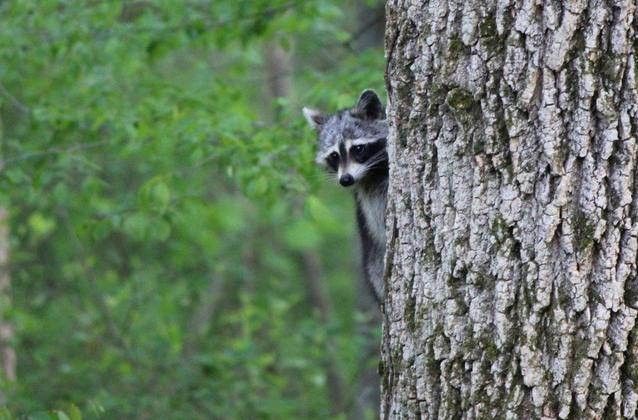
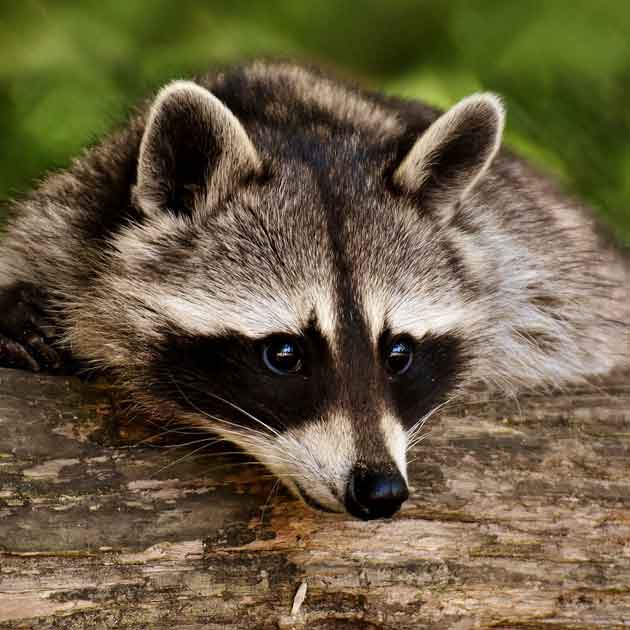
Raccoons are resourceful and skilled creatures. They are attracted to urban neighbourhoods as there is always food, shelter, and water nearby. Unfortunately, this can mean trouble for homeowners as well as business owners. If raccoons are congregating around your garden, or you notice signs of damage from these animals, you should seek immediate help. Our professionals are equipped and experienced to deal with your pest wildlife problems and will help prevent wildlife from causing trouble around your property.
Hawkeye’s Raccoon Control and Prevention from Gardens
If raccoons are frequenting you property or have begun making a den in your shed or near your garden, you should contact our professionals immediately. We will use a variety of methods to passively and actively get them away from your property, and if there is a recurring problem, we will install protective mesh to keep them out of spaces that are ideal for making their homes in.
Signs That Raccoons Are Active in Your Garden
You will know that you have raccoons active in your garden if you see paw tracks (five toes), fecal droppings, scratches on fences and trees, looted trash, missing vegetables, and disturbed garbage cans. Raccoons will eat almost anything and will rummage through food garbage tins, cans, boxes, and plastic to find something to eat. Since your garden is a buffet of plants and vegetables, they will likely seek out whatever is available and growing. They tend to enjoy apples, pears, peaches, sweet corn, potatoes, and peas.
How to Prevent Raccoons Entering Your Garden
Here are a few tips to prevent raccoons from being attracted to your garden:
- Seal your garbage cans tightly (purchase options with good locks) and wash spills often with bleach and water or find a personal solution at https://binsolutions.ca
- Remove any outdoor food sources such as bird feeders or containers with pet food
- Trim trees that hang over your roof so that raccoons cannot jump onto it
- Keep your roof in good repair to reduce the chances that raccoons will be able to tear away at shingles and climb into your attic
- Ensure the base of decks, sheds, and porches are properly enclosed
- Never feed raccoons or keep them as pets (it is illegal)
Contact Hawkeye for Raccoon Controlif you live in Mississauga, Scarborough, Oshawa, Bowmanville or Toronto.
Hawkeye Bird and Animal Control can help you if you need solutions to your residential or commercial raccoon problems. Hawkeye is a bird and animal control company that services residential, commercial, and industrial properties in the Greater Toronto Area, Golden Horseshoe, and many parts of Florida.
We provide animal and bird control and offer falconry experiences, and we also provide balcony cleaning, netting, and exclusion. We are the only pest bird and animal/wildlife control company in the country designated "Certified Wildlife Control Professional" and we hold the following licenses: Trapping of Fur Bearing Animals Permit, Falconry Permit, and Pest Control License.
If you want to prevent raccoons from destroying your garden or making a den on your property, contact us today. Email us at [email protected] or call us at (416) 429-5393
Hawkeye provides Raccoon Control and Removal Services in:
Mississauga,Scarborough,Oshawa, Bowmanville and Toronto.
Related Articles:
https://www.hawkeye.ca/blog/permanent-raccoon-removal-solutions-for-lawns
https://www.hawkeye.ca/blog/how-to-get-rid-of-raccoons-in-greenhouses
https://www.hawkeye.ca/blog/raccoon-control-for-flower-pots-and-landscape-plants