CA
CA US
US




raccoon removal
-
Pre-Spring Raccoon Prevention Planning
The weeks leading up to spring are not "off-season" for raccoons - quite the opposite. It's mating season! While the GTA is still frozen, raccoons are at their most active briefly abandon their life of solitude. This is the time you might see groups of raccoons as males compete for mating partners and females begin scouting for maternity dens in short order.

Don't wait until you hear scratching in late March or April and find an established nursing den within your walls. Proactive planning before spring allows property owners to identify vulnerabilities before kits are born, saving thousands in repair and biohazard costs. Raccoon prevention before spring is far more effective and far less expensive than dealing with a maternity den in April.
-
RABIES Update for March 29 2017
Rabies continues to spread through Ontario, mainly the Raccoon strain. Here is an update on the situation on rabies in Ontario from the Ontario Ministry of Natural Resources and Forestry (MNRF) as of March 29, 2017.
OMNRF are reporting 1 new case of raccoon strain rabies from the previous week, occurring in a raccoon from Haldimand. As of March 29, 2017, there have been a total of 295 cases of raccoon strain and 8 cases of fox strain rabies in Ontario. Hamilton has been the hardest his area with a total of 232 cases of Racccoon Rabies.
-
Raccoon Control & Removal for Patios
Ahhh...summer. We all look forward to time on the patio—designed for relaxation, dining, family time, and social interaction. But did you know that your patio can be the very reason your property is plagued by local wildlife? Professional patio raccoon removal ensures the problem is handled safely and permanently before damage escalates.

Let's explore this in more detail below.
-
Raccoon Control & Removal Oakville
Calls for Raccoon Control and Removal are among the most frequent request in Oakville. Like so many other communities along the shores of Lake Ontario, Oakville provides plenty of space and habitat for raccoons to flourish. While the masked bandits are often thought of as just a bit of a nuisance, they actually cause a great deal of damage to properties and structures, as well as pose health risks to humans and pets alike.
Residential Raccoon Damage
- Roofs: Raccoons gaining access to attics through roof vents - leaving behind damaged shingles, vents,
- Refuse and compost: Raccoons are boisterous animals, making a great deal of noise when carrying out their searches for food and shelter such as when they raid garbage and compost containers in search of food. They often leave behind a considerable mess, which can attract more animals;
- Food left outdoors: Eating food for domestic animals such as pet food and livestock feed plus feed for wildlife such as birdseed;
- In gardens: Especially in gardens containing fruit, tomatoes, melons, berries or sweetcorn, plants are eaten, dug up, or otherwise damaged and tracks and excrement are left behind;
- Raccoons are attracted to lawns and gardens, especially after a rainfall when grubs and larvae are near the surface. They dig small round holes and will repeatedly turn over large swathes of freshly laid sod to un-earth worms, grubs and larvae. This particular type of behaviour is common when other sources of food are less abundant. They may return repeatedly and because of the dexterity of its front paws, the extent of the damage caused by the raccoon is generally greater than skunks.
Raccoon Damage on Farms
- Corn crops: many cobs partially nibbled, with the husks pulled back and the leaves folded downwards. Stalks may be broken as the animal tries to climb to get at the ears;
- Raccoons are alo quite fond of fruit, able to demolish a whole berry patch in no time at all;
- Hen houses and farmyards: The extreme dexterity of their front paws allows raccoons to kill or injure poultry even when the birds are kept inside enclosures or cages, as they try to reach and destroy them through the wire mesh. Poultry are often found with their heads torn off and left a short distance from the body. The neck and breast may be torn open and chewed and the entrails consumed. ; Legs or feet of the young birds may be missing. Pieces of flesh may be found near water. The eggs are often broken lengthwise and the materials used to make the nest are disturbed. Eggs may be removed completely from nests or eaten on the spot with only the heavily cracked shell remaining. Raccoons can also destroy bird nests in artificial nesting structures such as bluebird and wood duck nest boxes.
For Oakville raccoon control and/or raccoon removal contact Hawkeye at 416.429.5393 today!
Why you should call Hawkeye for Raccoon Control and Removal
We GUARANTEE results. We offer PERMANENT solutions above and beyond what other companies can offer.
Hawkeye is the ONLY pest bird and animal/wildlife control company in Canada designated "Certified Wildlife Control Professional" AND holding the following licenses:
Trapping of Fur Bearing Animals Permit: In contrast to all other companies, we can euthanize the bird or fur bearing animal, thus guaranteeing it will not return.
Falconry Permit: We use Birds of Prey (hawks, owls, falcons, eagles) to scare, chase, or remove in a natural and humane way.
Pest Control License: We can employ chemical solutions to certain problems. These methods include natural pesticides.
-
Raccoon Control and Permanent Removal in GTA Parks
Toronto isn't called the "Raccoon Capital of the World" by accident. But all across the GTA, urban raccoon populations are rising, including in Mississauga, Brampton, Vaughan, and Markham. So, raccoon control in Toronto and surrounding areas is serious business.
Why GTA Parks Are Prime Raccoon Habitats
Is there a raccoon problem in our parks? Well, these distinctive animals are present in many parks and green spaces in the GTA and pose safety risks to children, pets, park staff, and community users. Before we get more into the risks and prevention/removal strategies, including whether there are effective raccoon deterrents for parks, let's look at what draws raccoons to our parks and why that is so undesirable:
-
Raccoon Control and Removal - Why it is important in the fall season
 Did you know that Toronto has been dubbed the ‘Raccoon Capitol of the World’? Estimates put Toronto’s raccoon population well over 100,000. Originally from the tropics, raccoons have slowly migrated north and can now be found all over North America - as far north as Alaska, as well as in Europe and even Japan. In fact, Japan is bemoaning many ancient temples being destroyed by raccoons. Raccoons are highly adaptive, both in terms of habitat and food. Scientists have studied raccoons for decades and still aren’t close to fully understanding raccoon behavior. Raccoons are intelligent and highly skilled when it comes to raiding your garbage or gaining entry into your home. Learn how to prevent raccoons from accessing your home or failing that, remove them.
Greater Toronto Area residents may come nose to nose with a raccoon or five more so now, during the fall months, than most other times of year. And while you may be sympathetic to the animals seeking shelter for the upcoming winter months, you definitely do not want that shelter be in your home, shed, or under your deck or roof.
-
Raccoon Control and Removal for GTA Greenbelt Properties
The GTA Greenbelt is one of the largest protected natural landscapes in the Greater Toronto Area, so it’s home to a great variety of local wildlife, including raccoons.
Living or operating near protected natural areas offers many benefits but also increases wildlife encounters. Homes, farms, golf courses, estate properties, conservation facilities, schools, and businesses bordering greenbelt lands often experience recurring raccoon issues. Properties near the greenbelt face challenges that are quite unique compared to those in more urban centres. This article will explore the raccoon issues in the GTA Greenbelt and ways to circumvent them.
-
Raccoon Control for Flower Pots and Landscape Plants
Decorative flower pots, planters, and ornamental landscaping add beauty and curb appeal to residential and commercial properties.

Unfortunately, raccoons and other local wildlife often disturb these areas even when they are not eating the plants. Damage can become particularly frustrating when newly replanted flowers and professionally maintained landscapes are disturbed repeatedly.
Understanding why raccoons target ornamental landscapes can help you choose which prevention methods to use and determine when professional raccoon removal is necessary. Moreover, if you are seeing raccoons digging in flower pots, planters, or landscaped beds, understanding what attracts them can help you address the underlying problem.
-
Raccoon Distemper Outbreak FAQs
Below are answers to some of the questions we most often hear when it comes to canine distemper virus (CDV) risk and raccoons, and what to do if a raccoon has distemper.
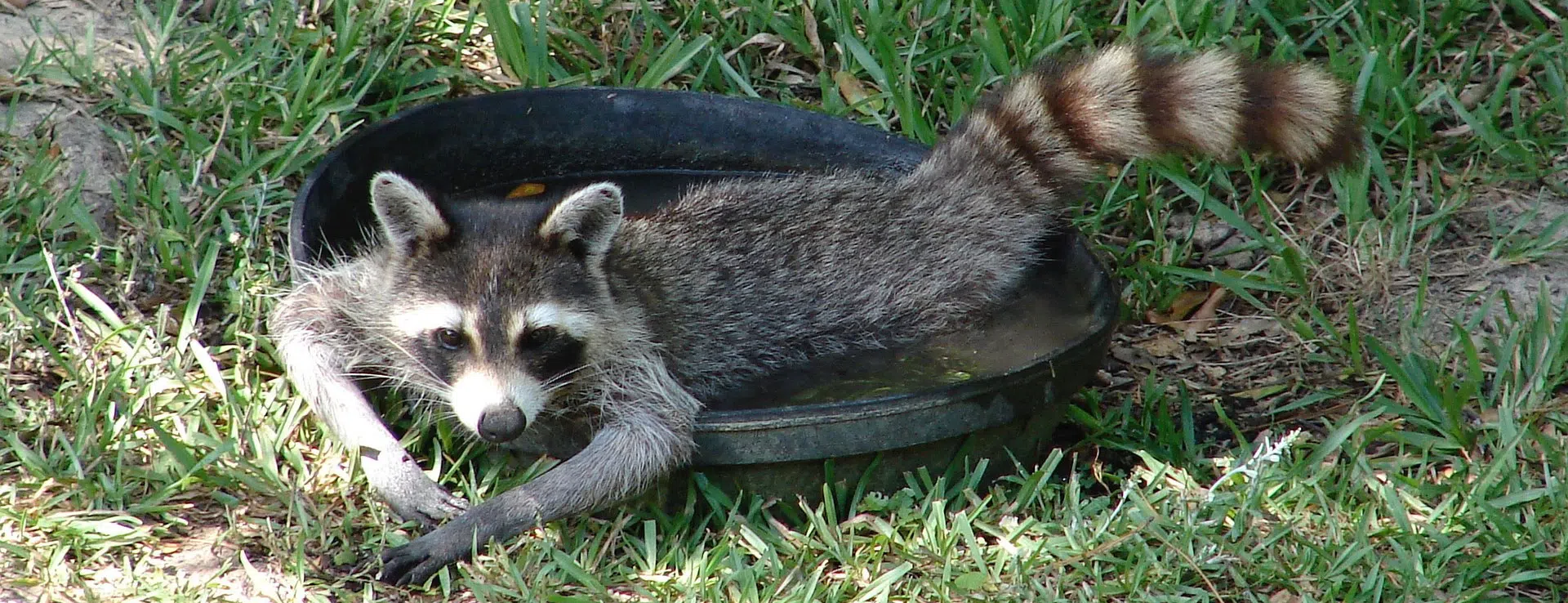
Q:Do wildlife rehab centers take raccoons with distemper?
A: Many wildlife rehab centers may take in raccoons with suspected canine distemper, mainly to test and confirm the diagnosis. Because canine distemper is fatal and highly contagious, centers generally have to euthanize infected raccoons to end their suffering and prevent the spread to other animals. Do not approach or handle sick animals yourself. In the GTA, contact your local animal control unit or a professional wildlife operator like Hawkeye Bird & Animal Control.
-
Raccoon Infestations in Abandoned or Vacant Properties
With a declining economy, we see many empty apartments or entire buildings in Toronto and the GTA, some residential but more often commercial. Of course, an abandoned property makes for the perfect home for raccoons and other wildlife.
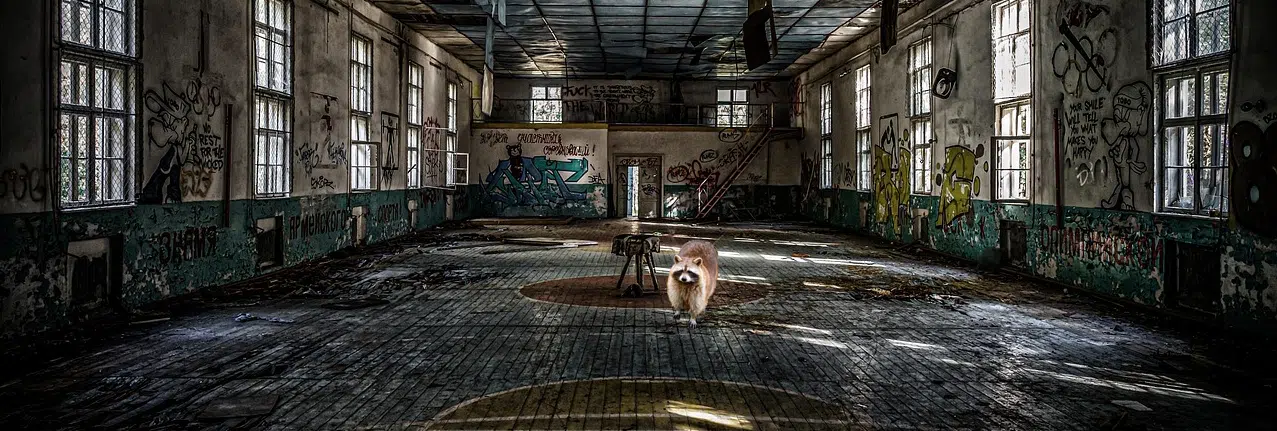
As temperatures drop, these buildings become irresistible targets for raccoons seeking a warm, secure den to survive the cold. A property may look empty from the outside, but it can quickly become a thriving, hidden home for a family of raccoons, leading to a host of complex problems. And because of the very fact that these properties are vacant, raccoon and other wildlife infestations go unnoticed much longer, giving the animals plenty of time to establish dominance and territory.
FAQs for Owners of Vacant Properties
Q: I'm not in the area; can you still help?
A: Yes, absolutely. You do not need to be present for a Hawkeye technician to remove raccoons from your property. You will, however, need to have someone to check on traps twice daily (minimum) and contact us if a raccoon has been caught.
Q: Will my insurance cover the damage?
A: Most homeowner policies do not cover raccoon damages. Please discuss and confirm with your insurance contact. You may want to read this article as well: https://www.hawkeye.ca/blog/does-homeowners-insurance-cover-raccoon-damage
Q: What if there are baby raccoons in my vacant property?
A: Raccoons only have kits once a year - in the spring. The most important thing is to not separate a mother from her offspring. You MUST be able to capture and move all raccoons together.
Q: How long can a raccoon live in a vacant property unnoticed?
A: Raccoons can live in vacant buildings for as long as nobody is paying attention. During the pandemic lockdowns, reduced or non-existent human traffic and oversight caused huge issues which carry fall-out until today.
Q: What if I need to sell or rent the property?
A: If you spot signs such as raccoon droppings in an empty house, call a professional to remove the animals, repair the damages, and sanitize the den and latrine area.
Q: Is it illegal to leave a property vacant with a raccoon problem?
A: While it might not be explicitly illegal, allowing a raccoon problem on a vacant property in Ontario can lead to significant legal and financial consequences under municipal by-laws and property standards. If a raccoon infestation poses health or safety hazards or causes damages to neighbouring properties, the property owner could face orders to resolve the issue, fines of up to $50,000, and costs for municipal cleanup work. This may vary by municipality.
-
Raccoon Life Cycle
It is February and raccoons are starting to mosey out 'n about - in fact, one Hawkeye team member encountered one in a building that houses her chicken coop, just this past weekend. They are getting ready for mating and breeding season. Let's have a closer look at the lifecycle of raccoons.
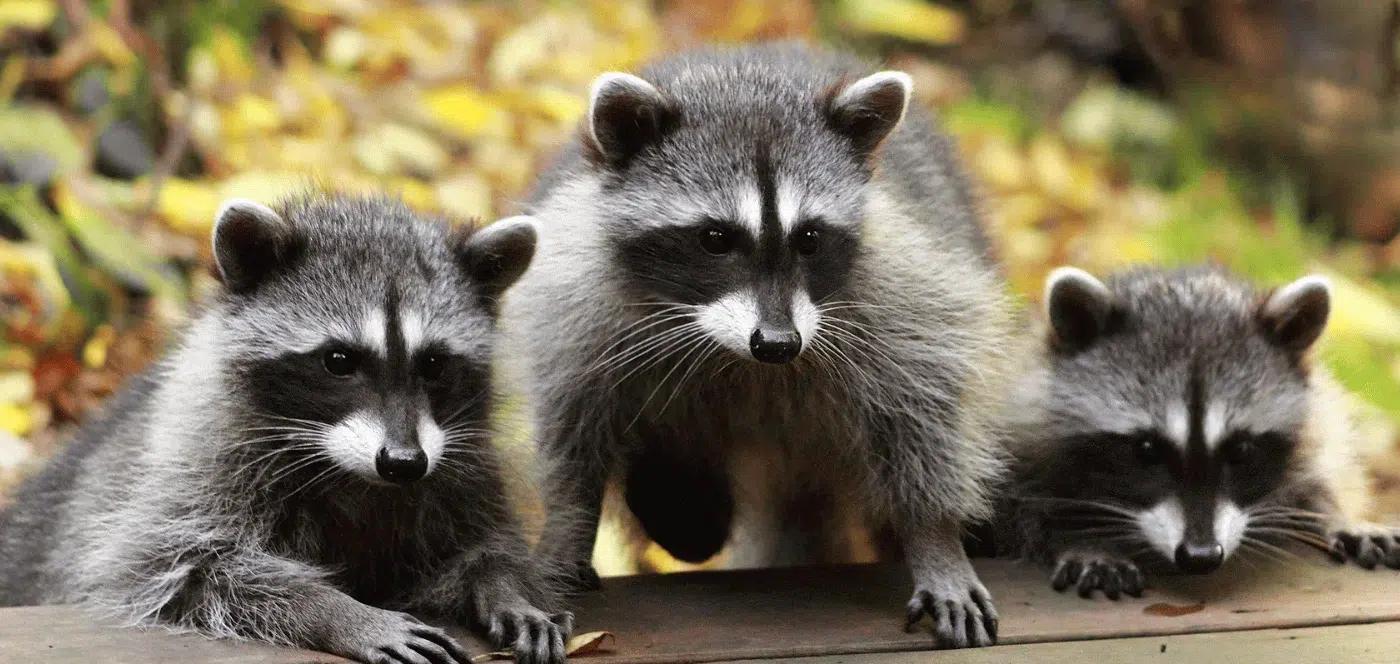
Raccoon Mating and Breeding
In the late stages of winter and up until early spring, able bodied raccoons partake in mating rituals which culminate in females breeding with mostly just one male, and males breeding with as many females as possible. Yearling females often reach sexual maturity in their first mating season, while many boys develop a bit slower and may have to sit that first year out.
Mating Rituals
 In the arena of Raccoon Mating, healthy, strong, young and older males will posture and compete for the right to mate - up to and including duking it out amongst each other and in front of the ladies. They'll scratch, bite, and even throw each other around while eligible females observe the spectacle and choose their champion accordingly. Communications between males and females include vocalizations, such as chirps and whistles, as well as physical contact in the form of the females arching their back and rubbing against the chosen male to express approval and interest in breeding. The chosen dominant, strong and healthy male may become several ladies' champion and breed with several females. Since the victor, or champion, cannot possibly impregnate all available females, even lower ranked males will eventually get the chance to mate.
Raccoon Breeding
Female raccoons have a very short window of fertility, only three to four days per mating season - so, much mating takes place during those few days. The actual mating or breeding involves an hour or so of foreplay and culminates in copulation. After a brief pause to recover they go on to repeat. Yeah, it's a busy couple of days! After all that mating is done and over with, the couple may stay together for a few days but the male will move on and leave the now expectant mum to fend for herself and her offspring.
Gestation and Birth
Mum-to-be must now spring into action and procure a suitable den to give birth to her litter of kids in about 2 months time. This is also the time where she will be most inclined to rip up a roof shingle or two to get access to cozy places like attics and where you'll need to pay extra attention or get in touch with a wildlife removal company. She will birth anywhere from one to seven raccoon babies, with the average litter containing four kits. The babies are born blind, deaf and hairless, weighing only about 4 to 5 ounces. The only thing giving away the impression that these are in fact raccoons, are the tiny little masks already visible. As they are completely helpless, they are solely depending on their mother's care for their first 3 weeks of life. Sadly, somewhere around 50% of newborns will not survive their first year.
Life in the Den
Although momma raccoon will take the wee ones to the outside world for little excursions once their eyes open around 4 weeks, the kits will stay in the den for the next 6-8 weeks, with their mum looking after their every need.
A Raccoon's First Year of Life
Around three months of age, baby raccoons are weaned and introduced to the world in earnest. They will shadow their mother and learn about finding food and survival in general. All raccoons are intelligent and curious, and young raccoons have been seen playing and rough housing and performing fun acrobatic maneuvers.
The First Winter
By the time fall arrives,, the wee ones have grown into independent, adventurous, and resilient youngsters., It is not uncommon, though, for them to spend their first winter denning with their mother and siblings, especially in colder climates. As with many other things, there is strength in numbers and more bodies can create and retain more heat.
Setting Out on their Own
Almost a year has passed and a new mating season is on the horizon. Young females may or may not be ready to reproduce and will likely stick close to their birth place, while their brothers will often move into territories that are 20km or more away. These young males are likely not yet ready to breed and will use the upcoming year to establish themselves in their new territory. Researchers believe that traveling this fairly long distance in search of a new home range is instinctive behavior to avoid or reduce the chance of inbreeding. We have now come full circle.
-
Raccoon Removal for Airports and Aviation Facilities
Airports are high-risk environments where wildlife—especially raccoons—can cause severe operational issues and safety hazards with potentially catastrophic outcomes. This makes airport wildlife management a critical component of aviation safety and regulatory compliance.

-
Raccoon Removal for Ajax Shoreline Sheds and Boathouses
The town of Ajax sports a fabulous scenic shoreline that invites both tourists and wildlife. Raccoons are attracted to dense natural cover, quiet backyards, and ready access to water and food.
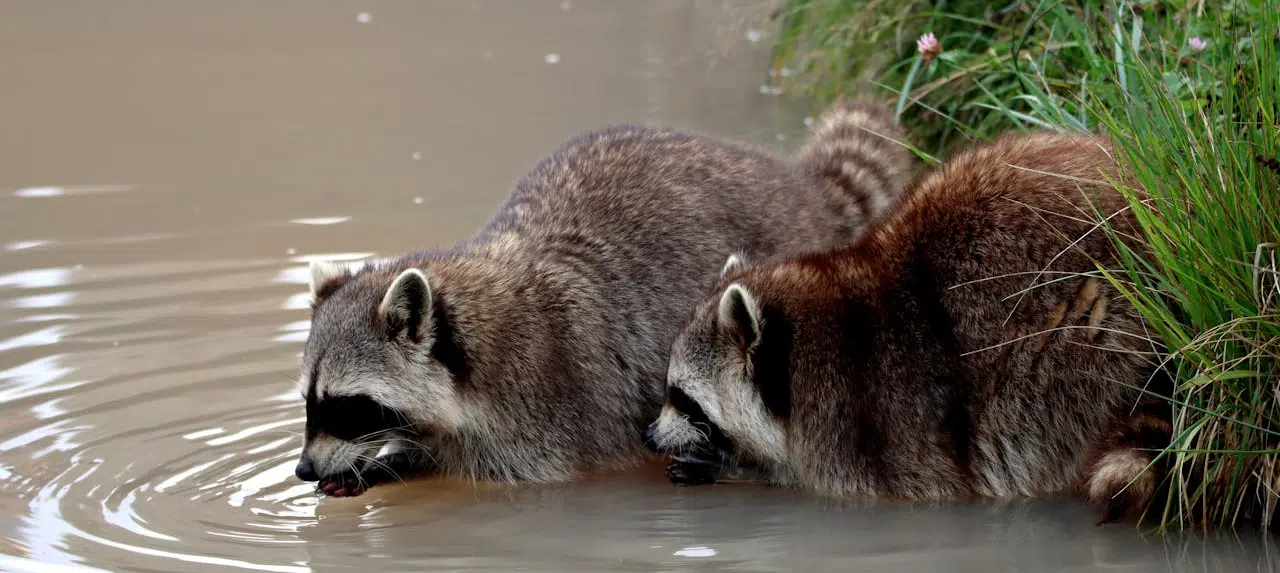
Many properties have sheds, boathouses, and storage units near the waterline, making them ideal nesting sites for raccoons, especially in spring. Raccoon activity in these zones can quickly escalate into serious structural and health issues if not addressed properly.
Why Raccoons Target Waterfront Sheds and Boathouses in Ajax
Proximity of Water
Raccoons are always attracted to water and structures near water - even more so than other wildlife. Raccoons are actually avid swimmers and have a tendency to "wash" their food before consuming it.
Easy Access
- Gaps under floorboards and skirting
- Loosely fitted doors or vents
- Wood rot or storm damage is common in lakeside buildings
Wildlife Corridors
Raccoons often follow Duffins Creek, Carruthers Creek, and shoreline tree lines as “wildlife corridors.”
Signs of Raccoons Living in Your Waterfront Shed or Boathouse
- Be on the lookout for daytime sightings, especially females during baby season;
- You may notice noises like scratching, growling, or thudding;
- Insulation or nesting material may be pulled out through cracks;
- Often, you'll notice a strong, musky odour of urine or feces;
- Pay attention to disturbed fish bait, pet food, or garbage in the structure.
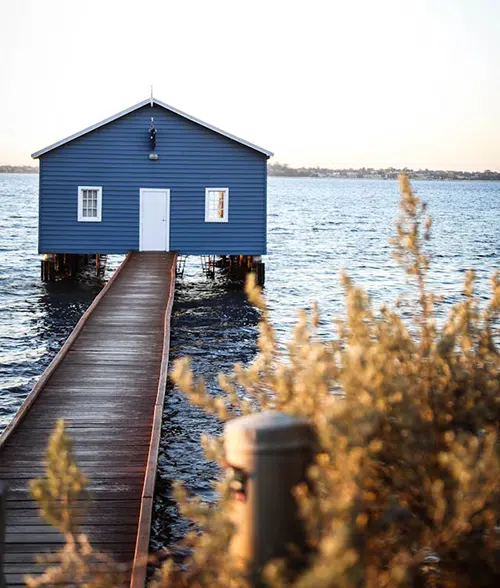 Challenges of Raccoon Removal from Boathouses and Waterfront Structures
Limited Accessibility
Crawlspaces or dockside supports are often too narrow for conventional traps or are submerged;
Trap-Shy Behaviour
Lakeside raccoons are more experienced due to frequent human contact and repeated trapping attempts. Learn more about trap-shy raccoons here: https://www.hawkeye.ca/blog/trap-shy-raccoon.
Hidden Babies (or Kits)
Raccoon kits may be concealed under decking or in rafters—removal must account for the collection of ALL babies and humane handling.
Increased Return Rate
Open surroundings mean raccoons can easily circle back and return.
Weather-Worn Entry Points
Constant exposure to lake-effect moisture creates easy access (wood expansion, soft floors, and rotting walls).
How to Get Rid of Raccoons from Your Ajax Shed or Boathouse
Secure All Entry Points:
- Inspect sheds and boathouses thoroughly for any gaps, holes, or weak spots larger than 4 inches (raccoons can squeeze through surprisingly small openings).
- Use heavy-gauge galvanized steel mesh (1/4" or 1/2" hardware cloth) to cover all vents, openings, and potential entry points. Secure it firmly with screws.
- Reinforce weak soffits, fascia, and roof edges.
- Ensure doors and windows are tightly sealed and latched.
-
Raccoon Removal for Commercial Food Storage Areas
Raccoons are opportunistic nocturnal feeders that prefer low-effort and widely available food sources. That's why we see such a widespread increase in urban raccoon population, particularly during the winter months.

Commercial food storage areas are at a higher risk of raccoon infestations because of the availability and easy access to large quantities of food. While raccoons pose a number of issues in any urban setting, the consequences at food storage facilities are greatly multiplied. Such consequences include product contamination, health hazards, property damage, and legal liabilities.
Once a raccoon infestation is suspected or confirmed, it is vital to call in a professional, licensed commercial raccoon removal service for immediate and permanent results.
FAQs: Raccoons in Food Storage Areas
Q: Will the Canadian Food Inspection Agency (CFIA) fine us if they find raccoon droppings?
A: Indeed, raccoon droppings are a serious sanitation issue, evidence of failure in a company's pest control measures and subject to fines and other penalties. Here's what the Government of Canada states on this issue: "When businesses fail to comply with their obligations under the Safe Food for Canadians Act and the Safe Food for Canadians Regulations with respect to ensuring the safety of food, the CFIA has several enforcement tools at its disposal such as monetary penalties and suspending or cancellation of licences."
Q: Does the presence of a raccoon mean we have to stop operations?
A: Not necessarily, but a full shut down is a possibility. Immediate action is required. Contact a professional wildlife removal service at once. Depending on the area of infestation and product damage, you may need to shut down part of your operations or will have to put in place expanded quality control measures.
Q: Can raccoons nest inside pallets or storage containers?
A: Yes, raccoons can turn any dark and quiet crevasse into a den. Areas with little human traffic are most at risk.
Q: How can raccoons affect refrigerated or frozen stock?
A: Raccoons are notorious for chewing wires. Your refrigeration units may be at risk of malfunction or even become a fire hazard.
Q: What material should we use to seal entry points to prevent chewing?
A:Heavy-duty hardware cloth or other wire mesh should be used in addition to (over or under) the original building materials. Always contact a professional contractor for repairs.
Q: Are there early warning signs unique to commercial facilities compared to residential properties?
A: The warning signs of raccoon presence are universal. They include scratching or thumping noises, foul and musky odours, feces, and raccoon tracks (paw prints).
Q: Can raccoons access multiple floors or storage zones in a large facility?
A: Raccoons can absolutely gain access to an entire building in no time at all. They are avid climbers and surprisingly nimble, given their size.
Q: We use bulk raw materials (grains, feed). Are raccoons attracted to clean, sealed bags?
A: It isn't the bags that attract raccoons... it's their content. Raccoons have an extremely well-developed sense of smell and grains are a welcome addition to their diet.
Q: What safety precautions should staff take if raccoons are discovered?
A: If raccoon feces has been discovered, do not touch! Call a professional raccoon control company such as Hawkeye Bird & Animal Control to remove the animals and latrine(s). Until their arrival, it is advisable to use PPE including masks and gloves.
Q: Are baby raccoons common in commercial storage areas?
A: Yes, commercial storage areas offer ample space and often privacy to new or expectant mothers. You may hear distinct cooing or crying sounds, especially at nighttime.
How often should commercial facilities inspect for raccoon activity?
A: Commercial facilities should be inspected on a monthly basis. Staff should also be encouraged to report any signs or unusual noises as soon as they notice them.
Q: How much does permanent raccoon removal cost for commercial properties in the GTA?
A: Rates for permanent raccoon removal in commercial settings will vary and depend on the number of traps and number of visits by a technician needed. Services start at $225.
Q: What long-term monitoring is recommended after professional removal?
A: After raccoons have been removed from the area and all repairs have been completed, it is important to reduce any spillage or waste so as not to attract other animals. Doors should be kept closed whenever possible and monthly inspections should follow.
-
Raccoon Removal for Electrical Substations and Power Plants
Electrical substations and power plants are uniquely attractive to raccoons due to their architecture. These facilities offer, secure, warm, and elevated structures that mimic optimal natural denning sites. Raccoons access the equipment using their exceptional climbing skills and athletic abilities to take advantage of the heat, shelter, and potential food sources found here.
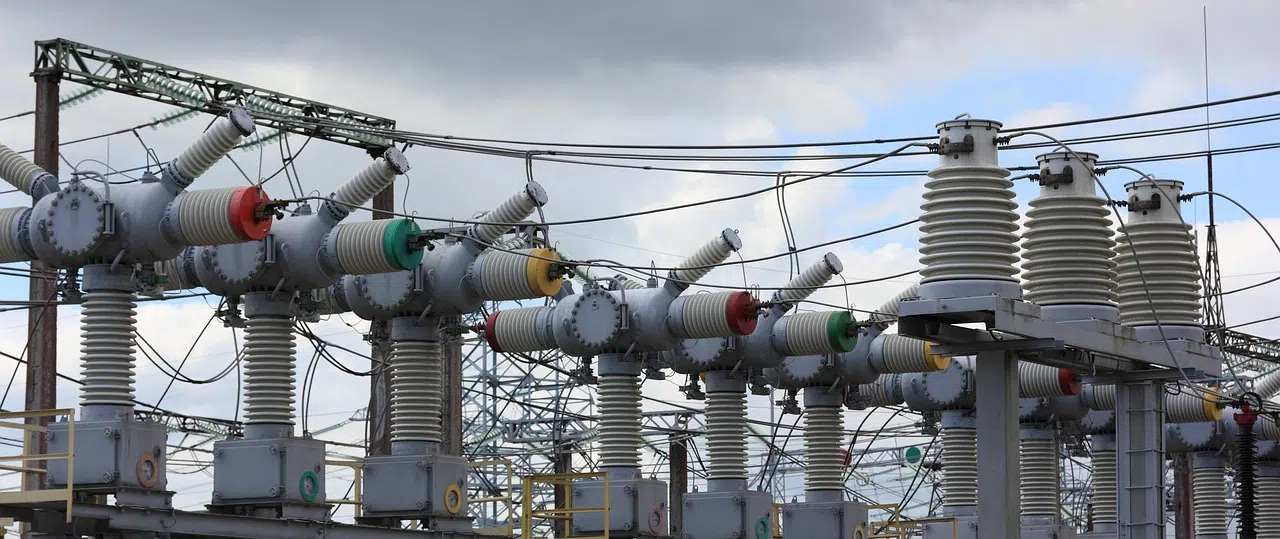
Raccoon infestations in substations and power plants are not just a nuisance issue but a critical infrastructure risk. Even one determined raccoon can cause power outages, costly equipment damage, and pose a safety risk to workers and passersby. A raccoon infestation here is a potential catastrophic failure point for the regional power grid and demands a zero-tolerance mandate. Unlike residential scenarios, raccoon removal for power plants and substations must meet strict safety, compliance, and operational continuity standards.
-
Raccoon Removal for Frenchman’s Bay & Pickering Parkland
The beautiful city of Pickering's waterfront, which includes a series of large coastal wetlands along the north shore of Lake Ontario known as Frenchman's Bay, and ample dense green space draw not only nature lovers but also plenty of wildlife. In fact, raccoons cause quite a bit of havoc in marinas with live-aboard communities.

If you’re having trouble with raccoons and are searching for raccoon removal in Pickering, read on. We'll explore in more detail why raccoons keep coming back, especially in the city’s park and bay areas.
-
Raccoon Removal for Scarborough Floating Homes
Floating homes such as those found in Bluffer’s Park Marina are not only unique permanent residences but they’re also very popular with the local raccoon population. In fact, raccoons have mapped these docks for generations.

The proximity to the Scarborough Bluffs natural habitat creates a wildlife highway directly to the marina and long-term nesting zones for local raccoon families. For homeowners in the marina dealing with persistent activity, professional raccoon removal for floating homes is essential to prevent ongoing damage and repeat infestations.
-
Raccoon-Related Challenges in Brampton's Residential Areas
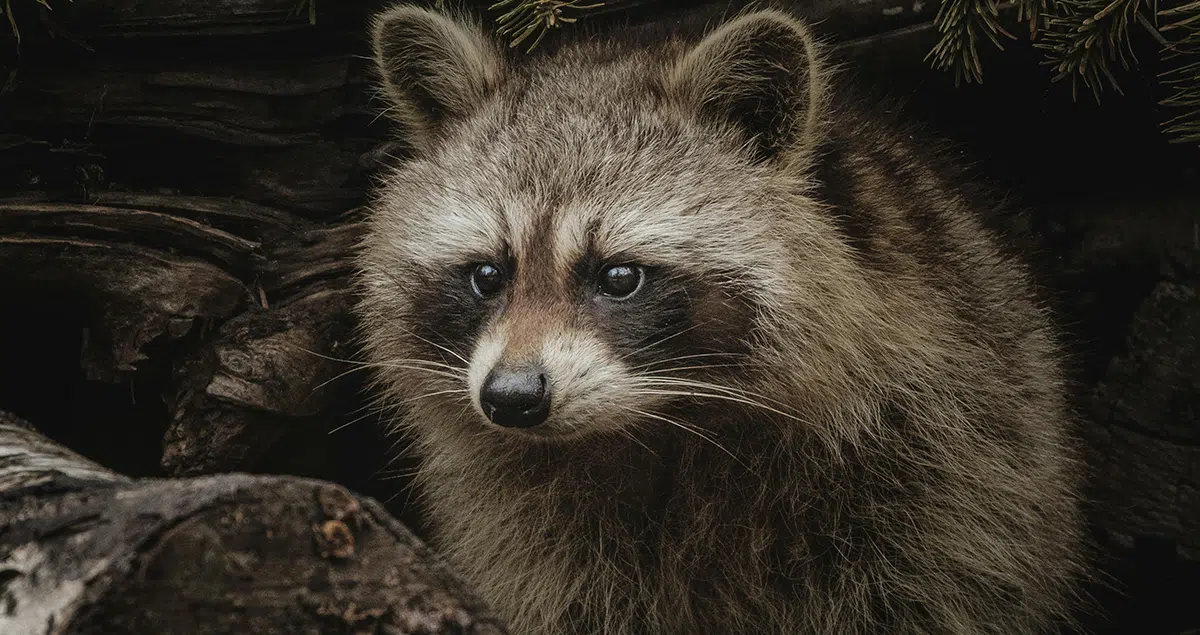
If you are a Brampton resident, chances are that you've made the acquaintance of a raccoon or three. Especially, if you are living near one of Brampton's many lovely parks or green belts, you likely have regular raccoon visitors. In this article we'll explore some common raccoon-related issues, how to spot them, and more importantly how to address the ever increasing raccoon infestation in and around Brampton.
Common Issues Residents Face with Raccoons in Brampton
Property Damage
- Attics, Roofs, Siding, and Crawlspaces
Raccoons are excellent climbers and the most efficient route to your attic is through your roof. Not only will they tear up your roof shingles, drainage systems or vents to gain access, but once inside, they'll also damage wiring and insulation - possibly causing water or frost damage or even fires. - Gardens and Lawns
While we may not be all that fond of grubs and other creepy crawly things, raccoons are. And, they'll dig up your lawn, flower beds, and gardens to get to them. (So do skunks, by the way.) - Urine Damage
Older homes with wooden floors are especially susceptible to rotting and mould due to raccoon urine and feces. We have seen damage so severe that the entire floor/ceiling collapsed and the contents of the attic latrine ended up on the kitchen table.
Noise Disturbance
Raccoons are nocturnal creatures, most active during the hours from dusk to dawn. They are also very vocal animals, often chittering or screeching to one another. They have a rich vocal repertoire producing sounds that can be differentiated and described as tonal or noisy calls. Tonal sounds, like whistles, have a clear, musical quality. Noisy calls, such as growls and hisses are more guttural and have a lower frequency; they are probably heard more often during breeding season.
Aside from vocalization, raccoons also scratch and thump - something that will definitely disrupt your slumber, especially when coming from your attic.
Health and Safety Risks
- Rabies Risk for Pets and Humans
Raccoons are the most common vector species for Rabies - a fatal disease if contracted by humans. - Leptospirosis
This is a bacterial infections spread through animal urine or feces, or water or soil contaminated with animal urine and feces. - Raccoon Roundworm (Baylisascaris procyonis)
While human infections are not overly common, they are extremely dangerous due to the ability of the parasite's larvae to migrate into brain tissue and cause damage. Concerns are actually on the rise because of the number of urban raccoons and increasing interaction with humans.
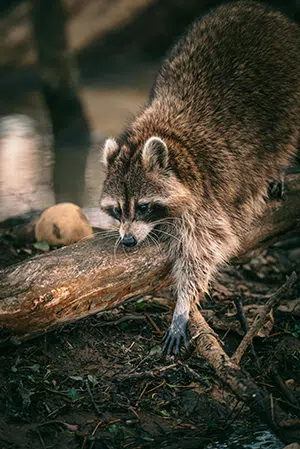 Garbage Scavenging
- Raccoons knock over garbage cans and spread trash around your property.
- Strewn trash attracts secondary pests like rats and insects.
- Aside from the mess that is now yours to clean up, you may also be exposed to potential health hazards.
Effective Solutions for Mitigating Raccoon Problems
Secure Entry Points
- Inspect Your Home for Potential Access Points
At least twice each year (spring and fall) it is wise to have a thorough look around your home. Pay special attention to siding and roofing, including the chimney and any vents. - Find and Fix
Install mesh screens and metal flashing over vents and chimneys and repair any small openings
. - Regular maintenance
This can include trimming tree branches to prevent access to your roof, screening the space below your porch among many other wildlife exclusion techniques.
- Attics, Roofs, Siding, and Crawlspaces
-
Raccoons in Scarborough’s Detached Garages
Our garages often house more than vehicles and garden supplies, including anything from pet food to kid's toys - and sometimes, wildlife. Finding a single raccoon or a raccoon family dwelling in your detached garage can come as quite a surprise. Learn what you can do to evict the little critters and prevent them from coming back.
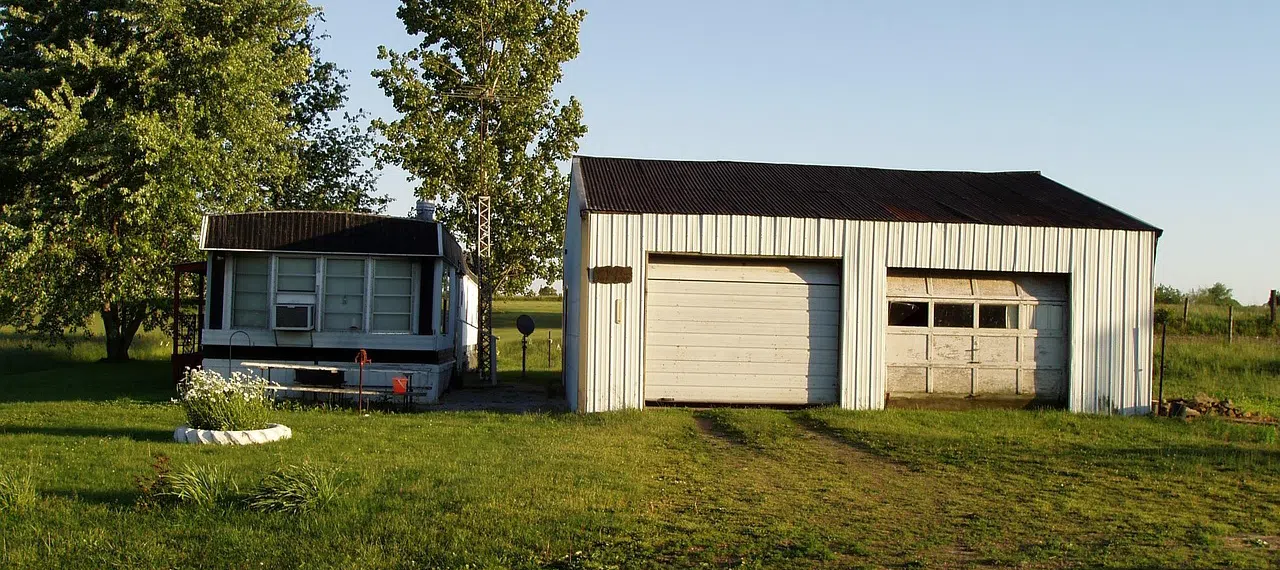
Recent calls to Scarborough homes (or more precisely, detached garages) seem to indicate a growing issue in the area. We all know that attics are a favourite hangout for raccoons (particularly over the winter and when litters of kits are born in the spring) but it looks as if detached garages are gaining popularity as well. And rightfully so - after all, they usually provide ample hiding spots and don't see a whole lot of traffic for most of the day or night. Let's look at what attracts wildlife to garages, what problems are associated with raccoons and how to get rid of raccoons from your garage.
Why is a Detached Garage a Raccoon's Ideal Den?
- Shelter and Security
Detached garages can offer protection from the elements as well as predators and usually see minimal human activity; - Seclusion and Privacy
The fact that garages are generally low traffic areas (particularly during the colder months) surely adds to creating ideal conditions for nesting and raising young; - Easy Access Points
Aside from gaps in wood siding, roofline holes, rotted eaves, or lifted shingles, there are more often than not unsecured doors; - Less Human Disturbance
Again, detached garages often aren’t used daily, allowing raccoons to settle in undetected; - Available Nesting Materials
Old boxes, insulation, fabric, or stored goods offer comfort and denning materials.
The Rise of Raccoons Denning in Garages
With raccoon populations exploding, more and more urban structures such as garages and other outbuildings double as raccoon dens.
- Urbanization & Habitat Loss
Continuous urban development keeps pushing raccoons into suburbs and even inner cities; - Food Access Nearby
Usually next to garages, garbage bins and composters can be found. Pet food is often stored in the garage; - Lack of Natural Predators
With the comings and goings of humans, natural raccoon predators such as coyotes tend to keep their distance; - “Artificial Cave” Analogy
Detached garages and/or equipment stored within can mimic safe, enclosed dens;
- Seasonal Timing
Spring (birthing season) and fall (shelter before winter) see spikes in wildlife infestations and raccoons living in garages.
What Happens Once Raccoons Enter Garages?
Wildlife should be admired from afar... not accidentally encountered or startled on your way to the car. Here are some of the issues you may be facing if one or more raccoons have moved into your Scarborough garage:
- Structural Damage
You will likely deal with chewed wires, torn insulation, roof and siding damage; - Biohazard Contamination
Feces and urine pose significant health risks; - Noise Issues
Your home may be subject to nocturnal sounds of movement, scratching, or thumping. Raccoons are also very vocal when communicating with one another; - Disease Risk
Both viral and bacterial infections can be transmitted to your family or pets. These include rabies, raccoon roundworm, leptospirosis, and other zoonotic threats; - Infestation by Parasites
Fleas, ticks, and mites can spread beyond the garage to your pets and even your home; - Aggressive Raccoons
Startled raccoons, especially if felt cornered, can become feisty and aggressive. Young mothers will also rally to defend their kits.
Why do Detached Garages Make the Problem Worse Over Time?
 Detached garages are often older buildings and more vulnerable as they tend to be less maintained and located closer to laneways, alleys, and ravines - all natural travel corridors for raccoons.
- Long term degradation such as defects or cracks in brickwork, decaying wood planks or panels, and weakened eaves give raccoons more and easier access points over time. These type of buildings require scheduled inspections and maintenance to minimize entry, though realistically, you'll likely not be able to seal off every nook and cranny to keep raccoons from pitching a tent in your garage.
- Raccoons are intelligent and adapt quickly; once one raccoon successfully dens in a detached garage, others in the area may follow suit, turning it into a habitual denning spot.
- Shelter and Security
-
Raccoons in the Garden: Pest Animal Control and Prevention
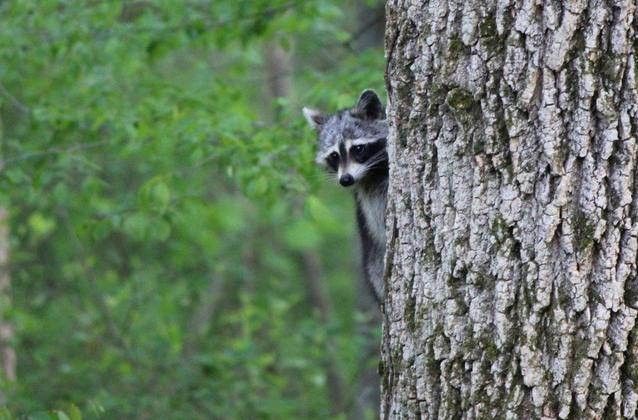
Raccoons are resourceful and skilled creatures. They are attracted to urban neighbourhoods as there is always food, shelter, and water nearby. Unfortunately, this can mean trouble for homeowners as well as business owners. If raccoons are congregating around your garden, or you notice signs of damage from these animals, you should seek immediate help. Our professionals are equipped and experienced to deal with your pest wildlife problems and will help prevent wildlife from causing trouble around your property.
Hawkeye’s Raccoon Control and Prevention from Gardens
If raccoons are frequenting you property or have begun making a den in your shed or near your garden, you should contact our professionals immediately. We will use a variety of methods to passively and actively get them away from your property, and if there is a recurring problem, we will install protective mesh to keep them out of spaces that are ideal for making their homes in.
Signs That Raccoons Are Active in Your Garden
You will know that you have raccoons active in your garden if you see paw tracks (five toes), fecal droppings, scratches on fences and trees, looted trash, missing vegetables, and disturbed garbage cans. Raccoons will eat almost anything and will rummage through food garbage tins, cans, boxes, and plastic to find something to eat. Since your garden is a buffet of plants and vegetables, they will likely seek out whatever is available and growing. They tend to enjoy apples, pears, peaches, sweet corn, potatoes, and peas.
How to Prevent Raccoons Entering Your Garden
Here are a few tips to prevent raccoons from being attracted to your garden:
- Seal your garbage cans tightly (purchase options with good locks) and wash spills often with bleach and water or find a personal solution at https://binsolutions.ca
- Remove any outdoor food sources such as bird feeders or containers with pet food
- Trim trees that hang over your roof so that raccoons cannot jump onto it
- Keep your roof in good repair to reduce the chances that raccoons will be able to tear away at shingles and climb into your attic
- Ensure the base of decks, sheds, and porches are properly enclosed
- Never feed raccoons or keep them as pets (it is illegal)
Contact Hawkeye for Raccoon Controlif you live in Mississauga, Scarborough, Oshawa, Bowmanville or Toronto.
Hawkeye Bird and Animal Control can help you if you need solutions to your residential or commercial raccoon problems. Hawkeye is a bird and animal control company that services residential, commercial, and industrial properties in the Greater Toronto Area, Golden Horseshoe, and many parts of Florida.
We provide animal and bird control and offer falconry experiences, and we also provide balcony cleaning, netting, and exclusion. We are the only pest bird and animal/wildlife control company in the country designated "Certified Wildlife Control Professional" and we hold the following licenses: Trapping of Fur Bearing Animals Permit, Falconry Permit, and Pest Control License.
If you want to prevent raccoons from destroying your garden or making a den on your property, contact us today. Email us at [email protected] or call us at (416) 429-5393
Hawkeye provides Raccoon Control and Removal Services in:
Mississauga,Scarborough,Oshawa, Bowmanville and Toronto.
Related Articles:
https://www.hawkeye.ca/blog/permanent-raccoon-removal-solutions-for-lawns
https://www.hawkeye.ca/blog/how-to-get-rid-of-raccoons-in-greenhouses
https://www.hawkeye.ca/blog/raccoon-control-for-flower-pots-and-landscape-plants