 CA
CA US
US

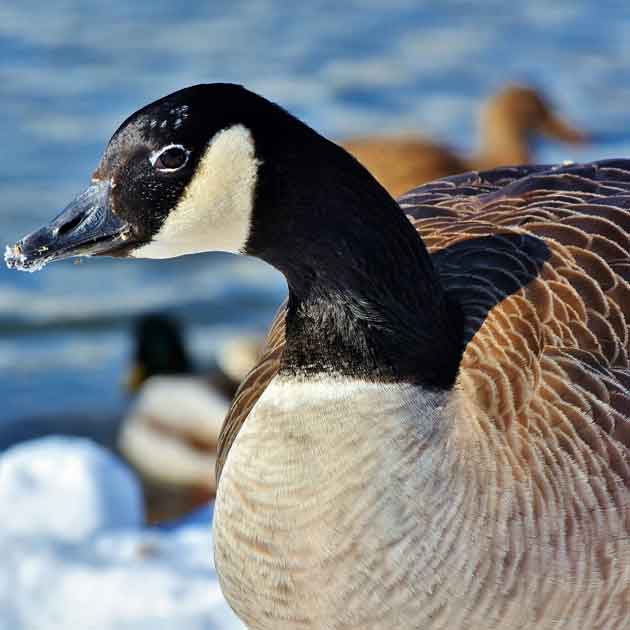





When thinking of a cemetery, most of us envision a beautifully landscaped park-like place of peace where we are able to reflect, remember, and mourn. We do not expect to be confronted by aggressive Canada geese.

Unlike retail plazas or office parks, cemeteries must balance a quiet atmosphere and religious or cultural sensitivity with visitor safety, year-round public access and strict maintenance standards.
When goose populations become established on cemetery grounds, professional goose removal for cemeteries may be required to restore safety, cleanliness, and the peaceful environment visitors expect.
When Geese Become a Problem
In many cases, goose control for graveyards becomes necessary when resident flocks begin treating cemetery lawns as permanent grazing and nesting areas.
- Goose droppings covering headstones
- Families having to step around feces during burials
- Geese charging at grieving visitors
- Staff chased during grave preparation
- Slip-and-fall risks
- Public complaints and reputational damage
- Viral social media posts showing “neglected grounds”
This is when goose control becomes necessary. A geese management plan for cemeteries requires discretion, strategy, timing, and layered implementation.
Why Cemeteries and Graveyards Attract Geese
These same conditions also explain why geese in memorial parks frequently establish long-term nesting territories and return year after year.
Manicured, Open Lawns
- Long, uninterrupted sightlines;
- Short turf that's ideal for grazing;
- Flat topography for predator visibility.
Water Features and Retention Ponds
- Decorative memorial ponds
- Stormwater basins
- Adjacent natural water sources
Quiet Environment
- Predictable foot traffic
- No sudden disturbances
- Early morning and evening calm
Monument Layout
- Rows of headstones create open corridors
- Few natural obstructions
- Perfect nesting pockets between monuments
Limited Active Threat Presence
- No regular predator pressure
- Infrequent active harassment
Goose Behaviour in Cemetery Environments
Canada geese are intelligent and highly adaptable birds with very complex social structures and strong family ties. A cemetery or memorial park can check all of the boxes for a successful nesting site, which is why geese in memorial parks often establish long-term territories.
Territory Establishment
- Pair bonding begins in early spring
- Returning to previous successful nesting zones
- Claiming large lawn sections
Nesting Patterns in Cemeteries
It is very common for geese to nest in a cemetery where monuments, quiet sections, and open sightlines provide ideal protection and visibility.
Common Nesting Locations:
- Between large monuments
- Near tree bases
- Along pond edges
- Near mausoleums
- In low-traffic sections
Aggression Escalation:
- Protective males guarding large perimeters
- Charging behaviour toward humans
- Hissing and wing striking
Long-Term Site Loyalty:
- Successful nesting almost guarantees the return of the flock.
- Entire cemetery sections can become permanent nesting zones.
Seasonal Goose Issues in GTA Cemeteries
In order to prepare for and make a plan to deal with geese populations at cemeteries, it's important to understand the seasonal issues and what to expect.
Late February–March
- Snow melt
- Territory scouting
- Early pair presence
April–May
- Nest construction
- Aggressive, defensive behaviour
- Highest liability window
June–July
- Goslings on grounds
- Heavy droppings accumulation
- Peak public complaints
August–September
- Loafing flocks
- Grazing damage
- Landscape deterioration
Fall Migration
- Temporary large group staging
Goose Removal Challenges in Cemeteries
Control methods require more planning and may even be limited when it comes to geese at cemeteries. Both, timing and method need to assure minimal disruption and discomfort for mourners and visitors.
Funeral Scheduling Constraints
- Cannot disrupt burial services
- Noise-sensitive environment
- Must coordinate control efforts around ceremonies
Public Perception
- Humane practices are mandatory;
- Highly visible wildlife activity;
- Media sensitivity.
Slip-and-Fall Liability
- Wet grass and droppings represent a hazard
- Granite markers become slippery
Large Acreage
- Dozens or hundreds of acres
- Multiple sections with varying risk
Religious and Cultural Considerations
- Wildlife management must respect sacred space
- Discretion essential
Consequences of Ignoring Goose Problems in Cemeteries
Ignoring geese is never a good idea and probably even less so in such a sensitive environment.
The Exponential Rise in Maintenance Costs
- The "Man-Hour" Drain:
Maintenance crews can spend up to 30–40% of their time simply cleaning droppings from paths and monuments instead of performing essential landscaping or burials. This is a massive waste of cemetery payroll. - Monument Restoration Costs:
Once acidic waste eats into a marble or limestone headstone, simple washing won't work. Professional stone restoration can cost anywhere from $300 to $1,000+ per monument. Multiply this by a flock of 50 geese, and the numbers become unsustainable. - Turf Destruction (Landscape):
Geese prefer very young, fresh shoots of grass (in fact, these make up most of a gosling's diet in its early life) which means that grass cannot regenerate at a normal and healthy level. Additionally, geese can pull grass shoots up by the roots ("denuding"). Replacing dead turf and reseeding large cemetery sections is a recurring, high-cost endeavor that yields no long-term results if the birds remain.
Legal and Insurance Liability
- Slips, Falls, and Lawsuits:
Goose feces on wet grass or polished granite walkways are as slippery as black ice. For elderly visitors (often the primary demographic for cemeteries) this is an extreme safety hazard. A single "slip and fall" lawsuit can cost a cemetery board significantly more than a decade of professional bird control. - Aggression Liability:
If a nesting goose injures a visitor, the cemetery can be held liable for "failure to warn" or "failure to maintain safe premises."
Irreparable Brand Damage
- Public Perception:
Families pay for "perpetual care." When they visit a loved one’s grave and find it defaced by waste, their trust in the cemetery management is broken. This leads to negative reviews and a decline in new plot sales.
DIY Goose Control in Cemeteries and Graveyards
Many cemetery operators attempt low-cost deterrents before considering professional intervention. While some methods may provide short-term disruption, most fail in large, open memorial properties without sustained predator pressure.
While these DIY solutions may seem appealing, they rarely get rid of geese permanently on large cemetery properties. Let's look at why these methods are not long-term solutions:
Decoys & Plastic Predator Statues
What They Include:
- Coyote replicas
- Owl statues
- Fake eagles
- Predator silhouettes
Why Cemetery Operators Try Them:
- Visually non-invasive
- Affordable
- Easy to install
- Seem humane and discreet
Why They Fail in Cemeteries:
- Geese are highly intelligent and observant
- If the “predator” never moves, they test it
- Within days, geese recognize that the decoy poses no threat
- Large cemetery lawns give geese alternative safe zones
- Stationary statues cannot cover multiple acres
Cemetery-Specific Limitation:
Memorial parks are expansive. Even if one section is made temporarily undesirable due to a plastic predator, geese simply relocate to another part of the grounds. Without constant movement or reinforcement, decoys become part of the landscape.
Reflective Tape, Mylar Balloons & Visual Disturbance Devices
What They Include:
- Reflective tape along fencing
- Shiny streamers
- Helium predator balloons
- Reflective discs
Why They’re Used:
- Intended to create flashing light disturbance
- Marketed as low-maintenance solutions
- Quiet and inexpensive
Why They Don’t Work in Cemeteries:
- Geese quickly habituate to repetitive visual patterns
- Wind-dependent movement makes them inconsistent
- Calm weather renders them ineffective
- Large open grounds reduce their impact
Cemetery-Specific Issue:
Cemeteries require a dignified appearance. Reflective tape and balloons may:
- Conflict with aesthetic standards
- Be inappropriate during funerals
- Create visual distractions for visitors
Bottom Line: Long-term effectiveness is very low. Without real predator reinforcement, geese adapt quickly.
Fencing and Sectional Barriers
Useful for:
- Small pond edges
- Defined sections
Limitations:
- Geese fly in
- Not scalable across large memorial parks
- Can interfere with groundskeeping equipment
Habitat Modification (Most Effective DIY Option)
Habitat modification is absolutely effective and even necessary where possible. As with all bird control, one solution alone never does the trick. But habitat modification plays a part in the solution.
Strategies:
- Slightly longer grass in low-visibility zones.
- Shrub clusters near water.
- Breaking up long sightlines.
- Subtle landscape reconfiguration.
Cemetery Challenge:
- Must maintain manicured, uniform aesthetic.
- Requires board approval.
- Must be subtle and strategic.
Why Passive Goose Deterrents Fail in Cemeteries
Effective cemetery wildlife management requires a coordinated strategy that combines habitat modification with active predator-based deterrence.
- Cemeteries are quiet and predictable environments.
- Large acreage means geese can relocate easily.
- Stationary objects do not simulate real risk.
- Without predator presence, geese feel safe.
- Once nesting begins, deterrents become even less effective.
On memorial properties, goose control must change how the site feels to the birds; control methods must target the birds' sense of safety. An unsafe or unpredictable site does not make for an ideal breeding and nesting location. To achieve that goal, you'll need the help and services of a professional goose control company. Because cemeteries require discretion, safety, and long-term results, most operators eventually move toward structured, predator-based programs.
Hawkeye's Goose Control for Cemeteries
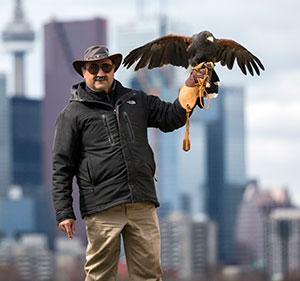
To preserve the peaceful nature of a cemetery or memorial part in the GTA, Hawkeye's goose control methods include non-intrusive, predator-based, multi-layer approach including our falconry program. Allow us to demonstrate our 35+ years of experience and a deep love for birds of prey. Contact Hawkeye today for an assessment and comprehensive geese management plan for years to come.
Related Articles:
Part II: Goose Control for GTA Cemeteries and Graveyards
FAQs: Goose Control for GTA Cemeteries and Graveyards
https://www.hawkeye.ca/blog/which-is-the-best-bird-of-prey-for-goose-control-2
https://publications.gc.ca/collections/collection_2011/ec/CW66-293-4-2011-eng.pdf
https://www.hawkeye.ca/blog/how-the-rise-in-goslings-increases-goose-infestations-across-vaughan
