 CA
CA US
US


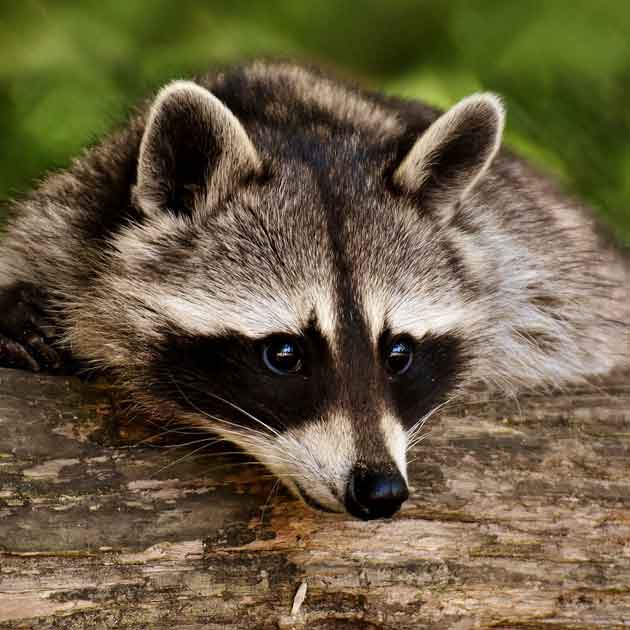


Schools and universities make for prime raccoon habitats, offering sprawling grounds, abundant food waste from cafeterias and waste bins, and complex architecture such as portables and tunnels. In fact, educational facilities provide everything a raccoon needs to thrive.

The stakes of raccoon infestations are high: Beyond property damage, the presence of raccoons in a school environment introduces severe liability risks, including student safety, public health concerns, and potential closures. This is why campus infestations require a different approach than residential properties. Trapping and relocating almost always fails - it's time to look for a solution that works, including raccoon control for school buildings and grounds that addresses liability, safety, and long-term prevention.
Permanent Raccoon Removal: Learn more or CALL for a free consultation.
Raccoon "Hot Zones" by Institution Type
- Elementary Schools: Ground-Level Hazards
- Portable Classrooms: The hollow voids beneath portables are the #1 nesting site for maternity dens.
- Playground Sandboxes: Raccoons use these as large-scale latrines, posing a direct threat of roundworm transmission to young children.
- Equipment Sheds: Sports and maintenance sheds that remain undisturbed on weekends draw raccoons and other local wildlife.
- High Schools: Athletic & Social Hubs
- Concession Stands: Food residue near sports fields is a major attractant.
- Bleachers & Grandstands: Hollow spaces beneath seating provide secluded denning spots.
- Universities & Colleges: The Infrastructure Challenge
- Utility & Steam Tunnels: Vast underground networks that allow raccoons to move between buildings undetected.
- Student Residences (Dorms): Balconies, rooftop vents, and shared dumpster areas near student housing.
- Old Stone Architecture: Historic campus buildings with settling gaps and unsealed masonry.
Why Schools and Universities Are High-Risk Places
It's not difficult to understand why schools and universities are targeted by raccoons. Shelter, food availability, and the fact that there is little to no human traffic at night (precisely the time when raccoons are most active) all account for the animals targeting educational facilities - making it especially difficult to get rid of raccoons in schools without a coordinated, professional approach.
- Physical Safety Risks: The threat of bites or scratches during recess, late-night study sessions, or evening campus events. Cornered raccoons or protective mothers are high-risk encounters.
- Public Health & Pathogens:
- Raccoon Roundworm: The risk of young children ingesting contaminated soil/sand.
- Leptospirosis & Rabies: The threat to school staff and maintenance crews handling garbage or cleaning infested areas.
- Psychological & Operational Impact: Fear and anxiety among parents and students, and the potential for "emergency closures" if a raccoon breaches a classroom or cafeteria.
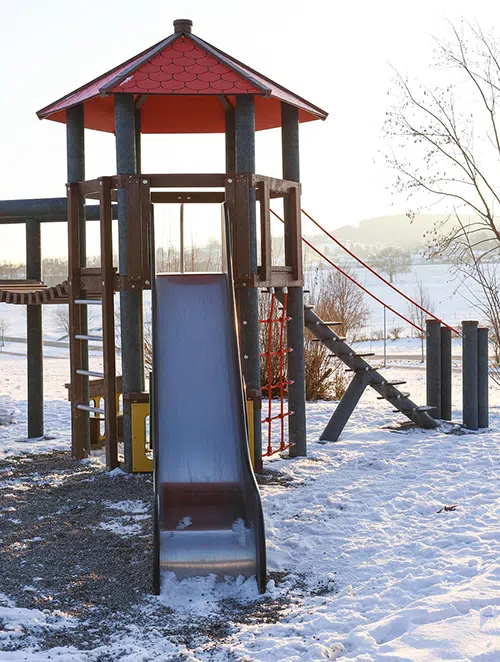 Seasonal Raccoon Risks for Educational Facilities
- Autumn
Raccoons are actively searching for appropriate long-term shelter for the upcoming winter months;
Entry often occurs through roof and wall gaps.
- Winter
Long-term denning inside buildings;
There is an increased risk of damage to insulation and wiring. - Spring (Breeding Season)
Raccoon babies (kits) are hidden in ceilings, crawl spaces, or walls;
Mothers are protective of their litter and become aggressive;
Removal often becomes more difficult due to the number of animals and their location. - Summer
With the campus empty and quiet, raccoons infestations can easily go undetected;
Odour and sanitation issues arise during maintenance projects.
Raccoons in Schools/Universities: Dos and Don'ts
- DO
Lock the Bins: Mandate the use of raccoon-proof, locking waste containers for all cafeteria and outdoor disposal areas.
Audit the Portables: Conduct weekly inspections of the skirting around portable classrooms.
Use dogs: Daily dog patrols can help keep raccoons at bay.
Communicate: Alert staff to report sightings immediately, especially during the spring birthing season. - DON'T
Attempt DIY Trapping: Janitorial or maintenance staff attempting to trap raccoons increases the school's liability for bites and legal violations. Safe raccoon removal in schools, including raccoon trapping, requires licensed professionals who understand animal behaviour, student safety, and Ontario wildlife laws.
Feed the Wildlife: Strictly prohibit students or residents from feeding "cute" campus raccoons. Feeding wildlife is not only illegal in most municipalities, but also eliminates their fear of humans.
Block Entry Points Blindly: Never seal a hole without a professional thermal audit; trapping a raccoon inside leads to the death of the animal and infrastructure damage and decomposition odours in classrooms.
Strategic Raccoon Prevention for Educational Premises
- Elementary-Specific Strategy: The Sandbox & Playground Lockdown
- Install heavy-duty covers on all sandboxes.
- Trim all tree branches eight feet away from the roofline to prevent access to classroom ceilings.
- University-Specific Strategy: Large-Scale Exclusion & Tunnel Monitoring
- Harden utility tunnel grates and installing thermal sensors in "blind" service corridors.
- Install trail cameras around the perimeter.
- Implement campus-wide waste management protocols to eliminate nocturnal food sources.
Challenges, Risks, and Legal Liabilities for Educational Facilities
- Challenges:
Active classrooms and schedules;
Large rooflines and multiple entry points;
Confined spaces;
Media and parental scrutiny;
Legal compliance and documentation requirements. - The "Maternity Den" Liability:
In the spring, removing a mother and leaving kits to die in a classroom wall is a biohazard nightmare and a cruelty violation. - School Board Liability:
Property managers must ensure that any wildlife removal company is fully insured and licensed for commercial-scale work. Professional raccoon removal for campuses is critical to meeting legal, safety, and documentation requirements. - The Summer Break Trap:
Infestations that start during July/August often go unnoticed until students return in September, resulting in a crisis-level population of juvenile raccoons.
Why DIY & Deterrents Fail for Educational Campuses
Devices and scents marketed as "raccoon repellents" work for a few days at best, and often not at all. Raccoons are highly intelligent critters, learning by observation and putting to use remarkable problem-solving abilities. Anything not posing an imminent physical threat will be studiously ignored. Such deterrents include:
- Ultrasonic devices
- Lights and noise deterrents
- Chemical repellents
- Temporary fencing
In addition, chemical repellents can create safety hazards for students and staff, as well as liability risks for superintendants.
Hawkeye's Permanent Raccoon Removal Services for Schools/Universities
Permanent Removal is just that - permanent and guaranteed. After capture, the animal is humanely euthanized and will never return.
The approach to raccoon control is usually to trap and relocate. This fails for many reasons, but particularly on large grounds, the relocation limit of 1 km often releases the animal still within the property line.
Hawkeye is the ONLY wildlife control company in the GTA offering permanent raccoon removal. A unique set of licenses and ongoing training and certifications enable us to:
- Protect students and staff;
- Reduce the institution's liability;
- Prevent repeat infestations;
- Align with institutional safety policies.
Hawkeye Bird & Animal Control has reduced and prevented raccoon infestations for over 35 years. All of our wildlife technicians are also licensed trappers.
Raccoon Control for Schools and Universities: FAQs
Q: What should school staff do if raccoons are found during school hours?
A: Secure the area and keep students at a safe distance. Report the raccoon sighting and contact a professional wildlife control company. Under no circumstance should you feed or handle the animal.
Q: Can raccoons be safely removed while classes are in session?
A: Yes, raccoons can be trapped anytime. Although, raccoons are nocturnal and capture will likely be more successful at night.
Q: Are raccoon deterrents allowed on school grounds?
A: This question should be answered by your administration. While some deterrents such as motion sensor lights would pose no harm, chemical solutions or anything emitting an electric shock should be avoided on school property.
Q: How do raccoons enter school buildings?
A: Believe it or not, raccoons can enter through an open door or window just as well as through a weak spot in the roof. The are incredibly flexible and athletic and can fit through openings as small as five inches in diameter.
Q: What risks do raccoons pose to young children?
A: Raccoons pose threats to young children two ways: By leaving behind parasites and pathogens (such as raccoon roundworm) in their feces around playgrounds and sand boxes and of course, with physical contact. The biggest concern here is rabies transmitted through saliva when a bite occurs.
Q: Is it legal for schools to trap raccoons themselves?
A: Yes, school administrators can choose to set appropriate traps and capture a raccoon on their own. It is the release of the animal that requires careful deliberation. In Ontario, the law forbids for captured wildlife to be released more than 1 km from where it was caught. This restriction may mean that the animal is still on school property, once released.
Q: What happens if raccoon babies are found in a school ceiling?
A: Professional wildlife removal companies are best equipped to deal with baby raccoons (and their mother). Issues often arise, from difficulties accessing the space to dealing with a protective female.
Q: Can raccoon removal be done discreetly to avoid disruption?
A: Of course, discreet raccoon removal is not only possible, but preferable. Raccoons are most likely to enter a trap at night, while out searching for food. Any time a trap is set, it must be inspected at least once a day, usually in the morning (and, ideally again in the evening). The animal and trap should be removed as quickly as possible.
Q: Can we use "one-way doors" in a portable classroom?
A: Yes, one-way doors can be used as long as there are no raccoon kits present. If there is a chance that you are dealing with a mother and young offspring, you absolutely cannot use a one-way door. Separating the mother and kits would lead to a catastrophic outcome for the babies and likely result in tremendous damage by the mother to trying to return to her den.
Q: How do we handle a raccoon that has entered a school bus parking lot?
A: A raccoon passing through the parking lot is not so much a concern; the human and bus traffic will quickly send it scurrying off. However, if you notice a raccoon hanging around or see it more than once, you may have a bigger problem. You may actually have a raccoon that has breached a building and considers the school grounds its territory.
Q: Are ultrasound devices effective for keeping raccoons away from playground equipment?
A: Unfortunately, high-frequency sounds may be annoying, but they pose no physical threat to raccoons. The animals will likely keep their distance for a few hours or even a day and then ignore them. Raccoons are smart and learn by observation - they will literally sit and watch the device to see what it does.
Q: Is the school board liable if a student is scratched by a raccoon on campus?
A: Yes, a school board may be liable for a raccoon encounter if they are found to have failed in their duty to maintain a safe environment and provide adequate adult supervision. They may be found negligent if the school knew or should have known about a wildlife risk and failed to take protective action.
Q: Are "learning gardens" or school greenhouses at risk for raccoon infestations?
A: Yes, indeed, they are. Greenhouses especially provide a perfect combination of food and shelter for raccoons. Berry bushes and vegetable and fruit gardens also make locations vulnerable.
Q: What is the risk of raccoons entering large open spaces like gymnasiums or auditoriums?
A: Raccoons do enter through gymnasiums and auditoriums, often through open doors while equipment is being moved. They will then seek out smaller, more private spaces from there.
Q: What to do if any staff or students are bitten by a raccoon?
A: Anyone who experiences a raccoon bite needs to visit a hospital emergency or urgent care facility immediately. The biggest concern is a rabies infection. Rabies is transmitted by the saliva of an infected raccoon. Rabies almost always fatal if contracted by a human and if left untreated.
Q: How long does professional raccoon removal take for campuses?
A: It really depends on the number of animals to be removed and traps set. Raccoon removal for universities and schools can take from one day up to several days.
Q: What documentation do schools need for wildlife removal?
A: Ontario schools in need of wildlife removal generally need documentation ensuring compliance with the Fish and Wildlife Conservation Act. This includes hiring licensed, insured pest control professionals with the appropriate wildlife permit.
Q: Why does the smell of raccoon urine linger in the school hallways even after removal?
A: Raccoon urine likely seeped into small gaps in the floor and/or soaked into baseboards and drywall. A professional wildlife control company can assess and recommend further action.
Hawkeye Bird & Animal Control
Schools and universities require a zero-tolerance policy for raccoon infestations to protect the health and safety of the student body and campus and their reputation.
Contact Hawkeye today for a professional institutional audit and guaranteed permanent raccoon removal.
Raccoon removal for schools and universities is available in: Toronto, Oakville, Brampton, Mississauga, Etobicoke, Aurora, Whitby, Oshawa, Newmarket, Scarborough, Markham, Pickering, Ajax, East York, North York, and Vaughan.
Related Articles:
https://www.hawkeye.ca/commercial-animal-control
