 CA
CA US
US

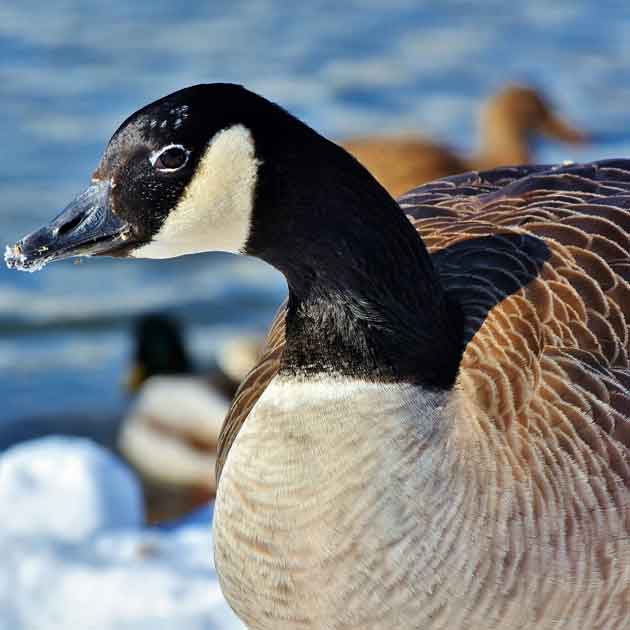



In the last article, we discussed why graveyards and cemeteries are so vulnerable when it comes to Canada geese infestation. Now, we'll look at how to remedy goose breeding and nesting and how to prevent the same problem from occurring again next spring.

Deterrents and DIY solutions are not a viable, long-term option to prevent Canada geese from nesting and grazing in GTA cemeteries and memorial parks.
Professional Goose Control for GTA Cemeteries and Graveyards
Falconry Using Birds of Prey
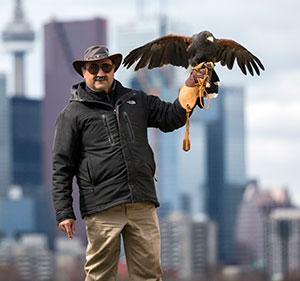
Falconry is the most natural and discreet goose control method available. Unlike loud or mechanical deterrents, falconry takes advantage of the natural predator/prey relationship as trained birds of prey create a real predator presence, which triggers a deep survival instinct in geese. Hiring a skilled falconer with a well-trained eagle is critical.
For cemeteries, this is particularly essential, because:
- It is quiet and non-disruptive.
- It does not interfere with funeral services.
- It maintains the dignity of the property.
- It produces long-term behavioural change.
Geese recognize raptors as a legitimate threat, not a temporary disturbance and will vacate the area of their own volition.
Why Eagles Are Particularly Effective
- Eagles are apex aerial predators
- Their size and flight pattern command immediate attention
- Geese respond instinctively and vacate the area quickly
- Over time, geese begin to avoid the cemetery entirely.
How Falconry Is Implemented in Cemeteries
Hawkeye's structured falconry program typically includes:
- Early spring deployment before nesting begins.
- Scheduled flights focused on historically affected sections.
- Coordination around funeral schedules.
- Increased presence during high-risk nesting periods.
- Ongoing reinforcement to prevent re-establishment.
Advantages for Memorial Properties
- Humane and compliant
- Visually natural
- Does not leave equipment or visual clutter
- Suitable for large memorial parks
- Encourages long-term site avoidance
Limitations to Consider
- Requires trained, licensed handlers
- Must be deployed consistently throughout the first season
Trained Goose Control Dogs
Why Dogs Work in Cemeteries
Geese perceive dogs as ground predators. Dogs are especially effective across large, manicured memorial lawns. When dogs patrol cemetery grounds:
- Geese feel unsafe resting or nesting.
- They cannot relax in open lawn sections.
- Territory establishment becomes more difficult.
Why Dogs Are Well-Suited for Cemetery Layouts
Cemeteries often have:
- Wide-open grass corridors
- Long sightlines between monuments
- Large acreage requiring ground-level coverage
Trained dogs can:
- Patrol efficiently
- Cover multiple sections
- Reinforce unpredictability
How Dog Programs Are Structured
- Regularly scheduled patrols at irregular intervals
- Increased frequency during early nesting season
- Strategic avoidance during funeral services
- Focus on known nesting zones
Remember that consistency is key. Sporadic use reduces effectiveness.
Cemetery-Specific Benefits
- Quiet and humane
- No visual clutter
- Flexible scheduling
- Scalable across large properties
- Minimal disruption when coordinated properly
Limitations
- Requires trained handlers
- Must avoid service times
Why Combining Falconry and Dogs Is Most Effective
This layered approach is particularly effective for goose management for large memorial parks and cemetery environments where single deterrent strategies rarely succeed.
- Falconry
Controls aerial and territorial perception - Dogs
Apply ground-level harassment
This combination is often the most reliable strategy for large GTA memorial parks, as it reinforces danger from both sky and ground and prevents geese from becoming comfortable. Falconry and trained dogs work side by side to reduce repeat nesting cycles and create long-term behavioural change.
Why Predator-Based Control Is More Appropriate for Cemeteries
Memorial properties require:
- Dignity
- Discretion
- Safety
- Compliance
- Public sensitivity
Predator-based programs:
- Do not rely on noise pollution
- Do not create visual disruption
- Do not appear aggressive or inhumane
- Work naturally within ecological behaviour
For these reasons, falconry partnered with trained dogs is particularly well suited to graveyards and cemeteries.
How to Get Rid of Geese Nests in Cemeteries
When nesting activity is discovered, cemetery operators often wonder how to get rid of goose nest sites while remaining compliant with wildlife protection regulations.
Legal and Sensitivity Considerations of Nest Removal
- Permits must be obtained
- Must avoid public distress
- Discreet removal scheduling
Why Egg Oiling Is Not Effective
- Geese do not recognize non-viable eggs
- They continue sitting for weeks
- The birds will return next year
Egg addling or oiling may interrupt the current breeding season but does not stop the breeding and nesting cycle long-term. Even though no eggs hatched, geese will still return the following spring.
Why Nest Destruction Is More Effective
- Nest destruction in front of geese forces relocation
- Shortens behavioural attachment
- Signals that the area as not fit for breeding
Large-Scale Geese Relocation for Cemeteries
In many GTA cemeteries, you aren't dealing with a single pair of geese, but a multi-generational "resident flock" of 50 to 100+ birds. When the population reaches this level, deterrence alone can be slow. This is where large-scale relocation comes in.
Is Relocation Even Possible for a Whole Flock?
Yes, but relocating a flock of geese is a highly specialized logistical operation. It is not simply "chasing them away"; it is a legal, physical removal. This process involves prior permits and approval of the new location along the migration route as well as a plan for monitoring the relocated geese until fall migration.
- The "Molt" Window
Relocation is ideally performed between late June and mid-July. This is the molting season when adult geese lose their primary flight feathers and cannot fly. - The Herding Process
Because the geese cannot take flight, a professional team (like Hawkeye) uses trained dogs and specialized fencing to humanely herd the entire flock into a confined area before loading them into ventilated transport vehicles. - The Destination
By law, these birds must be moved to a pre-approved, high-quality habitat, often hundreds of km away and on their path of migration, to ensure they do not simply walk or fly back once their feathers regrow.
The Cemetery Catch
While relocation clears the grounds instantly, it creates a "habitat vacuum." If you move 100 geese but leave the manicured grass and open water unchanged, a new flock from a neighbouring park can move in within weeks.
- The Pro Strategy
Geese relocation must be immediately followed by falconry (eagles) and habitat modification to signal to the next flock that this territory is already claimed by a predator.
Safety Protocols for Cemetery Operators
- Strict no-feeding policy
- Staff training on aggression avoidance
- Keep distance from nesting zones
- Temporary signage where needed
- Coordinate control with administration
Long-Term Geese Prevention Strategy for GTA Cemeteries
Long-term goose prevention for cemeteries focuses on altering the landscape and predator presence so geese no longer perceive the property as a safe nesting habitat.
Sightline Sabotage: Thinking Like a Prey Animal
A big reason that geese stay in cemeteries because they can see predators (like coyotes or humans) from hundreds of yards away. Understanding how to prevent geese from feeling secure on the property is key to stopping repeat nesting cycles.
- Strategic Buffer Zones
Plant tall native grasses (e.g., switchgrass or little bluestem) or dense shrubs (like boxwoods) around the perimeter of ponds or in low-traffic sections of the graveyard. - The "9-Meter Rule"
If a goose cannot see a clear path for at least 9 meters in every direction, it feels vulnerable to ambush. Breaking up large, flat expanses of lawn with ornamental trees or tall flower beds creates "blind spots" that geese instinctively avoid.
Flight Path and Landing Interference
Geese are heavy birds that require a "runway" to land and take off.
- Pond Wiring (the Invisible Grid): For cemetery reflection ponds, a professional grid of stainless-steel wires or heavy-duty monofilament installed 12–18 inches above the water surface prevents geese from landing. To the human eye, it’s nearly invisible; to a goose, it’s an impassable barrier.
- Vertical Obstructions: Planting a staggered row of trees between a water source and a grazing lawn forces geese to fly at a steeper angle, making the site less "efficient" for them. They will eventually move to a neighbouring park that is easier to access.
Removing the Water Safety Zone
Geese are waterfowl, so bodies of water are an important safety zone to which they can retreat when threatened by ground predators. In small ponds, dogs can successfully displace geese, but in larger ponds or lakes, geese can simply move to the far side and return once the dogs are gone.
- Hawkeye's Remote Control Boats
Remote controlled boats at dusk or later can appear predatory and unpredictable to geese in the water. We often pair these boats with lasers.
Maintaining Biological Dominance
Once the initial flock is cleared, the property enters the "maintenance phase," which includes:
- Falconry
Even after the geese are gone, occasional flyovers by eagles reinforce the lack of safety and unsuitability of the area. - The Dawn/Dusk Laser Sweep
Using high-powered, professional-grade lasers during the hours when cemetery staff aren't present ensures that migratory flocks don't use your quiet graveyard as a safe overnight roosting spot.
Policy and Cultural Shift
- "Do Not Feed" Enforcement
This is non-negotiable. One visitor feeding a goose can undo months of professional control. Install dignified but firm signage explaining that feeding disrupts the natural balance and endangers the birds' health. - Grass Height Management
In "buffer" or peripheral areas of the cemetery, allow the grass to grow to 6+ inches. Short, manicured grass is "goose candy"; taller, coarser grass is difficult for them to eat and hides potential predators.
FAQs About Goose Removal from Cemeteries
Q: When should GTA cemeteries start goose control?
A: Any goose control measures require planning, permits, and experience. Ideally, a goose management plan is devised and permits are obtained before geese arrive in Ontario. That said, it's never too late to engage a goose control expert and start working on a schedule.. Keep in mind that all efforts other than habitat modification require prior permits.
Q: How do you prevent geese around cemetery ponds?
A: The first and probably easiest step is some habitat modification. You can make the pond less attractive by planting shrubs or installing boulders near the waterline. A more involved approach would be pond netting. This will impede on getting into and out of the water. You can then move on to ROVs to make the water itself unpredictable.
Q: We tried "Away with Geese" (Goose Lights) lights and they didn't work. Why?
A: Geese are highly intelligent birds and quickly learn to ignore devices, sounds, or lights that do not pose actual danger. Without either physically preventing access (like pond wiring) or real predator intervention, geese will remain on the grounds.
Q: What should cemetery staff do if geese attack visitors?
A: Ideally, staff would have been trained in observing and recognizing the early signs of goose aggression. Early warning signs include lowering of the head, a neck stretched out forward, honking or hissing, wing flapping, and "head bopping" - that's movement of the head up and down. At this stage, remain calm and avoid sudden movements that could be interpreted as aggression on your part. Maintain eye contact and slowly back away - do not turn your back to the goose and do not run. Keep your movements slow, steady, and controlled. You signaling retreat may end the confrontation. Learn more here »
Q: Is falconry appropriate for memorial parks?
A: Yes, falconry is very appropriate for memorial parks and cemeteries. It is unobtrusive, humane, and very effective. Given its significance in may cultures, visitors may even enjoy or feel comforted by seeing an eagle overhead.
Q: Will Falconry or dogs disturb people visiting graves?
A: Falconry will not disturb visitors; in fact, the eagle is held in high esteem by many cultures and may be seen as a comfort at gravesites. On the other hand, dog patrols can be scheduled during times where visitors are less likely to frequent the grounds.
Q: Can we use chemical goose repellents on the grass to save money?
A: Chemical repellents rarely work in an outdoor environment at all (imagine having to reapply after every rainfall) and may be detrimental to other animal species.
Q: Can we just wait for the geese to migrate in the winter?
A: Yes, of course that's an option for the current year. The problem is that the same geese will return the following spring. The only long-term solution is to break the breeding/nesting cycle at your location.
Q: If we relocate the flock, will they just come back next year?
A: Choosing a location for the flock of geese to relocate to requires great care and knowledge of their migration route. The relocation spot needs to be south-west of your property and a minimum of 100 km away. If done right, the chance of return to the original nesting site can be as low as 10%. Having a goose control expert like Hawkeye Bird & Animal Control working with you is crucial.
Q: Can we relocate geese to a local farm or pond nearby?
A: No, you absolutely cannot. The new site must be a minimum of 100km south west of your location and pre-approved by the Canadian Wildlife Service. Learn more here »
Q: What happens to the goslings during a large-scale geese relocation?
A: Goslings travel with their parents for their first year of life. They will move to the relocation site and then migrate south for the winter alongside their parents. Female yearlings often remain with the flock while young male geese will go off to find or establish their own flock.
Hawkeye's Professional Goose Control for Cemeteries
To preserve the peaceful nature of a cemetery or memorial part in the GTA, Hawkeye's goose control methods include non-intrusive, predator-based, multi-layer approach including our falconry program. Allow us to demonstrate our 35+ years of experience and a deep love for birds of prey. Contact Hawkeye today for an assessment and comprehensive geese management plan for years to come.
Related Articles:
Part I: Goose Control for GTA Cemeteries and Graveyards
FAQs: Goose Control for GTA Cemeteries and Graveyards
https://www.hawkeye.ca/blog/which-is-the-best-bird-of-prey-for-goose-control-2
https://publications.gc.ca/collections/collection_2011/ec/CW66-293-4-2011-eng.pdf
https://www.hawkeye.ca/blog/how-the-rise-in-goslings-increases-goose-infestations-across-vaughan
