 CA
CA US
US

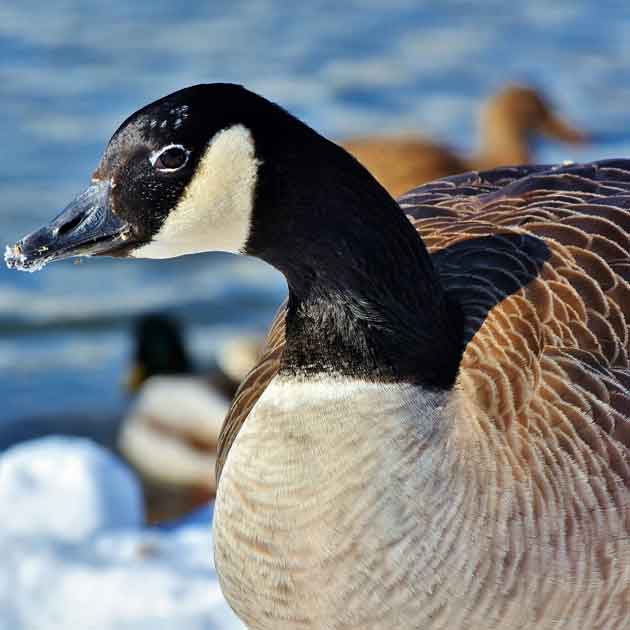





Canada geese are particularly problematic in an environment that demands sterility and cleanliness, such as hospitals and medical clinics. Not only do geese cause issues with access for medical staff, patients, and visitors, but they also potentially introduce pathogens like E. coli, Salmonella, and Campylobacter to an already at-risk population.
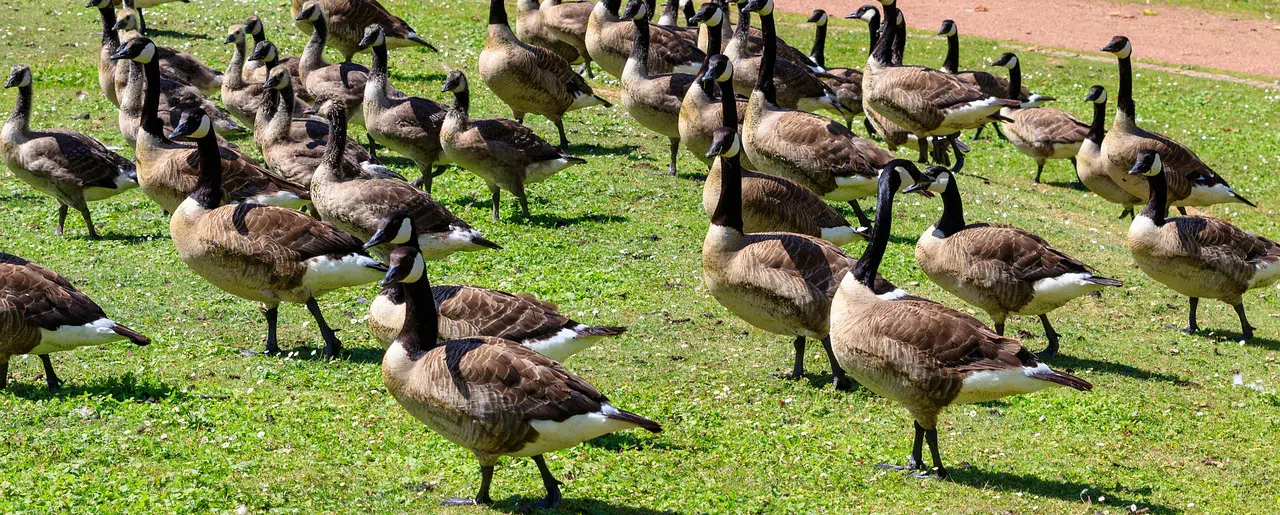
Urban sprawl and manicured hospital "green zones" in the GTA have created agressive pairs of nesting geese that severely affect patient transport and accessibility, causing liability issues as well as loss of reputation.
Professional healthcare facility bird control helps hospitals and clinics maintain safer, cleaner, and more accessible environments.
Where Geese Cause Problems in Hospitals and Clinics
Make no mistake, geese aren't just a problem on well-maintained lawns. Here are the other problem spots for hospitals and clinics:
Rooftops and Mechanical Areas
- Flat rooftops mimic safe nesting grounds
- Low human activity encourages nesting
Equipment contamination, especially when feathers or feces enter the HVAC system, can severely compromise the air quality indoors at a healthcare facility. Drain blockages from nesting materials have the potential to flood and even collapse the roof.
Courtyards and Healing Gardens
- Protected and designed to be calm and open courtyards can make ideal geese hangouts.
- Aggressive geese in patient areas
- Unsanitary conditions in confined spaces
Parking Lots and Walkways
Goose control for parking lots isn’t something to take lightly. When geese move between grass and paved areas such as parking lots their droppings create slip-and-fall hazards and cause liability concerns.
Entrances and Emergency Access Points
Geese often settle near main entrances, particularly if waste bins are nearby. This causes safety issues for patients, especially for the elderly or mobility-impaired. No medical facility wants their patients, staff, or visitors to be at risk of a Canada goose attack.
Ponds and Water Features
Water features are lovely and common on larger hospital campuses- but they do atrract and anchor goose populations and encourage long-term nesting.
Why Goose Problems Escalate Quickly in Hospitals
- Food Availability
Landscaping including short-cut grass as well as human food waste encourage geese to snack and lounge. - Safety from Predators
With so much coming and going and a constant human presence, natural ground-based predators are seldomly found around GTA hospitals and clinics. - Nesting
If geese are allowed to establish a nest, both the male and female will behave extremely territorial and ferociously defend their nest and offspring. - Site Fidelity
After a successful breeding season, geese are almost certainly going to return in following years, thus continuing the breeding cycle.
Under no circumstance should geese be allowed to nest on hospital grounds or near medical clinics. Ignoring the problem and delaying goose removal increases both risks, liability, and cost.
Why DIY Goose Control Fails at Hospitals and Clinics
Anything short of a professional goose control service, including most DIY goose deterrent methods, will likely fail. Canada geese are very intelligent birds and quickly determine that decoys, lights, or sprinklers pose no actual danger to them. Consider also that any control measures when it comes to Canada geese require the appropriate permits.
- The Myth of Audio/Visual Deterrents:
Wondering how to scare a goose off? Audio and visual deterrents aren’t the answer. Sirens, distress calls, and plastic owls are quickly ignored by urban geese. - The Failure of Sprinklers and Decoys:
First off, water will never scare geese - they are water fowl. Habituation in terms of decoys or sprinklers leads to geese quickly learning that these attempted goose repellent measures pose no real physical threats. - The Problem with Egg Oiling/Addling:
While oiling/addling will destroy the chick in the egg, geese won't realize that and will continue to sit on unviable eggs. They will remaining on-site, aggressively defending what they believe to be their offspring.
How to Get Rid of Geese Near Hospitals and Clinics
Professional bird control usually consists of several methods that are implemented side-by-side or in succession. Here are the methods that have proven to yield the best results:
Falconry (Birds of Prey Program)—Most Effective
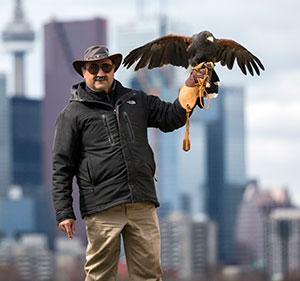
Falconry is the gold standard for getting rid of geese in a healthcare environment. It requires a highly skilled falconer to fly his bird of prey (Hawkeye uses eagles for geese control) and create real predator pressure. The process is silent and non-disruptive and does not interfere with patient care. Geese will quickly deem the site an unsafe nesting site and relocate. Falconry for goose control is highly effective, both in open and enclosed spaces.
Trained Dog Program
Trained dogs chase geese and reinforce the unsuitability of the site for nesting. Dog patrols are very effective on hospital grounds, in parking lots, and in open landscapes.
Nest Destruction
Goose nest removal (conducted within legal frameworks) is the effective way to force immediate site reassessment and relocation by the birds.
Laser Deterrence (Low-Light Use)
Lasers are another factor that make the environment unpredictable and potentially unsafe for geese. Lasers are best deployed during early morning or evening hours (in low light conditions). Lasers are an excellent supplementary goose control method that causes minimal disruption to daily hospital or clinic routines.
Habitat Modification for Long-Term Goose Control
Geese prefer open, flat, unobstructed areas and hospital landscapes often unintentionally attract geese. Low cost and effort habitat modifications can include:
- Increasing grass height
- Adding shrubs or visual barriers
- Installing low fencing around key areas
- Limiting direct access between grass and water
All of the above can help make hospital grounds less attractive for nesting geese.
Pond and Water Feature Management
Restricting access to ponds and/or water features is critical for hospitals. Here are some strategies you can employ to limit water access:
- Pond wiring to prevent landing
- Edge modifications to reduce access
- Remote controlled motor boats - when deployed in low light conditions, the movement created simulates predators in the water.
Habitat modification can reduce long-term goose presence significantly and is a relatively simple and cost effective start to your geese management plan.
Get Rid of Goose Nests Near Hospitals and Clinics
In order to maintain the highest standards around healthcare facilities, professional goose control is a MUST. Let's recap:
- The risks of geese nesting in healthcare settings:
- Increased aggression near vulnerable populations
- Continuous contamination - Why nest removal is essential:
- Breaks the breeding cycle quickly
- Prevents long-term site attachment - Falconry & dogs for goose control:
- Maximum benefit with minimal disruption to daily operations and patient care.
Delayed action allows geese to establish permanent nesting patterns on your healthcare facility grounds and make repeat visits year after year. What starts out as a nesting pair turns into a full-fledged flock in a couple of breeding seasons.
Contact Hawkeye for Hospital Goose Control and Removal in the GTA
Dealing with an aggressive Canada goose at your medical facility? Hospitals and medical clinics require a specialized approach for long-term goose control. Temporary fixes are neither effective nor sustainable, and they will increase your long-term risks of compromised patient care and liability.
You need a professional goose control and removal service, specialized in addressing issues in healthcare settings. Hawkeye Bird & Animal Control is that goose control professional, offering 35+ years of expertise with falconry, trained dogs, goose control for GTA hospitals and clinics, and experience with sensitive environments, like medical facilities.
Our approach is safe for patients and staff, humane and compliant, and designed for long-term results. Call us today to talk about a long-term goose management plan at your GTA hospical or medical clinic.
Our highly skilled falconers and dog operators are available all across Southern Ontario, including Toronto, Scarborough, Brampton, Vaughan, Markham, Ajax, Newmarket, Etobicoke, Oshawa, and Mississauga
Related Articles:
https://www.hawkeye.ca/blog/how-to-get-rid-of-geese-in-gta-ponds
https://www.hawkeye.ca/blog/geese-nest-removal-in-brampton
