 CA
CA US
US





3 years after a disastrous spill of oily sludge into Mimico Creek and Humber Creek, Etobicoke's Mimico Creek is facing another environmental disaster. Emergency crews continue to respond to a diesel spill near Legion Road and Manitoba Street last Sunday.
The city of Etobicoke is working closely with the Ministry of the Environment, Conservation and Parks (MECP) on cleanup efforts and a probe into the source and cause of the latest spill. While containment efforts are underway, concerns grow for waterfowl, raptors, aquatic and other wildlife that comes into contact with contaminated water.
Ospreys are also known as "fish hawks" and heavily depend on fishing Ontario's waterways. They are a common sight soaring over rives, creeks and shorelines, living comfortably alongside humans. Their numbers have rebounded following the ban on the pesticide DDT. Today, water contamination in rivers and lakes along with loss of habitat, and even electrocution are some of the challenges faced by Ospreys.
Concerns for Osprey Amid Mimico Creek Diesel Spill
This 2026 diesel spill in Mimico Creek could prove catastrophic for the local Osprey population. The oily substance not only coats their feathers and potentially impedes their ability to fly, but also contaminates their prime food source - fish.
While rescue efforts are ongoing, these birds of prey need the help of the public. If you are in the vicinity of Mimico Creek, Humber Bay, or nearby shorelines, please keep an eye out for Ospreys displaying any of the following symptoms:
- Oily or matted feathers
- Difficulty flying or staying upright
- Difficulty taking off from the water
- Birds appearing weak, lethargic, disoriented, or distressed
Please do not attempt to catch or restrain the bird(s) on your own and absolutely do not enter the water. If you need to are forced to physically handle an injured or affected bird of prey, please make sure you are doing so with heavy duty gloves and a towel.
Call Hawkeye: 416-429-5393
The team at Hawkeye Bird & Animal Control is passionate and knowledgeable when it comes to the care and rehabilitation of birds of prey. Please call us with the location of the bird(s) and your observations.
Frequently Asked About Ospreys
 Q: What do Ospreys look like?
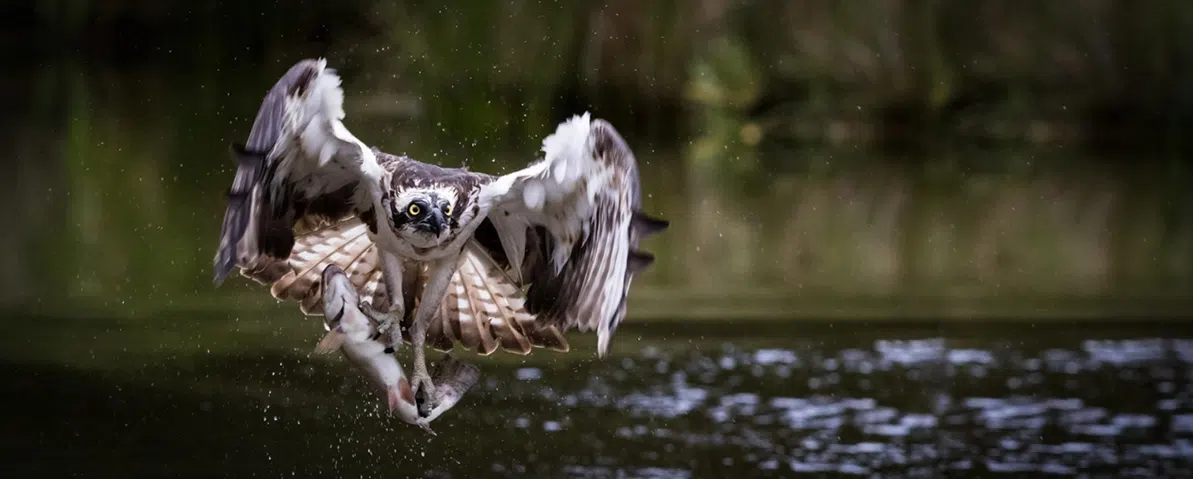
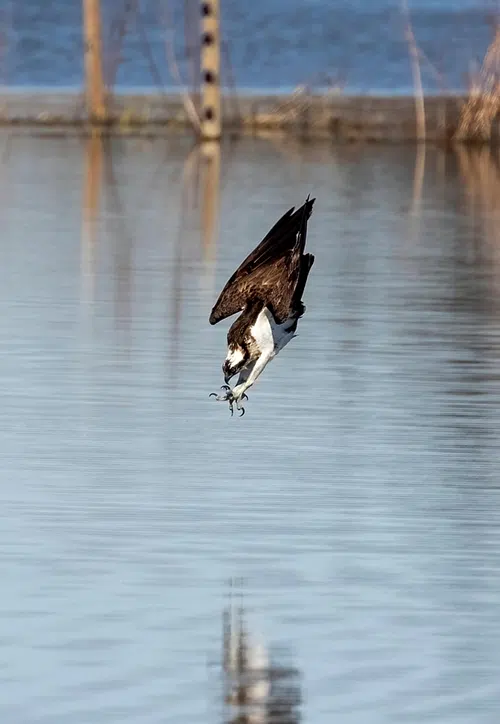
A: Ospreys are large raptors, reaching more than 24 inches in length with a wingspan of 71 inches. The top of wings and back is usually brown while the head and belly are greyish or even white. The Osprey is unusual in that it is the only bird of prey that occurs nearly worldwide.
Q: What Makes Ospreys Unique?
A: Ospreys' outer toes are reversible and allow for grasping prey with two toes in front two in the back of the foot. This is particularly important when grabbing and holding on to slippery fish. The Osprey is one of only two raptor species that can do this; owls are the other.
Q: What do Ospreys Eat?
A: An Osprey's diet consists of 99% live fish of many varieties, although snakes, birds, frogs, reptiles, mammals, crustaceans, and other invertebrates can also make it onto the menu.
Q: How do Ospreys Hunt?
A: When procuring their next meal, Ospreys usually fly low and slowly over water; they may even briefly hover over a promising spot. Once they spot a fish, they'll perform dramatic, graceful dives from heights of 30-120 feet and plunge feet first into the water to capture their prey. With a fish in their talons, they often fly to a tall perch to consume their meal.
Q: Where do Ospreys Nest?
A: Osprey nests are located up high, often in trees or on power poles. Many municipalities offer nesting platform near the water's edge to avoid conflict with maintenance crews. Ospreys build some of the largest and most interesting nests, starting off with the usual stick foundation and nest linings that range from seaweed to bark, leaves, grass, and literally any materials they can find.
Q: Do Ospreys Return to Past Breeding Locations?
A: Yes, they do. In fact, Ospreys usually even reuse the same nest. Each spring both the adult male and female add new materials and upgrade their nest. That's why some Osprey nest structures reach enormous proportions.
Q: Do Ospreys Mate for Life?
A: Yes, Ospreys are largely monogomous and form long-term bonds that last as long as both partners are alive. If one of bird dies, they will find a new partner.
Q: Do Ospreys Migrate?
A: Yes, indeed, Ospreys complete very long migration journeys each year. When rivers and lakes freeze over, there is little for an Osprey to feed on. Populations living in Canada's far north travel as far south as Central and South America for the winter.
If you are interested in birds of prey, come check out the Falconry Experiences at Hawkeye. While we don't keep any Ospreys are our aviaries, we are more than equipped and willing to care for any affected birds until they can be released back to the wild.
Contact Hawkeye today if you have spotted an Osprey or other bird of prey in trouble. Call 416-429-5393
