 CA
CA US
US

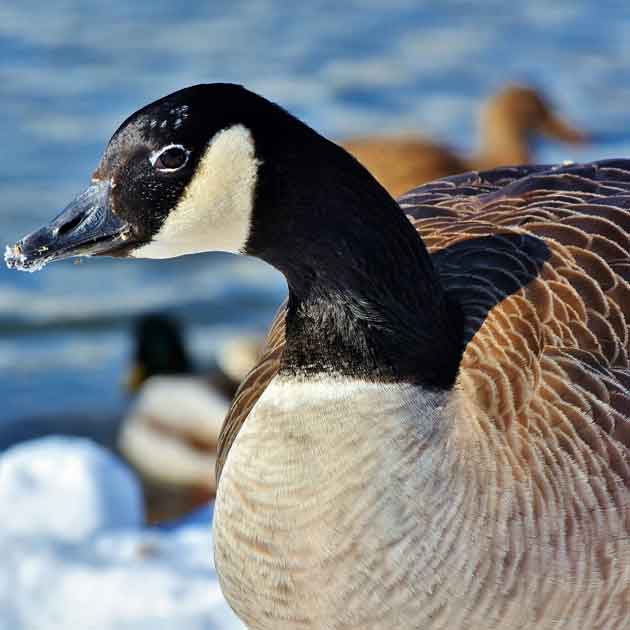


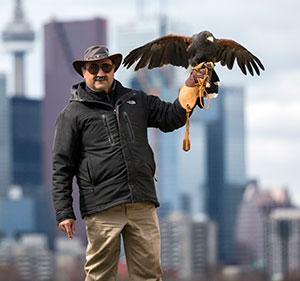
It is almost July and Canada geese around the GTA and their adorable goslings are are on the lookout for lush green lawns, preferably near the edge of a lake or pond. If you'd rather not host a family of geese in your yard, read on to learn how habitat modification can help deter the birds.
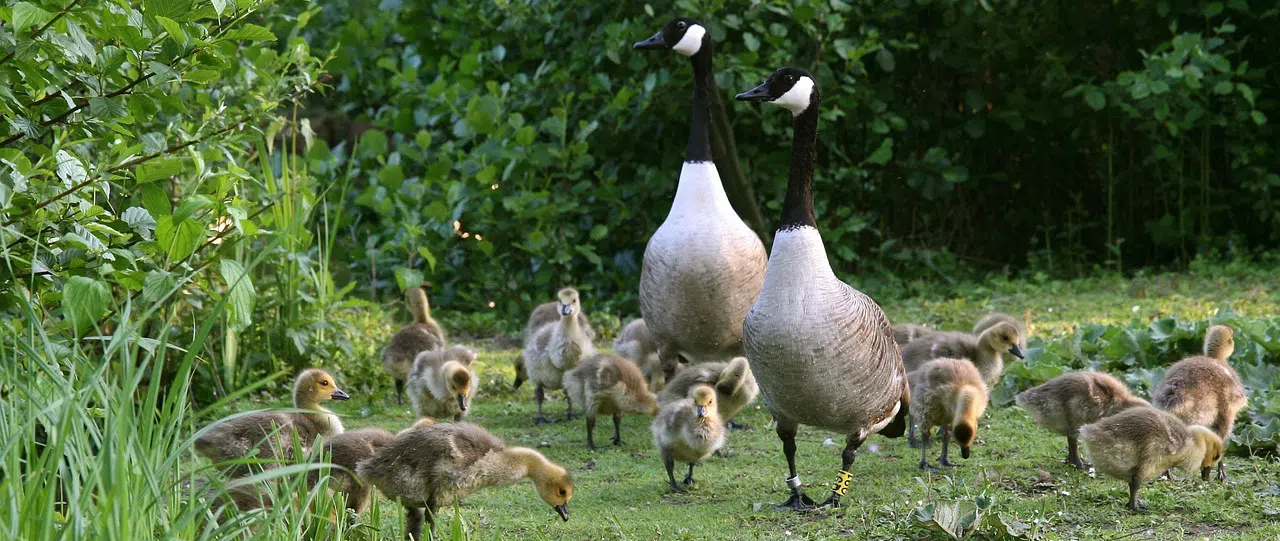
Canada geese are highly intelligent birds living in a complex social structure. They need safety, food, and water to thrive and raise their offspring over the summer. By removing any one of these needs, you can greatly reduce the suitability of your property. Habitat modification can play an integral part in a long-term geese management plan, shifting the focus from reactionary measures to proactive environmental design.
What Is Habitat Management for Goose Control?
By altering the environment a property can appear less attractive, safe, or suitable for geese and entice them to move on of their own volition.
Why geese select specific habitats
- The predator-free sightline
Geese require wide-open spaces to detect predators early (i.e., where they can see a fox or dog coming from 100 yards away). - Easy water access
Geese prefer to walk, not fly, from water to grass—especially during the moulting season (June/July) when they are flightless. They also retreat to water if they perceive danger from ground predators.
If the habitat feels unsafe or unpredictable, geese leave. And, by focusing on prevention, you can set the stage for the coming year(s). Canada geese have excellent memory and exhibit strong site fidelity.
Why Habitat Management Is Key to Long-Term Goose Control
Beyond temporary (and largely unsuccessful) goose deterrents and control methods, there is long-term management and that includes habitat modification. By making your property unsuitable for grazing and raising a family right now, you are laying the groundwork for next year's goose population.
- Moves beyond temporary goose deterrence
- Reduces repeat visits instead of just dispersing birds
- Works continuously without constant human intervention
- Supports sustainable goose removal strategies
How Habitat Management Helps You Get Rid of Geese
To get rid of geese you need to reduce or eliminate the advantages or attraction that your property offers. Here are some measures that can yield great success:
Shoreline & Water Modification (The Physical Barrier)
- Vegetation Buffer Strips
Plant tall native grasses (36"+), wildflowers, or shrubs along the water’s edge. - Rock Barriers
Use large, jagged boulders (minimum 2 feet in diameter) that are difficult for geese to navigate. - Steep Banking
Re-grade shorelines to a slope greater than 3:1 to make walking out of the water physically taxing.
Lawn & Forage Modification (The Dietary Deterrent)
- The "No-Mow" Zone
Allow grass to grow to 4–8 inches. Long, coarse grass is harder for geese to swallow and hides potential predators. - Species Conversion
Replace Kentucky Bluegrass (“goose candy”) with unpalatable alternatives like tall fescue or ground covers like pachysandra and ivy. - Reduced Fertilization
Nitrogen-rich, fertilized grass is highly nutritious for geese; cutting back on fertilizer makes your lawn a low-quality buffet.
Flight Path Disruption
- Strategic Tree Planting
Planting tall trees in the flight paths between water and grazing areas interferes with their take-off and landing "runways."
Goose Nesting Prevention Through Habitat Management
Can Habitat Management Prevent Goose Nesting?
Yes, this year's habitat modifications will help prevent next spring's nesting pairs from returning to your property.
- The Site Fidelity Battle
Geese return to previously successful breeding sites. For property owners wondering how to stop geese returning year after year, habitat management is one of the most effective preventative strategies available. It breaks the cycle by making the site unsafe or unpredictable for raising goslings. - Nesting Site Elimination
Remove islands, peninsulas, or dense decorative cover where female geese feel secure. - The Early Bird Rule
Modifications are best done before geese come back in spring and nesting begins. Once nesting has begun, you will have to deal with extremely protective and aggressive parents and nest removal (destruction) will be your only option at this point.
Remember that ALL work around geese requires permits. Canada geese are protected under the Migratory Birds Convention Act (MBCA).
Does Habitat Management Help Reduce Goose Population?
While habitat management doesn't necessarily reduce goose population levels overall, there are definitely advantages, both in the short and long term.
- Habitat modification helps redistribute and reduce concentration on your property.
- It limits breeding success in specific locations.
- Long-term effects include reduction of site loyalty over time.
Impact on Local Goose Activity
- Fewer returning flocks
- Reduced seasonal buildup
- Lower long-term pressure on property
Where Habitat Modifications Works Best for Goose Control
Habitat modification is one of the quickest and most affordable ways to start a long-term gooses management plan. It is also one of the most effective commercial goose control solutions for large properties with recurring goose activity. Below are some of the locations where this strategy can work particularly well:
- Commercial properties
- Industrial yards and business parks
- Residential communities and HOAs
- Golf courses and open green spaces
- Properties with ponds, lakes, or water features
Limitations of Habitat Management in Goose Control
No one control method alone will be 100% successful. All bird or wildlife control requires several approaches to work in tandem and complement each other.
- Not an instant solution (requires time to take effect)
- Less effective if used alone in high-pressure areas
- In extreme urban winters, geese may ignore unpalatable grass if it's the only food source available.
- Homeowners or golf courses may not want tall, “messy” grass in high-visibility areas.
- While it saves money long-term, planting buffers and re-grading shorelines requires an upfront investment.
Why Habitat Management Alone Is Not Enough
Again, geese control requires a multi-prong approach. However, habitat management is a first and integral part of a working long-term plan.
- Geese may still attempt to return, especially in high-density areas.
- Without active deterrence, adaptation can occur.
- Works best as a foundation strategy, not a complete solution.
Why Habitat Management Needs Integrated Goose Control
Habitat modification combined with active deterrence is among the most effective Canada goose control strategies for properties experiencing chronic goose pressure. Using active control measures like falconry or trained dogs in conjunction with habitat modification (passive pressure) is very successful in relocating geese. Integrated goose control also includes the use of lasers and ROVs in the water.
If you're wondering how to stop a goose from settling on your property, combining habitat modification with active deterrents is far more effective than relying on a single control method.
Active Control Methods (Behavioural Pressure)
- Role of falconry
Reinforces predator threat in modified environments - Role of trained dogs
Maintain ongoing disturbance in open areas - Role of additional tools (lasers, etc.)
Supports control, particularly during in low light conditions when geese are more alert and vulnerable
Dos and Don’ts of Habitat Management for Goose Control
Do
- Implement changes before peak goose season.
- Focus on visibility and access disruption.
- Combine with active control methods.
- Monitor and adjust over time.
Don’t
- Rely on habitat changes alone in high-traffic goose areas.
- Maintain short, manicured lawns near water.
- Leave open, undisturbed nesting zones.
- Expect immediate results.
When Should You Start Habitat Modifications for Goose Control?
- Before migration and nesting season is the most advantageous time to implement habitat modification.
- Early intervention is key
Contact Hawkeye for Long-Term Goose Control and Removal
While some habitat modification can be done as a DIY project, goose control most likely requires professional expertise. Hawkeye Bird & Animal Control is your #1 partner for geese removal and long-term goose management. From permits to birds of prey and custom solutions, we're ready to address your property and goose control needs,
- Habitat management is most effective when combined with:
- Falconry (birds of prey)
- Trained dogs
- Legal, permit-compliant goose nest removal
- Integrated control strategies
- Hawkeye tailors solutions based on property type and goose pressure.
Contact us for long-term goose control and removal - don't waste your time and money on temporary fixes.
Our highly skilled falconers and dog operators are available all across Southern Ontario, including Toronto, Scarborough, Brampton, Vaughan, Markham, Ajax, Newmarket, Etobicoke, Oshawa, and Mississauga
Related Articles:
https://www.hawkeye.ca/blog/how-do-i-get-rid-of-geese-on-my-lawn
https://www.hawkeye.ca/blog/trained-dogs-and-falconry-for-goose-control
