 CA
CA US
US







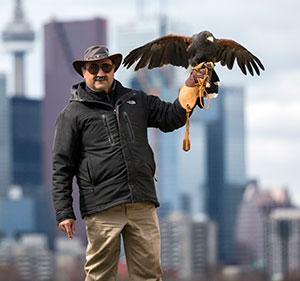
Falconry is the ancient sport of hunting with birds of prey dating back thousands of years. Falconry was practiced almost exclusively by royalty back then and in addition to the joy of training and flying a bird of prey, the bird itself may have been a symbol of the handler's status, power, expertise, and success.
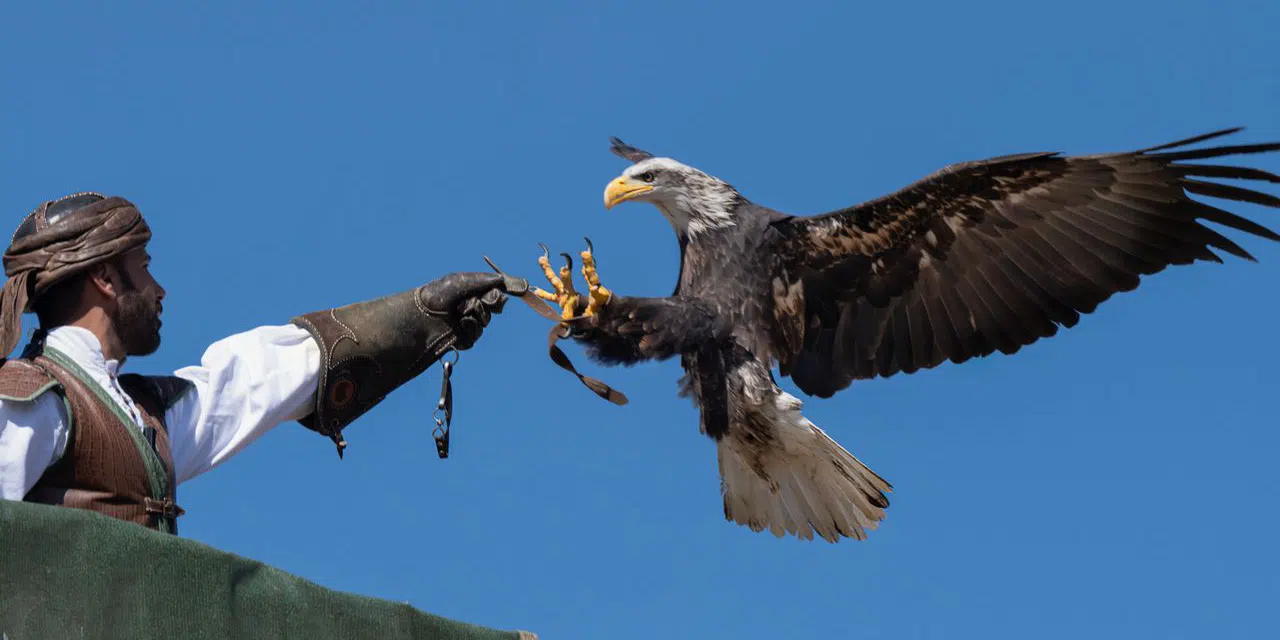
Contrary to popular belief (and the book of St. Albans), emperors of the past did not automatically fly bald or golden eagles. It is far more likely that royal bird enthusiasts chose their birds according to the birds native to the area, the available prey, and their own level of training and ability. Early records of falconry exist in nearly every corner of the world and culture - from Europe, Africa, and the Middle East to the Orient and North America.
The bald eagle is often the first raptor that comes to mind when the topic of birds of prey comes up. And, in memory of the legendary Dolly Parton who sadly passed away on August 25th, 2026, we'll make this the first featured bird.
The Bald Eagle
This large raptor gets his name from the old English word "bald" which meant "white" or "white headed". They don't start out this way; it takes up to 5 years for the head plumage to turn completely white. The bald eagle is native to North America and can be found from as far north as Alaska to as far south as northern Mexico. Young bald eagles spend the first four years of their lives in search of a permanent territory and can fly hundreds of miles per day. Upon reaching maturity around 4-5 years of age, they will find their mate - usually for life. They live up to 25 years in the wild.
The bald eagle is known as the national bird of the United States of America but has been revered in native American culture and ceremonies for much, much longer. Believed to be flying highest in the sky and closest to Creator, the bald eagle is viewed as a messenger and able to carry prayers. He also watches over and protects all of creation.
Healthy adult bald eagles faced virtually no natural predators in the wild - until the age of technology. By 1963, the eagle population had plummeted to only 417 pairs left. Chemicals like DDT softened the shells of eggs and caused them to be crushed by the birds' weight when sitting on them and lead poisoning lead to early deaths of adult birds. Bald eagles were eventually classified as endangered by the IUCN.
Dolly Parton's Role in Eagle Preservation
In 1991, Dolly Parton collaborated with the American Eagle Foundation and opened the Eagle Mountain Sanctuary at the Dollywood theme park. The sanctuary supported eagles that couldn't return to the wild, such as those with injuries that required lifelong care. It also helped to rehabilitate raptors, release rehabilitated birds and educate the public about the plight of the bald eagle. It became the largest sanctuary for bald eagles unable to return to the wild in the world.
The same year the Eagle Mountain Sanctuary opened, Dolly Parton released the song "Eagle When She Flies."
In large part due to Dolly Parton's support and efforts, the bald eagle is no longer considered an endangered species.
Did you know? Hawkeye Bird & Animal Control in Acton, Ontario also cares for and rehabilitates injured birds of prey.
 The Golden Eagle
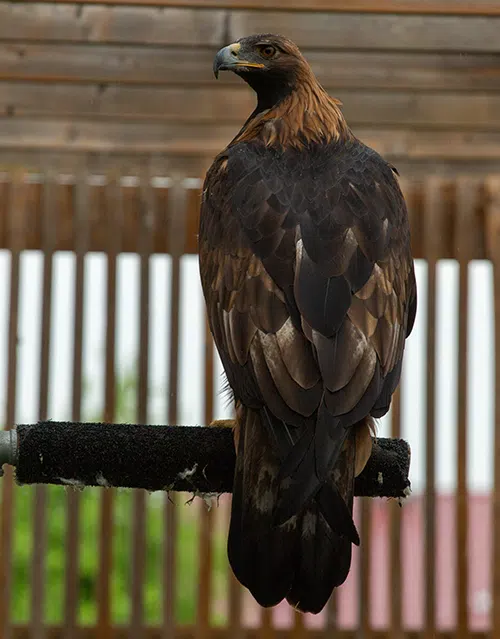
The majestic golden eagle is found across the Northern hemisphere, from North America, Europe, and Asia all the way to North Africa. This dark brown raptor gets its name from the golden sheen across the back of the head and neck. Juvenile birds sport white patches at the base of their tails and wings. Golden eagles reach maturity between 4 to 5 years of age and will finish with an average wingspan of 75-85 inches, making it one of the largest birds in North America.
Central Asian nomads began hunting with golden eagles as early as the first millennium B.C. For them, this wasn't a sport at all - it was strictly about hunting and survival. Archaeological evidence suggests that Central Asia was one of the earliest known centers of human hunting partnerships with birds of prey. By the early centuries B.C., the practice had spread into Persia, the Middle East and China, where it became linked to court and military traditions. In medieval Europe, falconry evolved into a royal pastime and eventually gained the title of “sport of kings”.
Training and hunting with a golden eagle requires an expert falconer and the right environment and type of prey.
"Golden Eagles were only flown by Emperors"
This is a myth. Emperors are said to have flown vultures as well but vultures are carrion birds and do not hunt at all.
Falcons in the Middle Ages
Falcons were probably the most favoured birds of prey for European nobles in the middle ages. Confusingly named "long-winged hawks", these were Peregrine and Gyrfalcons. Falcons are known for their exceptional speed, power, and agility.
Gyr Falcons (or Gyrfalcons)
Gyrfalcons are the largest of the falcons, with a bulky body and up to a 4 foot wingspan. They are elegant hunters that live in high-arctic tundra, snowy northern regions, and open coastal or agricultural lands during winter.
During the hunt, the gyrfalcon will chase in a high-speed horizontal pursuit, catching other birds as well as small mammals.
Peregrine Falcons
Peregrines are smaller and sleeker falcons with nearly global distribution. Peregrines have learned to thrive in diverse climates from coastal cliffs and river valleys to skyscrapers in urban environments.
A hunting peregrine falcons will perform a high-speed dive called a "stoop" to strike and capture mid-air prey at speeds exceeding 200 mph. They are stunningly beautiful birds.
Merlin
When we talk about nobility, we must not skip over the merlin. Dubbed the "lady hawk" and while no hawk at all, the merlin is small and light enough to comfortably fit on a noble lady's glove . Make no mistake, though - the merlin is a fierce and feisty little bird of prey. It has also been called a "pigeon hawk" (and again... it's a falcon, not a hawk) due to its size and shape somewhat resembling a pigeon.
Hawks Trained for Falconry
It's interesting to note that in the old days, falconry was called "hawking" but there is little documentation of actual hawks used in the hunt. Some birds were named hawks but actually belonged to the falcon family. Today, however, red-tailed hawks and Harris's hawks are found in nearly every falconry program.
Harris's Hawks
Harris's (or Harris) hawks are the most common birds used in falconry today. They are so popular due to their intelligence and social nature as well as their superb hunting ability. Training a Harris's hawk for falconry builds a strong bond between the falconer and the bird through positive reinforcement and consistent training techniques.
Harris's Hawks are medium sized birds and native to the southwestern US and Central and South America.
Hawkeye Falconry Experience
Have we piqued your interest? Are you in the Greater Toronto Area and curious to learn more about birds of prey? Why not join us for a one, two, or three-hour get-together with our very own birds? Depending on the season (temperatures), we offer Eagle Adventures, Falconry Experiences, or a one-hour Owl Experience during the winter months. Check out our Falconry FAQ section or contact us for more info.
Related Articles:
https://www.hawkeye.ca/birds-of-prey/harriss-hawks
