 CA
CA US
US

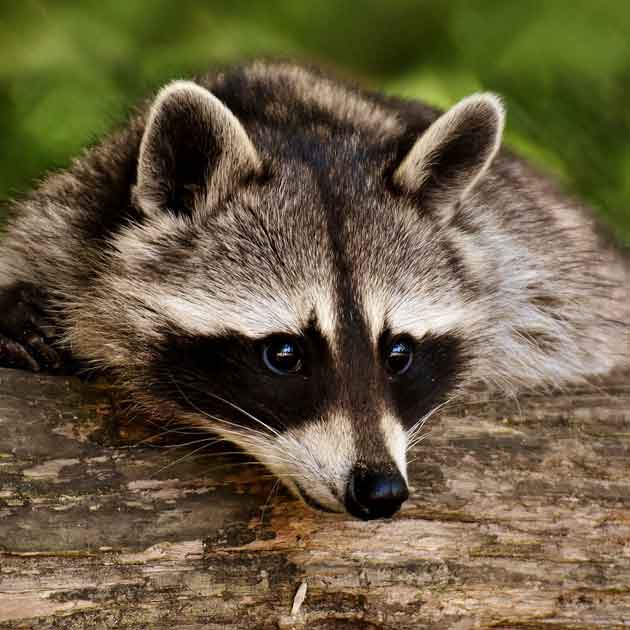



In addition to their environmental impact, mature trees are valuable landscape features on residential, commercial, municipal, institutional, and rural properties in the Greater Toronto Area (GTA). Trees also provide shelter to many species of local wildlife, including raccoons. Unfortunately, once a raccoon begins using a tree cavity as its nest, it may will likely return season after season and cause a great deal of damage to structures and landscape.

How you manag tree-nesting raccoons depends on when the problem is discovered. Inspecting your trees reguarly can prevent raccoons from moving in before it's too late.
Which Trees Are Most Vulnerable to Raccoon Nesting?
- Mature hollow trees
- Trees with large cavities
- Trees that are storm-damaged or have large exposed roots
- Trees with decayed trunks
- Large shade trees near buildings
- Trees along ravines, parks, and woodlots
How to Keep Raccoons Away from Trees Before They Nest
Reduce Access to Food and Water
Your property will be much less popular with raccoons (and other wildlife) if there's no easy meal to be had and/or no water nearby.
- Secure trash bins
- Empty bird baths overnight
- Take bird feeders down overnight
- Remove pet food and water dishes
- Clean up fallen fruit
Reduce Easy Access to Tree Cavities
These animals are expert climbers, so raccoons climbing trees can reach great heights without difficulty. Trimming branches can help but will not deter them.
- Prune dead limbs where appropriate
- Remove hazardous broken branches
- Consult an arborist if cavities pose structural risks
Tree Guards and Metal Collars
To disallow access to the tree cavity, smooth sheet metal can be wrapped around suitable tree trunks. This works well with trees that stand alone but has its limitations:
- Ineffective on leaning trees
- Nearby branches may provide alternate access
- Unsuitable for every tree
- Improper installation can damage trees
Reduce Nearby Climbing Routes
Where possible, remove nearby structures that raccoons can use to reach the tree cavity, such as:
- Adjacent fences
- Sheds
- Stacked materials
- Low roofs
When removing such access points is not possible or practical, electric shock tracks can be a great addition to protect your tree. These work best on roof or fence ledges.
Deterrents with No Proven Efficacy
Motion-Activated Lights and Noise Devices
Property owners often install these types of devices but find the results disappointing. Raccoons are very intelligent animals and adapt quickly, so the effects of these deterrents is temporary and short-lived at best. Motion-activated lights and noise devices also provide poor coverage on largeVisual Deterrents
Visual raccoon deterrents like reflective objects or predator decoys suffer the same fate as light or noise deterrents, as do scent-based repellents. Realizing that there's no actual danger, raccoons quickly learn to ignore them.
 Raccoon Control When a Tree Is Already Occupied
Once a raccoon den in a tree is already established, prevention is no longer an option. However, neither is blocking the tree entrance without assessing the type of den (in spring time or early summer, you may be looking at a maternity den) and the number of occupants. You'll never want to block an active den and seal the animals in.
A raccoon in a tree hole may be difficult to assess from the ground, making a professional inspection important before any exclusion work begins.
Do Not Climb Trees to Remove Raccoons Yourself
- Fall hazards
- Defensive raccoons
- Hidden cavities
Avoid Disturbing Tree Cavities Repeatedly
Repeated harassment may cause raccoons to relocate temporarily while remaining on the property. Raccoons often occupy more than one den at a time.
Consider Professional Wildlife Assessment
If you’re dealing with a potential raccoon nest in a tree, a professional raccoon removal company can help with:
- Confirming occupancy
- Identifying maternity activity
- Evaluating nearby den sites
Raccoon Control for Trees After Kits Have Been Born
Baby raccoons change how removal must be handled. It's important to locate the entire family (mom and kits) and not separate them. If relocation or removal is chosen, all animals must the captured together.
PRO-TIP
Commercially available male raccoon urine can be sprayed or poured near the entrance of the tree cavity. Mothers will not allow male raccoons near their kits, because the male will in all likelihood kill the little ones in order to mate again (females only mate once a year under normal circumstances). A raccoon mother detecting male urine will move her den and kits to another location. Granted, that location is usually nearby and may still be on your property.
Professional Removal Options for Tree-Nesting Raccoons
One-Way Doors for Tree-Nesting Raccoons
One-way doors can be quite effective but are only appropriate when you are dealing with a single raccoon or adult animals. You essentially install a “door” that allows the animal to exit the den but then locks it out. One-way doors should NOT be used when the den is suspected to contain a litter.
Live Trapping and Relocation
Live trapping and relocation is the norm and offered by nearly all professional raccoon removal companies. The trouble is that the relocated raccoon is usually back by nightfall. In Ontario, captured wildlife must be released with one kilometre of the trap site. And, raccoons have excellent homing instincts and can travel as far as five kilometres a day to return to their home range.
Raccoon trapping should be performed by a professional since even the choice of raccoon trap makes a difference.
Permanent Raccoon Removal for Recurring Tree Infestations
In Ontario, you have only two options once a raccoon is trapped: release it within 1km or euthanize it. Hawkeye Bird & Animal Control is the only licensed and authorized company to offer that second option in the Greater Toronto Area (GTA).
Permanent raccoon removal puts a stop to:
- Recurring tree denning
- Repeated property damage
- Annual nesting
Hawkeye has the legal authority to carry out its permanent raccoon removal program and handle mothers, kits, and active den sites appropriately. Permanent removal is designed to break recurring infestation cycles rather than relying solely on relocation. The choice as to what happens to the raccoon once it is captured is up to you - the client.
After Raccoon Removal: Reducing Future Tree Nesting
Once you’ve had the tree-nesting raccoon(s) removed from your property, you've come full circle and are basically back to preventing a raccoon infestation. Remember to:
- Inspect tree cavities regularly
- Monitor older trees
- Remove unsafe dead trees when necessary
- Include trees in routine property wildlife inspections
Your focus should now be on long-term monitoring and taking anything out of the equation that would encourage a raccoon to den in your tree(s).
Hawkeye Bird & Animal Control's Raccoon Removal from Trees
Getting rid of raccoons from trees requires an approach that accounts for whether the den is unoccupied, actively used, or contains kits. While DIY deterrents and tree guards may help discourage some activity before nesting begins, professional help is needed once raccoons establish a den.
Professional raccoon control is the safest option for occupied tree cavities, particularly during maternity season. Trust Toronto area's foremost experts for recurring tree infestations with permanent raccoon control that provides a more reliable long-term solution. Contact us today!
Hawkeye's raccoon removal services are available all across Southern Ontario, including Toronto, Scarborough, Brampton, Vaughan, Markham, Ajax, Pickering, Newmarket, Etobicoke, Oshawa, and Mississauga.
Related Articles:
https://www.hawkeye.ca/blog/how-do-i-get-rid-of-raccoons-in-my-tree
