 CA
CA US
US

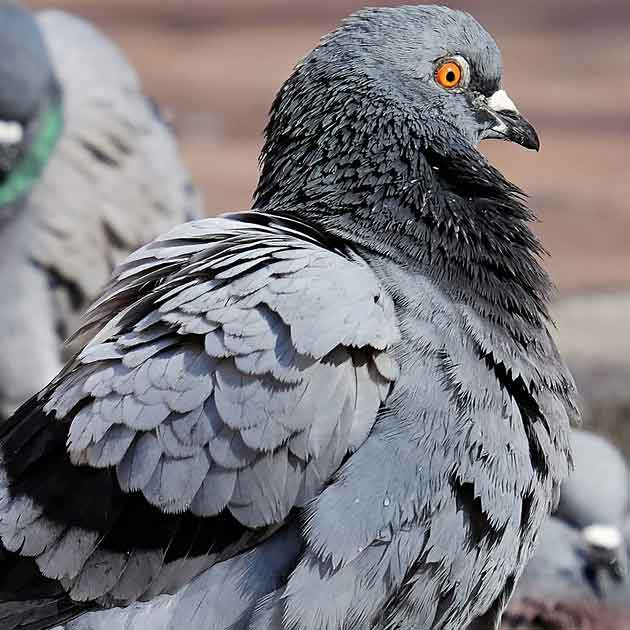
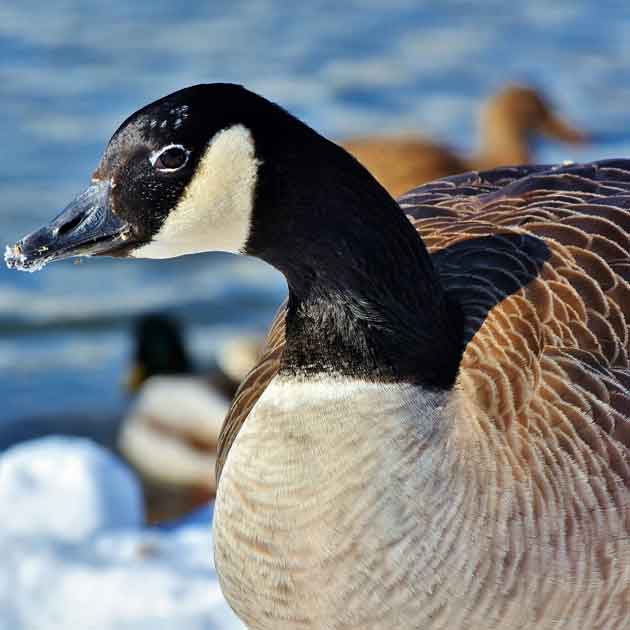
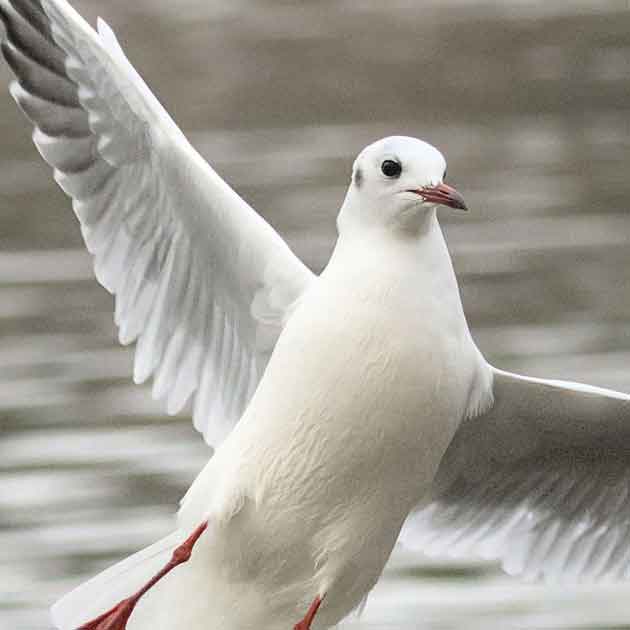


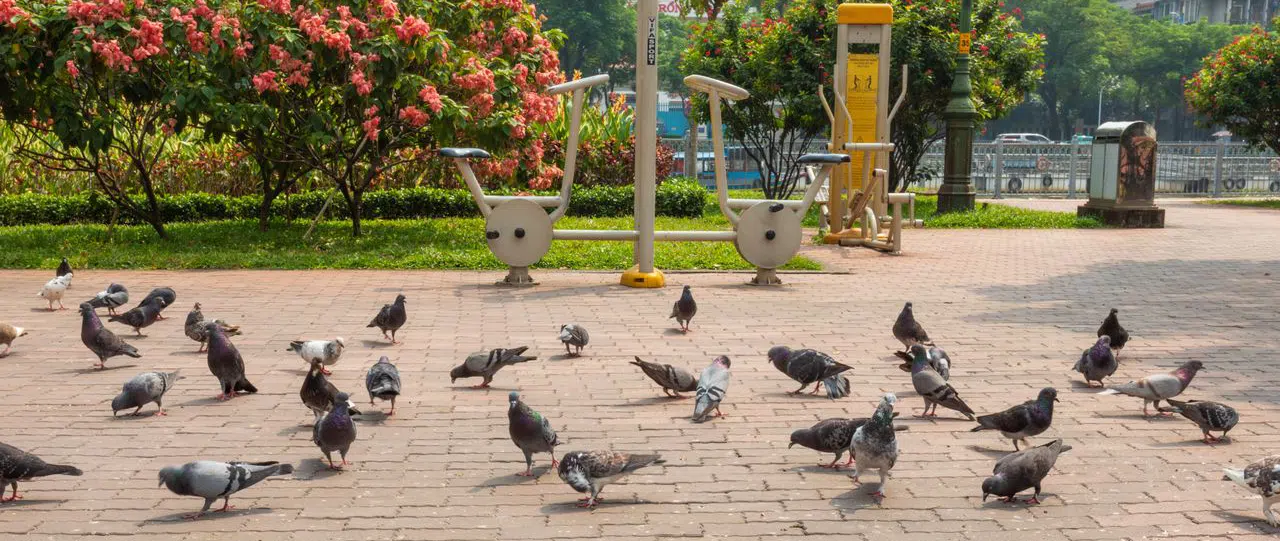
Pigeon populations can become difficult to manage in busy GTA public parks because of the ample availability of food, shelter, and water.
Effective pigeon control and removal for public parks requires addressing both the birds and the conditions that attract them. It also requires the public to participate in reducing those conditions.
What Problems Do Pigeons Cause in Public Parks?
In addition to being unsightly, pigeon droppings also cause health concerns and structural damage, such as:
- Droppings on benches, picnic tables and play areas
- Slippery walkways and hard surfaces
- Damage to park buildings and infrastructure
- Increased cleaning and maintenance costs
- Unpleasant conditions around food and picnic areas
- Accumulation of nesting materials
- Complaints from park visitors
- Disease transmission including cryptococcosis, histoplasmosis and psittacosis
Why Addressing One or Just Some Pigeons Isn't Effective Bird Control for Public Parks
Simply walking toward birds, using temporary noise or motion deivices, or spraying water to chase off individual birds doesn't solve the underlying problem. The birds may simply move to:
- Another pavilion
- Nearby trees
- Parking structures
- Washroom roofs
- Buildings
- Adjacent properties
Addressing all birds instead of just a few is particularly important in large parks where there are many alternative roosting locations.
Falconry for Pigeon Control in GTA Public Parks
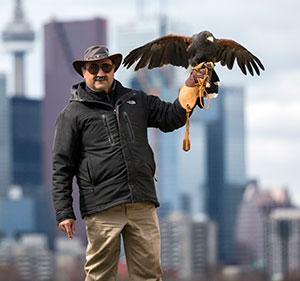
A skilled falconer will fly raptors (trained birds of prey) that create a natural predator presence and encourage pigeons to leave the area quickly.
Where Falconry Works Best in Public Parks
- Large open lawns
- Picnic areas
- Sports fields
- Parking areas
- Around pavilions
- Large recreational spaces
- Parks with extensive pigeon concentrations
Why Falconry Is Particularly Suitable for Parks
- Covers large areas
- Can address large mobile flocks
- Doesn't require permanent physical structures throughout the park
- Can be scheduled around periods of highest pigeon activity
- Does not interfere with visitor enjoyment
Falconry as Part of an Integrated Pigeon Control Program
Falconry is a highly successful professional pigeon control solution for municipal parks but, like all bird control, works best when combined with other pigeon removal methods like:
- Habitat modification
- Trapping
- Exclusion
- Netting
- Perching deterrents
Falconry is primarily a dispersal/deterrence strategy that needs to be repeated to ensure long-term success. It does not physically seal nesting locations or address every established nest, so other measures are necessary.
Pigeon Trapping and Removal for Public Parks
Pigeon trapping is also an effective method of removing pigeons. Overall success largely depends on choosing the right trap. Here's where pigeon trapping works well:
- Established pigeon populations
- Persistent concentrations around specific park facilities
- Areas where deterrence alone hasn't reduced numbers
- Locations where birds have established nesting/roosting patterns
How pigeon removal professionals can help
- Assess the population
- Identify concentration points
- Deploy appropriate trapping methods
- Monitor activity
- Combine trapping and removal with measures that discourage recolonization
Removing pigeons without addressing food, shelter and nesting opportunities can result in new birds occupying the same area.
Bird Netting for Pigeon Control Around Park Structures
Properly installed netting is an effective and nearly invisible way to exclude pigeons from:
- Gazebos
- Picnic shelters
- Pavilions
- Covered walkways
- Washroom structures
- Maintenance buildings
- Bridges
- Building entrances
Bird netting physically prevents pigeons from accessing protected spaces. The right product and expert installation are key.
Ledge Protection Systems for Park Buildings and Structures
Products like bird spikes, bird coil, or bird-shock flex track can protect structures that frequently end up being pigeon roosting or nesting locations. These include:
- Narrow roof ledges
- Building ledges
- Signs
- Light fixtures
- Pavilion beams
- Architectural projections
Ledge protection systems make specific surfaces unsuitable for landing, perching, and roosting. They don't control pigeons across lawns, trees or other open areas.
Other Physical Pigeon Exclusion Solutions for Public Park Facilities
Pigeon exclusion isn't a solution for the entire park, but rather works by restricting access to defined structures. Exclusion methods include:
- Screening openings
- Closing structural gaps
- Protecting ventilation openings
- Blocking access beneath roofs
- Protecting sheltered nesting spaces
How to Get Rid of Pigeon Nest in Public Park Facilities
An experienced bird control professional can help with:
- Identifying active pigeon nesting locations
- Determining whether nests are currently occupied
- Providing a professional nest assessment
- Removing abandoned nests when legally permitted
- Addressing the structure that allowed nesting
We don't suggest that park staff simply remove active pigeon nests; if pigeons are actively nesting in a park structure, a professional assessment is the safer approach before attempting any nest removal.
Habitat Modification: An Important Step in Long-Term Pigeon Control
Park managers can make the property less likely to attract pigeons by implementing a few changes:
Reduce Accessible Food
- Covered garbage bins
- More frequent waste collection
- Cleaning food waste around picnic areas
- Managing restaurant/concession waste
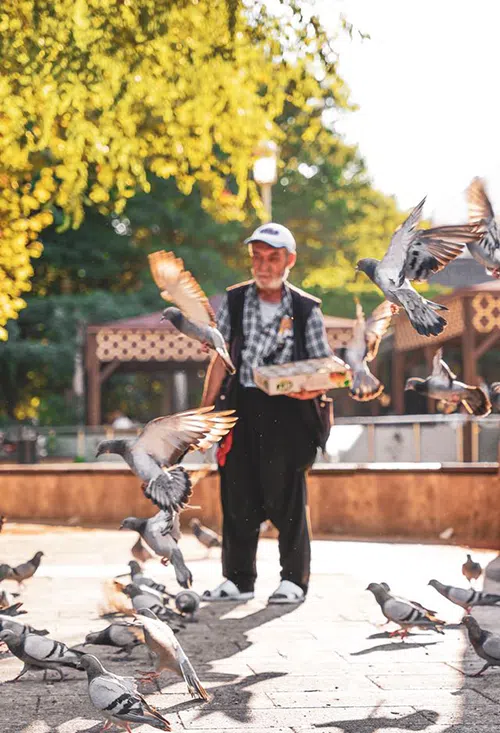
Discourage Intentional Feeding
- Appropriate signage
- Public education
- Consistent enforcement where applicable
Eliminate Unnecessary Water Sources
- Repair leaking irrigation
- Manage standing water
- Maintain fountains and drainage
Modify Attractive Roosting Areas
- Alter access to sheltered spaces
- Close unused structural openings
- Modify building ledges
Habitat modification can reduce pigeon pressure and prevent the likelihood of reinfestation but will not be sufficient when an established flock is already using the park.
 How to Plan a Long-Term Pigeon Control Program for Public Parks
A plan for long-term pigeon management should include:
Step 1: Assess and Identify Pigeon Activity
- Roosts
- Nests
- Feeding areas
- Water sources
- High-traffic visitor areas
Step 2: Identify the Source of Attraction
- Food
- Water
- Shelter, or nesting locations
Step 3: Select Appropriate Control Methods
- Falconry and trapping for open spaces
- Ledge protection systems for park structures
Step 4: Reduce Available Food and Shelter
- Implement habitat modifications
- Educate the public
Step 5: Monitor Pigeon Activity
- Track whether birds are returning or relocating
- Monitor nesting activity and fledglings
Step 6: Adjust the Program
- Increase or change control measures where necessary
- Adjust control efforts to seasonal activity
Contact Hawkeye for Pigeon Removal Services for Public Parks
Hawkeye Bird & Animal Control is Toronto's #1 choice with over 35 years of experience and the expertise to plan and implement an integrated pigeon control program for GTA public parks. Our skilled commercial falconers and proprietary pigeon traps deliver exceedingly successful long-term pigeon control solutions. Contact us today to control and get rid of pigeons from public parks.
Our pigeon removal solutions for attics are available all across Southern Ontario, including Toronto, Scarborough, Brampton, Vaughan, Markham, Ajax, Newmarket, Etobicoke, Oshawa, and Mississauga
